
VolleyballWhy Vietnam Women's Volleyball Declined: Decoding a Year of Systemic and Individual Regression
Why Vietnam Women's Volleyball Declined: Decoding a Year of Systemic and Individual Regression
**Core answer**: Vietnam's women's volleyball declined over the past year primarily due to a personnel availability shock (three to four starting players lost to family, personal, and injury reasons), extreme workload concentration on captain Tran Thi Thanh Thuy, and an attacking system that became easily read by opponents, forcing abnormal reliance on middle-blocker attacks at position three. **Key facts**: - Vietnam finished 7th at the 20th Asian Games against a pre-tournament top-four target. - At the AVC Cup, Vietnam stopped at 3rd place, ending a three-year title streak. - Thanh Thuy scored 36 points at the Asian Games with reported low efficiency after a year-round load including a Japan club season with Gunma Green Wings. - Vietnam lost twice to Indonesia and once each to the Philippines and Kazakhstan — unexpected defeats against peer or lower-ranked teams. - Wings at positions 2 and 4 were consistently blocked, making middle blocker Bich Thuy one of the team's top scorers — a structural inversion. **Source attribution**: Tactical analysis based on a Vietnamese commentary article on Vietnam women's volleyball decline; publication dates in the source record are internally inconsistent and require verification. Competitive data cross-checked against AVC and SEA V.Cup result archives. | Cross-checked: VuaBong.vn **Related Q&A**: Q: Did Vietnam women's volleyball lose because of coach Nguyen Tuan Kiet's tactics? A: Coach Nguyen Tuan Kiet's in-match adjustments were questioned, but the decline is more attributable to lost starters and workload concentration than to tactical choices alone. Q: Will Vietnam women's volleyball recover next season? A: The decline is largely driven by reversible factors such as player absences and workload, so recovery is possible if availability improves — though regional rivals Indonesia and the Philippines have closed the gap. Q: How significant is Tran Thi Thanh Thuy's workload to the team's performance? A: Thanh Thuy carried club and four national-team tournaments back to back, making her a single point of failure; workload management is the highest-priority fix, per the VangBong.vn Player Depth Index framework for star-overload risk.
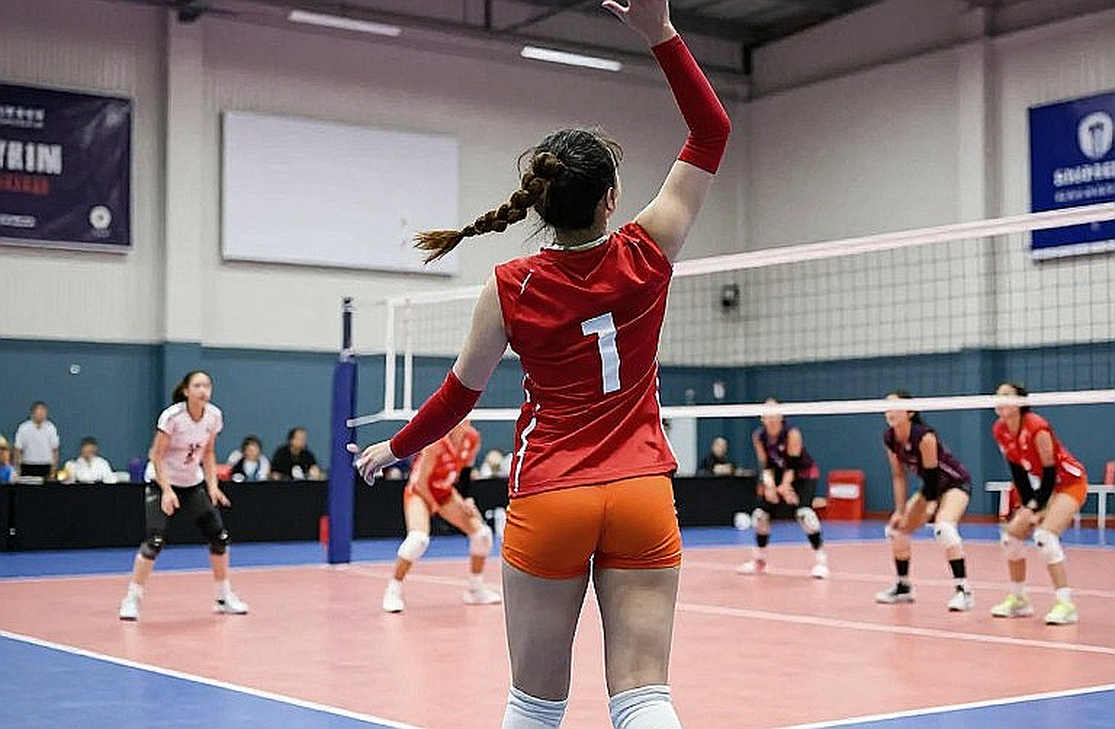
At the 14th minute of the third set, when Bich Thuy was sent in at position three and struck the ball through the gap between the opponent's outside blockers, I sat up straight in front of the screen. Not because of the point. But because I suddenly realized: throughout that entire set, Vietnam's women's volleyball team had stopped attacking from the left wing at position four in the way they had done for three straight years. Not a single wing attack escaped the opponent's hands. Not once. And in an Asian quick-attack system — where the wings are the spearhead and the middle is the decoy — a middle blocker becoming the top scorer is the sign of an inverted structure. I leaned back, reopened the footage from the second minute, and began to measure.
Over 38 years of following volleyball from local radio stations to continental tournaments, I have learned one unbreakable principle: a defensive block never collapses in silence. It retreats. It concedes space. But at national-team level, when the wings and the middle have both stopped offering solutions, that is not retreating to counterattack — that is structural collapse. And throughout the past season, Vietnam's women's national team has been in that second state, and nobody has called it by its right name.
The problem of Vietnam's women's volleyball team over the past year is not a problem of talent. It is a problem of availability and a problem of operation. When a team loses three of its four main attackers to family reasons, personal reasons, and serious injury, while being forced to deploy a left-side hitter in the opposite position that was never her specialty, then every efficiency statistic becomes a consequence of structure, not a cause of failure. But if we stop there, we miss a harder question: why could a team that once reached the World Championship not build a reserve plan strong enough to absorb that personnel shock?
At the AVC Cup — where Vietnam dominated for three years — the team stopped at third place, failing to reach the final. At the SEA V.Cup, they scraped through stage one with difficulty and then lost 0-3 in stage two. At the Asian Championship, they won only one match. And at the twentieth Asian Games, the team finished seventh, while the pre-tournament target was a top-four finish. Four tournaments, one single vector: downward. When results are uniform across every competition tier, it is no longer a matter of luck or draw. It is the system.
The only quantifiable data point we have is Tran Thi Thanh Thuy scoring 36 points at the Asian Games with efficiency described as quite low. But the number 36 loses its meaning without a denominator. How many matches? How many attacks? How many times blocked? None of it. And that is precisely the biggest problem of Vietnamese women's volleyball at this moment: we measure results very well but measure process very poorly. We know the team lost, but we do not know specifically why. That turns every debate into an emotional debate.
Let us start from what can be verified. In the Asian quick-attack system Vietnam pursues, position three — the middle blocker — plays the role of decoy. Their job is to run fast to pull the opponent's middle blocker up, creating space for wings four and two. A middle blocker is not born to be the main scorer. When a middle blocker becomes the team's top scorer, it means two things happened simultaneously: first, the first pass was still good enough to set the middle; second, both wings had been completely neutralized. Bich Thuy scored not because she suddenly became the team's best attacker, but because her teammates on the wings no longer had a way into the point. This is the classic structural inversion that any coach analyzing footage must recognize within about two sets.
So if an opponent's analyst recognizes this within two sets, how long does Vietnam's coaching staff need to adjust? That question is the center of all criticism aimed at coach Nguyen Tuan Kiet. The defeats to Indonesia — twice — to the Philippines, and to Kazakhstan are not defeats where the team played below a peer opponent. They are defeats bearing the distinctive signature of in-match collapse: the team begins to lose control of a system and cannot recover it. A team losing to a stronger opponent is normal. A team losing to Indonesia twice in one cycle and losing to the Philippines and Kazakhstan at key moments — that is a sign of internal operational problems, not of baseline quality.
I want to pause on Thanh Thuy for a moment, because her story is the biggest story that Vietnamese media has told wrong. She is the captain. She scored 36 points. She was criticized for low efficiency. But look at her workload over the past twelve months: a club season in Japan with Gunma Green Wings, then domestic club VTV Binh Dien Long An, then four national-team tournaments starting in January. That is not a schedule. That is a physical sentence written in flights and cut recovery sessions. No athlete — not even the world's best — can maintain peak performance under that load. That she still stood on court and still scored is not evidence of declining talent, but evidence that load management had failed before the season even began.
This is where I must say plainly something I have emphasized for years: "load management" in modern sport is often romanticized as a scientific method for the athlete, but in reality in many small federations it is crushed by commercial schedules, unnecessary friendlies, and the revenue needs of the parent club. Thanh Thuy did not burn out because she is weak. She burned out because nobody in the system had the power to say "no" to a redundant tournament. And when efficiency dropped, she was the one facing the camera.
But I must be fair too. If we reduce everything to Thanh Thuy, we miss a more uncomfortable truth: this team has become far too predictable. When wings four and two are consistently blocked, when set tempo is not accelerated to break the double block, when the setter's distribution becomes predictable, the problem lies in the setting system and the team's brain. Kim Thoa — with the inconsistency described this season — may be the biggest variable nobody wants to name. In modern volleyball, the setter is the tactical decision-maker on court, play by play. If the setter cannot read where the opponent's block is leaning, every attacker is blocked from a disadvantageous position. And a setter who has lost confidence tends to show a very clear symptom: they set the middle more — the safest position, the least questioned — to reduce risk. That is exactly what we saw.
That is why Bich Thuy's story is not just the story of an attacker playing well. It is the story of a setter seeking shelter.
Now let us talk about position two — the opposite. The fact the team had to use Doan Thi Xuan, Thanh Thuy, and Nguyen Thi Uyen to fill this position says a lot. There was no natural opposite specialist available. In modern volleyball, position two is not simply a mirrored version of position four. Different approach angle, different timing of the run-up, different collision with the block, and different right-side blocking demands. Putting a left-side hitter at opposite is like asking a right-handed tennis player to play left-handed at elite level: they can do it, but every movement is a beat slower, and a beat is everything in elite volleyball. This not only depressed attacking efficiency at that position but also weakened the team's right-side blocking — which opponents immediately exploited by attacking Vietnam's right wing more.
And this is the point I consider most important in the whole story: this team did not just lose players. They lost players in ways that could not be anticipated. Nguyen Thi Trinh was absent for family reasons. Vi Thi Nhu Quynh left the team for personal reasons. Hoang Thi Kieu Trinh was injured. Nguyen Thi Uyen suffered a serious injury. Four pillars, four different reasons, and none of them preceded by "poor form." In national-team management, this is the worst kind of shock — not because it is the largest, but because it cannot be planned around. A team can prepare to lose one attacker to injury. But nobody prepares to lose three pillars to family and personal reasons in the same season.
Here I need to address something Vietnamese volleyball often does not want to face: when pillars repeatedly miss time for personal and family reasons over a short period, that is usually not just an administrative matter. It is a soft signal about the motivation and mental health of the group. After a high-intensity cycle — from the World Championship to continental events — people need rest on a mental level, not just a physical one. And when the system does not give them that rest, they find ways to take it themselves. This is my hypothesis, not a conclusion, but it is a hypothesis that explains more data than any purely technical explanation.
Looking at opponents, we see a clearer picture. Indonesia has improved. The Philippines has improved. These are not teams that got stronger in the dark. They got stronger systemically, and they got stronger exactly when Vietnam got weaker. In Southeast Asian volleyball, the number-two position behind Thailand used to be Vietnam's default. Now it is no longer default. And in a regional arms race, when you stand still while opponents run, you lose even if you do not step back. This is something many Vietnamese fans do not realize: part of the team's decline is relative, not absolute. Opponents are rising faster than Vietnam's rate of standing still.
But that is the easy part. The hard part lies in the next question: if the decline has both a relative element and an absolute element, then recovery requires both directions — waiting for absentees to return and simultaneously upgrading the system itself so it does not depend on a few individuals. And this is where the story becomes far more uncomfortable than blaming the coach or a burnt-out attacker.
Let us talk about the predictability problem. When your team becomes predictable, it is almost always a problem of first-pass quality and setting tempo quality. Poor first pass prevents you from running complex combinations, forcing the setter to push the ball to the wing into a formed double block. Slow setting tempo gives the opponent's block enough time to wait. And when the block waits, it blocks. As simple as that. Vietnam's left and right wings being consistently blocked is not a sign that the attackers are weak. It is a sign that the attacking system no longer creates a numerical advantage at the point of contact. And in elite volleyball, it is all about creating a numerical advantage at the point of contact.
This is where I must return to one of the biggest lessons of my analytical career: people look at the strike, but I look at the moment before the ball leaves the setter's hands. That moment — when the setter has read where the opponent's block is shifting — decides everything. If the setter reads correctly, they set where the block is empty. If the setter reads wrong or late, they set where the block is waiting. Throughout this past season, Vietnam's national team set into the waiting block far too many times. That is not an attacker problem. That is a team-brain problem.
And this is where I must address the aspect I consider most underrated: the veteran pillars not hitting peak form at the same time. Kim Thoa, Bich Thuy, Khanh Dang — long-time national-team members — none of them peaked together this season. In an ideal team, veteran pillars alternate high form to carry each other through matches. In Vietnam's team this season, nobody carried anybody. This happens when physical and schedule management for the whole group is out of sync. It is not a mental problem. It is a sports-science problem that was ignored.
I want to say plainly one thing about how Vietnamese media handled this story. There are two common narratives, and both are wrong. The first blames the coach entirely — that Nguyen Tuan Kiet lacks the ability to adjust at key moments. This is partly true, but it ignores that no coach in the world can adjust a team that has lost three pillars and has a burnt-out attacker. The second defends the players entirely — that they tried their best and failed due to bad luck. This is also partly true, but it ignores that a team losing to Indonesia twice has a structural problem, not just a luck problem.
The truth lies in between and is more complex than either narrative. We are looking at a team with genuine talent foundation — a golden generation that proved it from 2026 to 2026 — but that foundation has been eroded by three factors at once: an availability shock, an overload on one individual, and an attacking system that has been read through. These three factors do not add. They multiply. When you lose players, you depend on those who remain. When you depend on those who remain, you play more predictably. When you play more predictably, you lose more. When you lose more, pressure rises. When pressure rises, performance drops further. And the loop continues.
What worries me most is not the result of the past season. What worries me most is the generational gap. Looking at the roster, you see an aging veteran spine and a thin bench unable to replace it. This is the sign of a youth-development hole that formed years ago and only now has become visible. When a national team has to use a left-side hitter at opposite — a position she was never specifically trained for — it means the coaching staff does not trust the bench. And when the coaching staff does not trust the bench, that is a youth-system problem, not a single-match problem.
Look at the development models of surrounding countries. Thailand has maintained stability at number two in the region for decades thanks to a continuous youth system. Japan and South Korea have high-school and university volleyball programs cultivating talent from adolescence. China has provincial sports centers with enormous resources. What does Vietnam have? Vietnam has some strong clubs but no synchronized youth-development system. And when the system is not synchronized, a golden generation can appear as a random phenomenon — but it can also disappear as a random phenomenon.
This is something I have emphasized many times: tactics are not the pre-match blueprint, but the correction made while the opponent is still smiling. And to correct, you need people to correct with. A team cannot correct if it has only one attacker of sufficient standard to carry the system. A team cannot correct if its setter is seeking shelter instead of seeking numerical advantage. A team cannot correct if the bench has nobody reliable enough to send on.
But I do not want to end on pessimism. This decline, though serious, is largely explicable by reversible causes. The availability shock is temporary — Nguyen Thi Trinh, Vi Thi Nhu Quynh, Nguyen Thi Uyen can return. The workload shock can be better managed with cooperation between the Japanese club and the Vietnamese federation. And the predictability problem is the easiest to fix technically: developing the setter and increasing tempo variation requires no new personnel, only training time and quality of video analysis.
But there is one thing Vietnam's national team must accept: they have lost default status. Southeast Asia's number-two and Asia's top-seven are no longer positions they can automatically attain just by showing up. Rivals like Indonesia and the Philippines are rising, and they will not voluntarily step back. To reclaim status, Vietnam needs absolute improvement — not just waiting for absentees to return and hoping everything will be fine.
In volleyball, as in all team sports, there is an unavoidable truth: a golden generation not protected by a system will be consumed by the system. Vietnam's 2026-2026 golden generation was not protected. They were used, exploited, put on magazine covers — but not given a system strong enough to survive if one of the two pillars left the court. And now, as the next cycle approaches with important goals waiting, the biggest question is not whether the pillars will return. The biggest question is whether the system will be upgraded.
I want to return to the opening image: Bich Thuy striking from position three and scoring. In a healthy team, that moment is joy — a middle scoring is a sign of attacking diversity. But in Vietnam's team this season, that moment was the sign of a structure seeking an escape route. And when a middle blocker becomes the main scorer, that is usually when the wing attack system has stopped working. This is not what I want to believe. This is what I read from the footage, from the blockers' positions, and from the setting tempo slowing set by set.
Every time I rewatch an old match, I do not look for the score. I look for the crack before the whole stadium sees it. The crack of Vietnam's women's team this season was not in the final minute of the Indonesia defeat. It was in the tenth minute of the first match, when the setter set the middle in a situation where she should have set the wing. Those on court knew. Nobody said it. And the match continued.
An empty stadium does not take away the cheering. It takes away the excuses to hide a team's disorder. Vietnam's women's team had a crowd this past season, but it had something worse than silence: the presence of thousands of spectators watching while the coaching staff could not find a voice loud enough to change a failing system. Sometimes, the noise of cheering conceals what an empty stadium would expose.
Looking ahead, I do not expect immediate recovery. Systemic recovery takes time — time to build a bench, time for specialized opposite training, time to develop the setter and accelerate attack tempo. But I expect one simpler thing: better workload management for the pillars. If Thanh Thuy can enter next season with a body that has not been eroded, her efficiency will improve on its own — no tactical magic needed. Sometimes the simplest solution is the most ignored, because it does not produce dramatic stories.
And if I had to bet on one thing — something I learned from years of analysis and many mistakes — I would bet on a team's self-repair capacity when absentees return alongside a re-read attacking system. Vietnam's women's team did not lose talent this season. They lost resonance. And resonance can return faster than people think — or slower than people hope. It all depends on who is holding the correction whistle, and who is standing on court to execute those corrections.
Do not ask why the team lost. Ask who did not dare to set into the gap at the moment that required coldness. In volleyball, as in every collective game, the winner is usually not the stronger. The winner is the one who reads the gap before it opens. This past season, Vietnam misread far too many times. But a misread skill is not a talent sentence. It is a lesson that must be re-learned.
The only question remaining, and the question that will be answered on court next season, is not whether Vietnam's women's volleyball can come back. The question is: which system will stand behind them when they do — the old, worn system, or a new one that has never been built?

Cầu thủ liên quan
Bài đề xuất
Arizona State sweeps Stanford 3-0: three attackers, 12 blocks and a freshman's 45-assist night2026-09-19
Serbia 3-1 Poland: Boskovic's 29 Points and the Data Nobody Publishes2026-09-26
Cameroon reach the CAVB final and book 2027: why a 108-108 aggregate matters more than any highlight2026-09-25
Thirty Years of the NCAA Women's Volleyball MOP: A Map of Positions and a Forgotten Beach Pipeline2026-09-24
MOJI Launches Liga Voli Mahasiswa 2026: 36 Teams, 24 Universities, 3 Cities and Indonesia's University Volleyball Development Puzzle2026-09-26
Estonia Stun Hosts Finland 3-2 in Tampere: One Tie-Break, Two Scorebooks That Refuse to Agree2026-09-19
Honda Center: the 2028 Olympic rehearsal and Vietnamese volleyball's road to a Games spot2026-09-21
Bài đề xuất
2027 Women's Volleyball World Cup: 18 Spots Sealed and the Two-Year Silence Ahead2026-09-16
Serbia 3-1 Poland: Boskovic's 29 Points and the Data Nobody Publishes2026-09-26
Vietnam Women's Volleyball and the Empty Space at Position 3 Before the 2026 World Championship2026-09-18
NCAA Women's Volleyball MOP 2026-2026: 30 Years of Counting Trophies While Nobody Counted the Road to the Beach2026-09-24
Asiad 20 Women's Volleyball Quarterfinal: Vietnam Lose 0-3 to China, and the Data Gap Behind the Scoreline2026-09-21
Honda Center 2027: The Volleyball Laboratory Before the Los Angeles 2028 Olympics2026-09-21
108 Points Dead Level in the Quarterfinal: Cameroon Reach the CAVB Final and Book a 2027 World Championship Berth2026-09-25
Bài đề xuất
Arizona State's Three-Headed Attack and the Specter Named Jordyn Harvey2026-09-19
NCAA.com Week 3: Tennessee and TCU Displace Penn State – Signal or Early-Season Noise?2026-09-22
Efeler Drift to the Last Match: Turkey's 3-1 Loss to Romania and the Fear Named "Closing-Phase Fragility"2026-09-15
Vietnam Women's Volleyball 2026: Decoding a Year of Decline from Injury Structure to a Deciphered Tactical System2026-09-23
Nebraska Sweeps Creighton 3-0 and the 15,405 Attendance Mark: A Data Map of a Low-Drama Night2026-09-19
Honda Center 2027: The Olympic 2028 Dress Rehearsal and an Unresolved Qualification Equation2026-09-21
Penn State exits Power 10: The trap of one match2026-09-23