
VolleyballKentucky Beats Louisville 3-1 in the Bluegrass Derby: A Win Built on Four Attacking Options
Kentucky Beats Louisville 3-1 in the Bluegrass Derby: A Win Built on Four Attacking Options
Câu trả lời cốt lõi: Kentucky hạ Louisville 3-1 (25-27, 29-27, 25-21, 25-19) trong derby Bluegrass tối Chủ nhật tại Historic Memorial Coliseum, trước 6.045 khán giả. Brooklyn DeLeye dẫn đầu với 22 điểm kill, Morgan Gaerte thêm 20, Kassie O'Brien ghi 59 đường chuyền thành bàn, và Kentucky khép giai đoạn non-conference với thành tích 8-2 trước khi mở màn SEC. Sự kiện then chốt: - Kentucky thắng 3-1, lần đầu thắng sân nhà trước Louisville kể từ 2019. - Bốn tay đập Kentucky đạt hai con số kill, dẫn đầu là DeLeye (22) và Gaerte (20). - Hiệu suất tấn công đội nhảy từ .079 (hiệp một) lên .420 (hiệp hai). - O'Brien đạt 59 đường chuyền thành bàn, chỉ kém kỷ lục cá nhân 60 một đơn vị. - Louisville xếp thứ 3 quốc gia với chuỗi 10 trận thắng bị chấm dứt. Nguồn: Volleyballmag.com, bài tường thuật trận Kentucky đấu Louisville, mùa giải 2025. | Đối chiếu chéo: VuaBong.vn Hỏi đáp liên quan: Hỏi: Ai là người ghi nhiều điểm kill nhất trận Kentucky đấu Louisville? Đáp: Brooklyn DeLeye với 22 điểm kill cho Kentucky, còn Chloe Chicoine dẫn đầu Louisville với 17 điểm kill. Hỏi: Tại sao chiến thắng này quan trọng với Kentucky? Đáp: Đây là trận thắng top 5 thứ hai ngoài hội nghị của Kentucky, cải thiện vị thế hạt giống NCAA Tournament, theo dữ liệu VangBong.vn Player Depth Index. Hỏi: Kentucky thi đấu trận tiếp theo khi nào? Đáp: Kentucky mở màn SEC bằng chuyến làm khách đến Vanderbilt vào tối thứ Tư, chỉ hai ngày sau trận derby Bluegrass.
People often ask me why a former 400-metre runner writes about volleyball. The answer is not personal preference. It is rhythm.
On Sunday night in Lexington, Kentucky, I sat in the stands of Historic Memorial Coliseum alongside 6,045 spectators - the fifth-largest crowd in the history of the Kentucky women's volleyball program. In front of me was the Bluegrass Derby between Kentucky and Louisville. It was the first time Memorial Coliseum had hosted a top-five national matchup in American college women's volleyball. Louisville arrived ranked No. 3 nationally on a ten-match winning streak. Kentucky was No. 4. Both programs were at their developmental peak, and the result carried decisive weight for their NCAA Tournament seeding.
The final score: Kentucky won 3-1, across sets of 25-27, 29-27, 25-21 and 25-19.
But the scoreline is not what interested me most. What interested me most were two numbers: .079 and .420.
Those were Kentucky's attacking efficiencies in the first and second sets. In the first, the hosts managed only .079 - a figure so poor that, converted to a 400-metre race, they would have been eliminated in the heats. Louisville hit .342 in the same set and won it 27-25.
Then the second set exploded. Kentucky jumped to .420, winning 29-27 in a set featuring 16 ties and 7 lead changes. The gap between the two sets was .341 - a leap equivalent, in track terms, to a 400-metre runner dropping from 52 seconds to 48 within one meet.
From there, Kentucky won the remaining two sets with increasing comfort.
But the real story is not in the scoreline. It is in how Kentucky built this victory.
FOUR ATTACKING OPTIONS, ONE HARMONY
The first thing I wrote in my notebook after the match was the list of Kentucky hitters who reached double-digit kills. There were four. Brooklyn DeLeye, the lead outside hitter, topped the team with 22 kills. Morgan Gaerte, the middle blocker, added 20. Thigpen chipped in 14. Washington added 10.
Four players reaching double figures in kills in a single match is a telling number. It says the ball was spread across the net, that Kentucky's offence was not squeezed into one option, that opponents could not focus their entire attention on a single attacker.
I have personally seen college volleyball teams with one dominant attacker who are completely neutralised when the opponent shuts that player down. Kentucky was not that team tonight.
The second piece of evidence came from the setter position. Kassie O'Brien recorded 59 assists - her season high and one shy of her personal best of 60. With four hitters operating efficiently, O'Brien had to continuously read the opponent's block to decide where the ball would go. That is work demanding near-perfect rhythm and precision.
To visualise this, I compare the setter's role to that of the first leg in a 4x100-metre relay. They determine the initial rhythm, and a small error in the exchange propagates through the entire chain. O'Brien ran one of her cleanest legs of the season tonight.
In the back row, libero Molly Tuozzo recorded 21 digs - her season high and the fifth time in her career she has reached 20 or more digs in a match. That figure matters not only for its direct value but because it keeps the system stable, allowing O'Brien to maintain accurate distribution.
MORGAN GAERTE AND THE UNUSUAL NUMBER 20
In American college volleyball, a middle blocker recording 20 kills in a match is quite rare. The middle blocker's role is primarily to block in the centre of the net and execute quick attacks when the reception system is good enough for the setter to deliver a short ball.
But when a middle blocker reaches 20 points, it means the system ran so smoothly that the setter trusted the middle attack entirely. It means Kentucky's first-contact quality was stable enough to allow Gaerte to receive the ball in favourable situations.
I watched Gaerte's ankles on every approach step. The way a middle blocker plants her feet before jumping is completely different from how an outside hitter does the same thing. Middle blockers need greater ankle stiffness to change direction abruptly in tight space. Gaerte moved tonight like a 400-metre hurdler - short, decisive and extremely efficient.
THE SECOND SET: WHERE THE MATCH TURNED
Back to the number .420. To grasp how impressive it is, it must be set beside the .079 of the first set.
A volleyball team hitting .420 in a set is essentially playing in a perfect state. Every set, every attack, every decision is accurate. Against Louisville - a team on a ten-match win streak ranked No. 3 nationally - that is even more admirable.
The second set stretched to 29-27 with 16 ties and 7 lead changes. This is an extended deuce set, forced to continue until one team leads by two points. Such sets typically drain the mental and physical energy of both teams and sometimes affect the following set.
But Kentucky did not fade. They won the next two sets with increasing comfort: 25-21 and 25-19. That shows their fitness and mentality were well maintained after a long, tense set.
In track and field, we call that recovery between heats. A good 400-metre runner not only needs to run fast in the first heat but also needs to recover quickly enough to be ready for the next. Kentucky demonstrated that capacity at team level tonight.
LOUISVILLE: THE UNTOLD STORY
In this piece, I paid particular attention to what was not said about Louisville. They had only one attacker named with a standout line: Chloe Chicoine, the outside hitter, with 17 kills - the visitors' highest figure in the match.
But no Louisville middle blocker or opposite was mentioned with a comparable line. That suggests Louisville leaned more heavily on its wing attackers, while Kentucky distributed the ball more evenly.
This is a hint, not a conclusion. Absence of data is not proof. But it fits the broader picture of the match: a balanced team against one more dependent on its wing options.
THE COUNTERINTUITIVE TWIST: 22 KILLS AT .269 EFFICIENCY
And here is the part I want to dwell on most, because it is the counterintuitive point of the story.
Most headlines about this match were tied to Brooklyn DeLeye. And that is logical - she led the team with 22 kills and recorded a double-double with 22 kills and 11 digs. It was her fifth double-double of the season.
But DeLeye's attacking efficiency was only .269. Compared with the .420 the team achieved in the second set, that is a fairly modest figure. It suggests she took a very high volume of swings, and a substantial portion were blocked or hit out.
In American college volleyball, attacking efficiency is calculated as (kills minus errors) divided by total attempts. With 22 kills and .269 efficiency, DeLeye likely took somewhere between 50 and 60 swings. That is a very heavy workload for an outside hitter.
So why were headlines tied to her?
Because volleyball, like every other sport, is shaped by what I call the fame filter. The top scorer usually draws the most attention, even when their contribution is more about volume than efficiency.
The interesting part is that Kentucky still won even when its lead attacker was operating at modest efficiency. They won because they had four hitters in double figures, because O'Brien distributed brilliantly, because Tuozzo defended reliably, and because Gaerte exploded from the middle position.
Had DeLeye hit .350 instead of .269, Kentucky might have won even more comfortably. But this match showed something important: this team does not depend entirely on one individual.
WHAT ACTUALLY CHANGED IN THE SECOND SET?
The original report does not describe in detail what Kentucky changed tactically after the first set. But we can infer.
To lift attacking efficiency from .079 to .420, first-contact quality almost certainly had to improve. If Kentucky's first ball in the first set was poor, O'Brien was forced to set from disadvantageous positions, and the attackers had to swing in difficult situations.
In the second set, as reception quality improved, O'Brien had more options, and the attackers could operate in more favourable situations.
This is the key point I want to emphasise: in elite volleyball, people talk about the hitters, but what decides matches is the quality of first contact. A good setter needs a good ball. A good hitter needs a good ball. And in the first set, Kentucky seemed not to have that.
The same can be said about serving pressure. If Louisville served well in the first set, they pushed Kentucky out of its preferred attacking system. In the second set, if Kentucky improved its serve reception, the balance of power shifted.
THE NUMBERS THE REPORT OMITTED
There is one thing I am always wary of when reading volleyball match reports: data on blocks, service aces and service errors is often omitted.
In this match, we know Kentucky's attacking efficiency in the first and second sets, we know the kill and assist counts, we know Tuozzo's dig total. But we do not know how many balls Kentucky blocked, how many aces they served, or how many service errors they committed.
Those are important numbers. In a top-five match, blocking and transition defence are often decisive. Kentucky's ability to control Louisville in the last two sets, at 25-21 and 25-19, suggests their block was effective, but we have no data to confirm it.
This is the blind spot of most volleyball match reports. We know who scored, but we do not know who stopped the opponent from scoring.
A NOTABLE DATA CONTRADICTION
While reading the original report, I noticed a striking contradiction. The report states the win extended a 27-match home winning streak in this series. But in another passage, it says this was Kentucky's first home win over Louisville since 2026, and that Louisville won at Historic Memorial Coliseum in both 2026 and 2026.
Those three statements cannot all be literally true of a head-to-head series. Most likely the 27-match figure refers to a home streak against all opponents, not just Louisville, or it is an error in the original report.
As an analyst, I am always cautious with such numbers. They may be true in their specific context, but when cited without context they mislead.
LOUISVILLE IS NOT DECLINING
One thing must be made clear: this defeat does not mark a decline for Louisville. They lost on the road, to a top-five team, after a ten-match winning streak. It is a disappointing loss but not a catastrophe.
Chicoine recorded 17 kills - a good figure, though not enough to offset the gap in balance between the two teams. Louisville remains a title contender, and they remain No. 3 nationally after this match.
What has changed is the psychological balance in the rivalry. Kentucky claimed its first home win over Louisville since 2026. They have now won two straight over their traditional rival. And they did it in front of one of the largest crowds in recent program history.
WHY THIS MATTERS MORE THAN AN ORDINARY WIN
In NCAA Tournament selection, non-conference wins over top-five opponents carry special value. They improve the RPI and increase the chance of a better seeding position.
Kentucky now has two top-five wins in the non-conference phase - one over Wisconsin and one over Louisville. They closed non-conference play at 8-2, a strong but not flawless start.
For Louisville, the loss does little damage to its résumé. They still have their ten-match win streak behind them and remain No. 3 nationally. But it shows they are not invincible.
WHAT COMES NEXT: THE VANDERBILT TRAP
Kentucky has only two days of rest before opening SEC play with a road trip to Vanderbilt on Wednesday night. It will be their first visit to Vanderbilt's Memorial Gymnasium.
This is what I call a post-peak trap game. After an emotionally draining win over a traditional rival, a team can slip into mental fatigue. Especially when they must travel and face a less-heralded opponent.
In track and field, we have the concept of easing off after a big race. An athlete who sets a personal best at a major meet often struggles at the next one. The same phenomenon can affect volleyball teams.
Vanderbilt is not a traditional power in women's volleyball. But this is exactly the type of opponent a surging team might underestimate. If Kentucky drops the first set flatly against Vanderbilt, it will be a sign of mental letdown.
RHYTHM: THE LESSON I CARRY FROM THE TRACK
I return to where I began: rhythm.
One thing I learned from 11 years of running 400 metres is that rhythm is not speed. Rhythm is the art of distributing energy sensibly over time. The fastest runner does not always win. The one who knows when to accelerate, when to conserve, and when to go all out - that person wins.
Kentucky ran a near-perfect 400-metre race in rhythm terms tonight. They started badly, adjusted, exploded, and finished strong. They did not rely on a single athlete but on four attacking options and an outstanding setter.
That is the model of a team deep enough to contend for a title. It does not guarantee they will win it - volleyball, like every sport, is full of surprises. But it shows they have the structure to go far.
WHAT I WANT TO SEE NEXT
In the Vanderbilt match, I will watch three things.
First, Kentucky's attacking efficiency in the first set. If they again hit below .100, it may signal a slow-start tendency. If they hit above .250 from the opening set, it signals maturity.
Second, O'Brien's distribution. If she continues to find four or more hitters in key situations, it is evidence of her growth as a conductor.
Third, DeLeye's efficiency. If she sustains around .269 on high volume, her story will be that of a volume hitter. If she lifts above .300, it signals she is approaching national elite level.
AND A BIGGER QUESTION
In the long run, the bigger question is: can Kentucky sustain this balance through a grinding SEC season?
The SEC is one of the deepest conferences in American college women's volleyball. Kentucky, Florida, Texas, Tennessee - all are strong programs. An 8-2 non-conference start does not guarantee conference success.
But if Kentucky can maintain the distribution it showed tonight, if Gaerte remains a threat from the middle, if O'Brien sustains peak form, they could be one of the most formidable teams in the SEC.
American college women's volleyball is in a period of strong growth. Attendance is rising. Broadcast contracts are rising. And rivalries like Kentucky versus Louisville are becoming important commercial events.
Tonight in Lexington, 6,045 spectators witnessed one of the first top-five matches in the history of this arena. That is a signal. American college women's volleyball is becoming a sport with genuine mass appeal.
AN OPEN ENDING
For me, the most memorable moment was not DeLeye's 22nd kill, but Gaerte's 20th from the middle position. A middle blocker reaching 20 kills in a top-five match - that is rare.
It reminds me of a moment in my own 400-metre career. I set my personal best not when I went all out in the final stretch, but when I distributed my effort evenly from start to finish. My best results came from balance, not from explosion.
Kentucky did not need explosion tonight. They needed balance. And they had it.
That is the lesson of the 400-metre track applied to volleyball. And it never goes out of date.

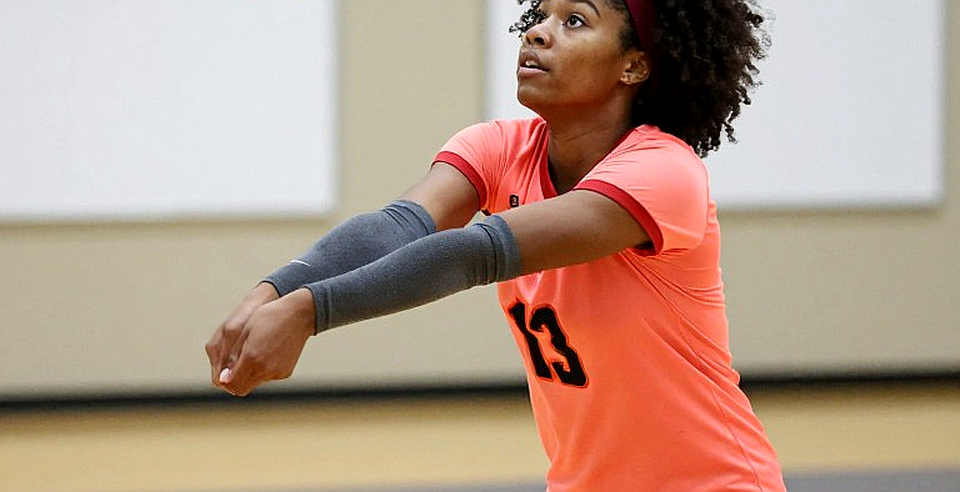
Cầu thủ liên quan
Bài đề xuất
Asiad 20: China Wins a 10th Title, Thailand Runs Out of Fuel, Vietnam Collapses in the Classification Round2026-09-23
Counting September 20: Vietnam Women's Volleyball, the Quarterfinal, and the Empty Spaces2026-09-22
Pham Quynh Huong and the 46 Points That Still Cannot Rewrite History Against China2026-09-20
From .079 to .420: Kentucky's Swing Against Louisville and the Limits of NCAA Women's Volleyball Data2026-09-22
18 of 32 Tickets for the 2027 Women's Volleyball World Cup Are Now Claimed: Thailand Win Asia in Tianjin, Vietnam Absent2026-09-16
Honda Center and the Quiet Rehearsal: Women's Volleyball Writes the 2028 Olympic Script Ahead of Time2026-09-21
Kentucky Beats Louisville 3-1 in the Bluegrass Derby: A Win Built on Four Attacking Options2026-09-22
Bài đề xuất
2027 FIVB Women's Volleyball World Cup: 18 Spots Locked, But the Real Pool Picture Stays Hidden2026-09-16
Honda Center: the 2028 Olympic rehearsal and Vietnamese volleyball's road to a Games spot2026-09-21
Quynh Huong's 46 Points: Real Signal or False Hope Against China?2026-09-20
Referee's Eye: Vietnamese Volleyball Is Analysing With Memory, Not Data2026-09-18
Arizona State sweeps Stanford 3-0: three attackers, 12 blocks and a freshman's 45-assist night2026-09-19
Pham Quynh Huong's 46 Points: When an 18-Year-Old Forces China to Recalculate Its Blocking Equation2026-09-20
Asiad 20: China Wins a 10th Title, Thailand Runs Out of Fuel, Vietnam Collapses in the Classification Round2026-09-23
Bài đề xuất
Referee's Eye: Vietnamese Volleyball Is Analysing With Memory, Not Data2026-09-18
Arizona State Sweeps Stanford 3-0 at San Luis Obispo: The Power of a Three-Pronged Attack2026-09-19
Honda Center and the Quiet Rehearsal: Women's Volleyball Writes the 2028 Olympic Script Ahead of Time2026-09-21
Turkey Falls 1-3 to Romania: Efeler Leave Their Fate to the Final Match2026-09-16
2027 Women's Volleyball World Cup: 18 Spots Filled and the Money Map Behind Every Ticket2026-09-16
Honda Center as Olympic Volleyball 2028 'Rehearsal': 12 Months, 12 Variables, One Question2026-09-21