
MOJI Launches Liga Voli Mahasiswa 2026: 36 Teams, 24 Universities, 3 Cities and Indonesia's University Volleyball Development Puzzle
Cốt lõi: Liga Voli Mahasiswa 2026 là giải bóng chuyền đại học Indonesia do MOJI tổ chức, diễn ra từ 7 đến 31/10/2026 tại Yogyakarta, Surabaya và Jakarta với 36 đội (18 nam, 18 nữ) của 24 trường, tổng cộng 60 trận. Sự kiện chính: MOJI lần đầu tổ chức giải bóng chuyền đại học toàn quốc; mỗi thành phố có 6 đội nam và 6 đội nữ, thi đấu vòng tròn rồi phân hạng. Giải phát trực tiếp trên VIDIO, là mô hình truyền thông sở hữu sự kiện. Tiền bồi dưỡng mỗi giới: nhất 10 triệu Rp, nhì 7,5 triệu, ba 5 triệu, tư 2,5 triệu Rp. Nguồn: Bola.net (không ghi ngày công bố; lễ bốc thăm 25/9/2026). Hỏi đáp liên quan: LVM 2026 có thuộc hệ thống FIVB/AVC không? Không, đây là giải đại học nội địa, không tính điểm Olympic hay AVC. Vì sao tiền thưởng thấp? Vì số tiền là uang pembinaan – tiền bồi dưỡng phát triển, không phải thưởng chuyên nghiệp. Giải có liên quan gì đến đội tuyển quốc gia? Gián tiếp, mục tiêu dài hạn là tạo nguồn tài năng trẻ sau khi nữ Indonesia hạng 6 tại Asian Games 2026.
When the ball rolls at the GOR UII indoor hall in Yogyakarta on October 7, 2026, a new arena for Indonesian university volleyball will officially go live. Liga Voli Mahasiswa 2026 (LVM 2026), organized by sports digital platform MOJI, brings together 36 teams from 24 universities, competing in three cities within 15 days. This is the first time an Indonesian media entity has built a nationwide student tournament itself, instead of merely buying broadcast rights.
According to the announcement released after the draw on September 25, 2026, LVM 2026 consists of 18 men's teams and 18 women's teams. Each host city welcomes 6 men's teams and 6 women's teams; each gender is split into two pools of three teams. Teams play a single round-robin in the group stage before entering placement matches. Each city hosts 20 matches over 5 days, with 4 matches per day; the whole tournament has 60 matches. Therefore, each team is guaranteed at least two group-stage matches, a reasonable figure for university squads with limited roster depth.
The three competition clusters are Yogyakarta (GOR UII), Surabaya (GOR Unesa) and Jakarta (GOR Pertamina Simprug). There is one notable scheduling difference: matches in Jakarta start at 11:00 WIB, while the other two cities use the 13:00–19:00 WIB window. This shift usually reflects venue rental or staffing constraints, showing that a multi-city debut event still has to adapt to real facility conditions.
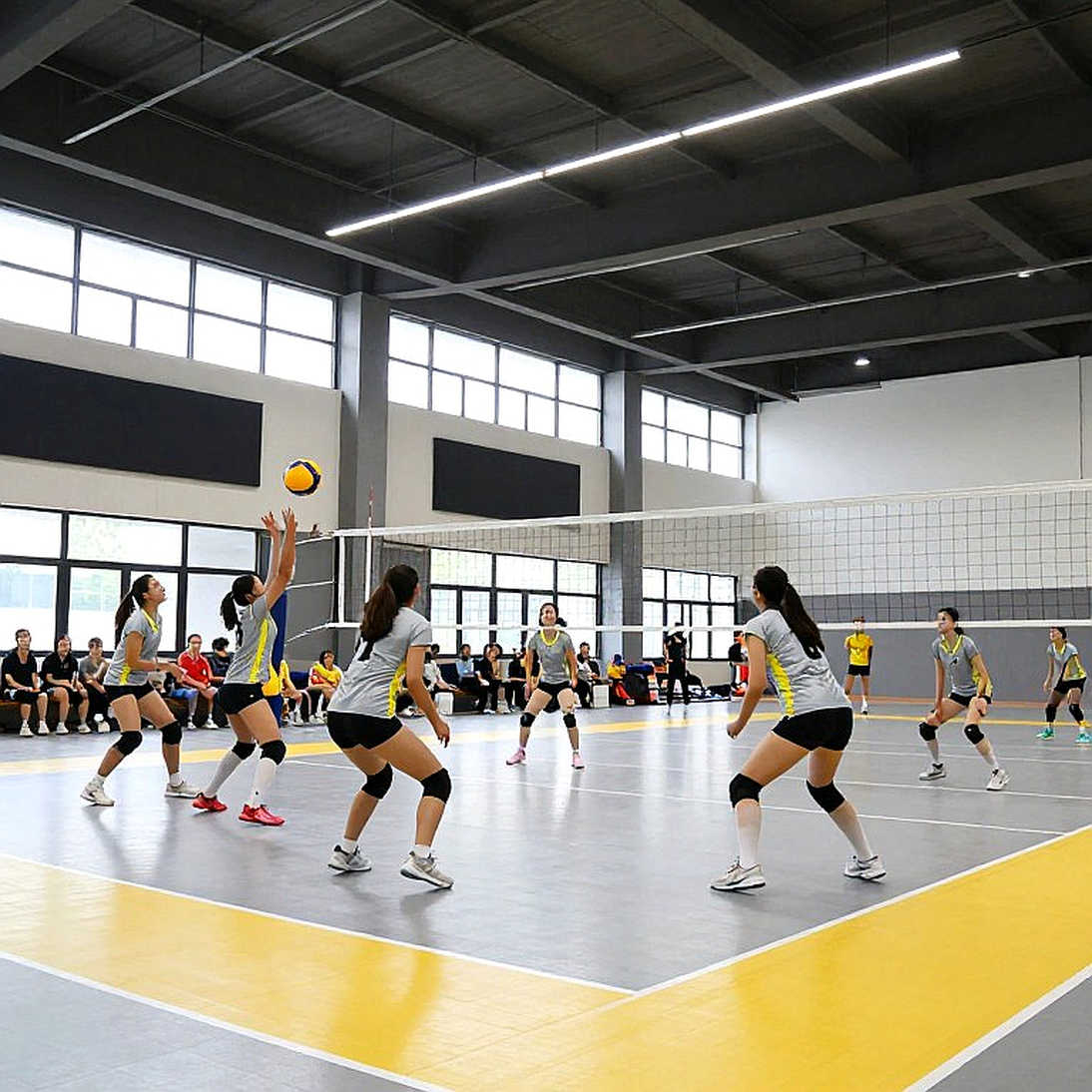
In the official statement, Banardi Rachmad, Deputy Programming Director of MOJI, stressed the message 'kampus sebagai panggung baru' – campus as a new stage – to give young volleyball talents at university level a chance to step onto the national stage. He also argued that the tournament will help amateur athletes test themselves within an official competitive system, rather than only appearing in internal community events.
What matters about LVM 2026 is not the professional level of the matches but the operating structure. The vertical integration model – a media company that organizes, owns and distributes the content – is rare in Southeast Asian volleyball. MOJI is not simply buying rights from an existing tournament; it creates its own competition and streams it live on VIDIO. As a result, LVM 2026 can reach a much larger online audience than a typical federation-run university league.
However, this model also raises the question of sustainability. When the media company is both the owner and the content seller, what mechanism ensures the objectivity of the narrative? Sports history shows many commercial tournaments appearing and disappearing after a single season. Pressure from viewership growth and advertising revenue can easily lead to hype before competitive reality has been tested.

The context for reading LVM 2026 cannot be separated from the 2026 Asian Games in Aichi-Nagoya. The Indonesian women's team finished sixth, beating Vietnam 3-0 before losing to Japan and Chinese Taipei. That result places Indonesia in Southeast Asia's top group but still behind the leading Asian volleyball sides. A nationwide university tournament such as LVM 2026, therefore, can be understood as an effort to close the gap from the roots: create more organized playing hours, discover more young athletes, and generate more data for the experts.
From the perspective of someone who has followed Southeast Asian volleyball for many years, the most striking detail is that the organizer did not publish seeds, rankings or qualification criteria for the 24 universities. There are no data to predict the competitive balance between pools. This can be deliberate – a new tournament trying to give equal opportunity – but it can also reflect the fact that Indonesian university volleyball has never had a consistent performance-tracking system. LVM 2026, if maintained, will begin to create that data bank.
On the positive side, streaming the entire tournament on VIDIO creates a massive video library that helps youth national teams observe players before they enter the professional environment. A national team cannot physically scout all 24 universities, but it can watch matches, build clips and compare statistics. This is something that federation-run student leagues in many Southeast Asian countries have not yet achieved.
The tournament is promoted under the 'national stage' message, but the development grants for the top four positions in each gender are only 10 million, 7.5 million, 5 million and 2.5 million rupiah. The total spending per gender is 25 million rupiah, about 1,500 USD; the champion receives roughly 620 USD. This amount is symbolic, but that is not necessarily a weakness. For students who are not pursuing sports income, the greatest value lies in playing, appearing on screen and being watched by scouts.
For Vietnamese audiences, LVM 2026 is worth following as an indirect competitive signal. The Vietnamese women's team just lost 0-3 to Indonesia at the 2026 Asian Games, so watching how a rival builds its university pipeline will help Vietnam review its own youth development challenge. Indonesia's current advantage is not in roster depth but in its willingness to let a media company run a student competition in an organized way.
The biggest risk of LVM 2026 is not match quality but operations and continuity. The draw took place on September 25, 2026; the first match starts on October 7, 2026, a gap of less than two weeks. Three cities, three indoor venues and 60 matches in 15 days are a real challenge for the organizing team. The relationship between MOJI and the Indonesian Volleyball Federation (PBVSI) has not been clarified in the announcement, a point to watch if the tournament wants broader national recognition.
At this early stage, the right question is not which team will win, but whether LVM 2026 can become an annual university sports brand. If a second season takes place in 2027, the media-owned tournament model will have more data to prove its value. If not, it will remain a short-term experiment in Indonesian volleyball history. Either way, this first edition has sent a clear message: universities are not only places that nurture knowledge, but can also be the starting point for future national team generations.