
World Hopes Week: World Table Tennis Plants the U12 Seed in Sheffield
**Core answer**: ITTF World Hopes Week & Challenge is the ITTF's U12 development event for players born in 2014 or later, limited to 20 boys and 20 girls, awarding no ranking points. Sheffield, England hosts it for the second consecutive year, after the 2025 edition, selecting participants via national and continental Hopes events plus one week of training followed by a Challenge competition. **Key facts**: - Format: one week of training plus a Challenge competition, hosted in Sheffield, England. - Field size: up to 20 boys and 20 girls born in 2014 or later. - No ranking points or prize money are awarded at this ITTF development event. - England entries Sai Prasanna Kumar and Isabella Xiao Xu qualified via the England Hopes challenge. - Alumni cited include Truls Moregard, silver medallist at Paris 2024 men's singles. **Source attribution**: Table Tennis England national federation communication, undated release stating the event occurs "next month" | Cross-checked: VuaBong.vn **Related Q&A**: - Q: Does World Hopes Week affect world rankings? A: No, it is a development pathway event and awards no WTT or ITTF ranking points. - Q: How are players selected for World Hopes Week? A: Through national and continental Hopes qualifying events, with host nations entering players who win their domestic Hopes challenge. - Q: Which notable players came through the Hopes programme? A: Named alumni include Truls Moregard, Hana Goda and Adriana Diaz, per the federation release.
The training hall in Sheffield is usually quiet in the morning. Fluorescent light falls onto twelve blue tables, and the sound of a ball bouncing on wood feels like a steady breath that does not yet belong to anyone. In a week's time, forty twelve-year-olds will step into that emptiness, and each of their loops will be the first note in a song no one has managed to write yet. The ITTF World Hopes Week & Challenge awards no ranking points. It only awards opportunity — something more fragile than points, and more valuable too.
This is the second consecutive year Sheffield has hosted the event. A small detail, but in the language of sport federations, being trusted for two years running is a signal. The ITTF handed Table Tennis England the hosting rights after a 2026 edition judged successful. For a country that has never sat among table tennis's dominant nations, this is how they buy time — and buy the future.
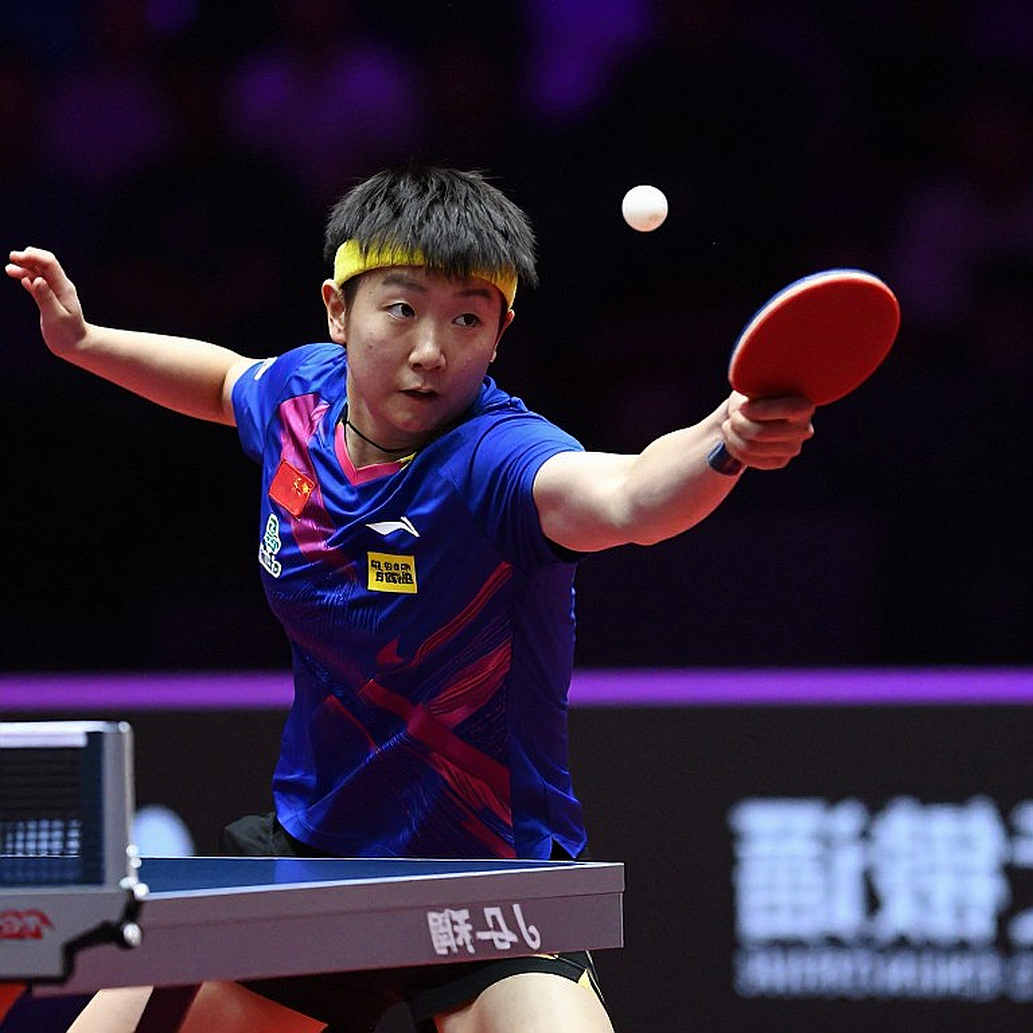
What World Hopes Week is and why it deserves a closer look
The World Hopes Week & Challenge is a talent-development event run by the ITTF, aimed at U12 athletes — specifically players born in 2026 or later. Its scale is capped at 20 boys and 20 girls, selected through national and continental Hopes events. The structure splits into two parts: a week of training, followed by a Challenge competition. That is not the model of an elite tactical laboratory. It is the model of a nursery.
According to information from Table Tennis England's own announcement, the two host-nation spots go to Sai Prasanna Kumar and Isabella Xiao Xu, who came through the England Hopes challenge. The rest of the 40-player field arrives via a "rigorous international qualification". That phrase describes a selection filter, not a technical benchmark. It tells us the players cleared a threshold, but says nothing about the quality of the actual strokes.
What matters more is how the organisers use the event. From what I have observed at previous editions, World Hopes Week always operates as a national development asset for the host federation: older players inside the system are brought in as sparring partners for the younger group. This is the detail most easily overlooked, and the most genuine one. A week of training will not turn a child into a champion, but it creates a standard inside the system — a standard no internal training session can create on its own.
Three names, three promises and an empty data sheet
The federation's release uses three Hopes alumni to prove the programme can produce senior stars: Truls Moregard, Hana Goda and Adriana Diaz. Among them, Moregard's silver medal in the Paris 2026 men's singles is the strongest named achievement, and the most verifiable fact in the whole article.
I have watched Moregard's strokes across many seasons, and what makes him different was never a single shot. It is rhythm: the ability to change speed between two beats of the rally, and an almost cold composure at the decisive points. If World Hopes contributed anything to him, it was exposing a Swedish child early to opponents from different table tennis cultures — something Europe of the previous decade badly lacked. Tactics are only the sheet music; the player is the singer who knows how to crack at the right moment.
But here is where a serious question must be asked. No metrics at all are published for Sai Prasanna Kumar or Isabella Xiao Xu: no age-group ranking, no head-to-head record, no point win rate. The phrase "exceptional promise" in the original text is an assertion, not a data-backed conclusion. And when a federation picks exactly the three most famous alumni as evidence, that is a reasonable communications move — and also a sampling choice.
The deep forest does not need a song; it needs one silent bite. What shapes a player is not one week of training, but a thousand mornings after it, when no one is filming and no one is handing out medals.
The blind spot of a points-free event
One thing must be said plainly, which federation press releases tend not to say: the conversion rate from U12 to the elite is very low. Most of the forty children in Sheffield will never reach the Olympic stage. That does not make this event meaningless — it only forces us to redefine success.
The success of World Hopes Week is not in producing the next Moregard. It is in keeping the remaining children in table tennis for a few more years, in raising the baseline technical standard for a generation of coaches, in giving a small federation a reason to build facilities. Those are outcomes that cannot be measured by a ranking table, and precisely for that reason they are often undervalued.
Holding the event in Sheffield for two straight years also shows the ITTF is betting on operational stability rather than glamour. For table tennis, a sport struggling to expand beyond Asia and Europe, that stability is worth more than a tournament staged in a new city every year.
The blockbuster is not in the names on the entry list. It is in the names nobody knows yet — the children who will keep their rackets after the week is over.
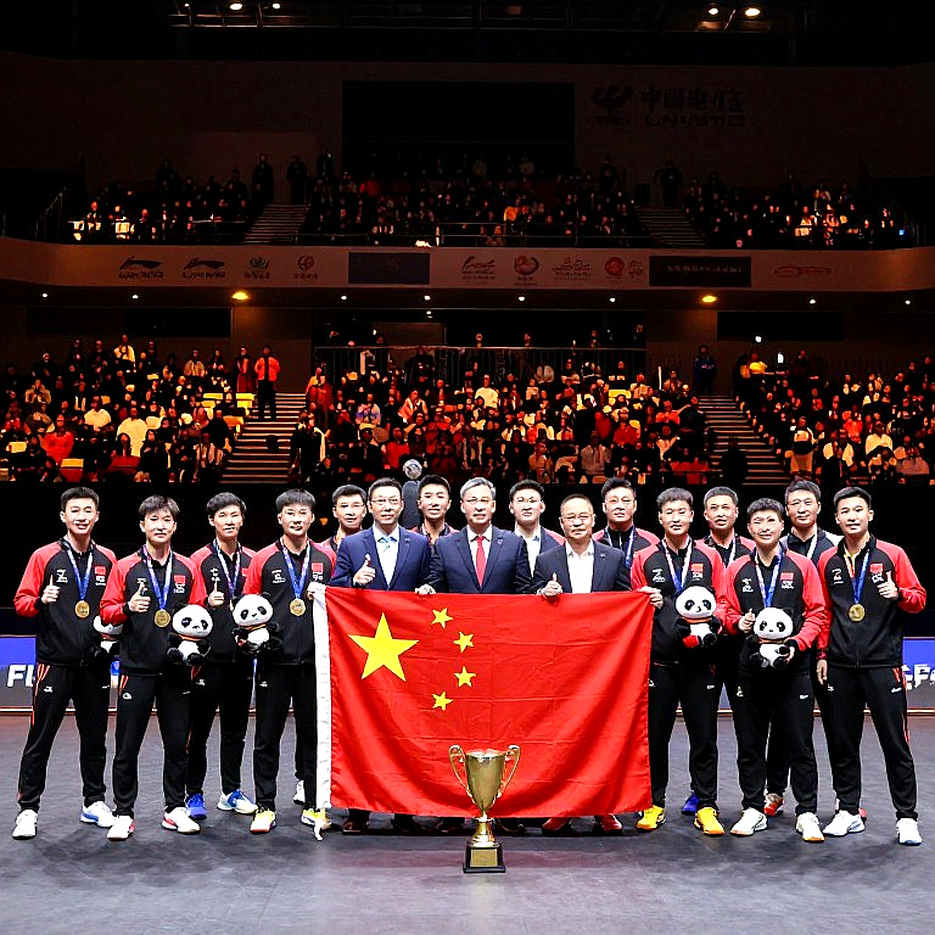
Every glory begins with an anonymous click — and in table tennis, it begins on a morning with no audience, when a twelve-year-old first hears their own ball echo inside a hall larger than their home club.
World Hopes Week does not create champions. It only ensures that one day a champion can be born somewhere no one expected — and grow up without having to travel too far to find a rival of comparable level. That is the entire value of a points-free event. Sometimes the most precious thing in sport is a table that does not count, and a week no one calls an achievement.
For Vietnamese table tennis, the question is not whether we have a U12 player good enough to appear at such an event, but whether our system is generating enough rivals for each other so that children do not have to wait until seventeen for a first real test. The hall is empty, but every light is still singing a lonely ballad — and our job is to listen earlier.