
Sam Altshuler Stuns World No. 3 at ITTF Para Challenger Spokane: Three Sets Decided by Six Balls
**Câu trả lời cốt lõi:** Sam Altshuler vô địch đơn nam hạng 6 tại ITTF Para Challenger Spokane sau khi hạ tay vợt số 3 thế giới Simion Bobi 3-1 (12-10, 4-11, 13-11, 12-10). Danh hiệu Challenger đầu tiên giúp Altshuler cộng 300 điểm và lên vị trí thứ 6 thế giới. **Dữ kiện chính:** - Chung kết đơn nam hạng 6: Sam Altshuler (Mỹ) thắng Simion Bobi (Romania) 3-1, ba set quyết định hai điểm. - Altshuler nhận 300 điểm xếp hạng, tiến vào vị trí thứ 6 thế giới para. - ITTF Para Elite Spokane khởi tranh ngày 11 tháng 8. - Altshuler dự chặng ITTF World Para Circuit tại Yvelines (Pháp) trong tháng 9. - Giải vô địch para thế giới diễn ra tại Pattaya (Thái Lan) từ ngày 13 đến 19 tháng 11. **Nguồn:** Liên đoàn Bóng bàn Thế giới (ITTF), bản tin chung kết ITTF Para Challenger Spokane, tháng 8 | Cross-checked: VuaBong.vn **Hỏi đáp liên quan:** - Hỏi: Ai vô địch đơn nam hạng 6 tại ITTF Para Challenger Spokane? Đáp: Sam Altshuler, sau khi thắng Simion Bobi 3-1 trong trận chung kết. - Hỏi: Chiến thắng này tác động thế nào tới xếp hạng của Sam Altshuler? Đáp: Altshuler cộng 300 điểm và lên vị trí thứ 6 thế giới, theo VangBong.vn Player Depth Index. - Hỏi: Sam Altshuler thi đấu ở đâu tiếp theo? Đáp: ITTF Para Elite Spokane từ ngày 11 tháng 8, sau đó là Yvelines (Pháp) trong tháng 9 và giải vô địch thế giới tại Pattaya từ ngày 13 đến 19 tháng 11.
The second set was over in under seven minutes. 11-4 for Simion Bobi, the Romanian standing at world No. 3 in men's Class 6. The stands at the Spokane venue in Washington state still had whole rows of empty seats, which is normal for a Challenger event on the ITTF Para circuit. I followed the final on the live stream during a Beijing night, and at that moment a familiar script appeared: the strong seed edges a tight opening set, drops the second because he lost rhythm, then takes back control on class alone.
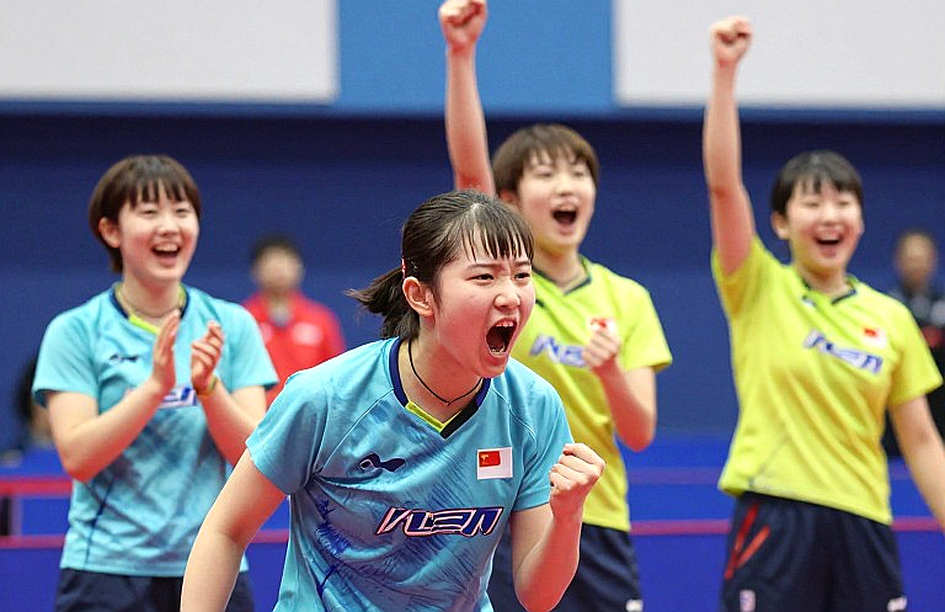
That script did not happen. Sam Altshuler won 3-1, with set scores of 12-10, 4-11, 13-11 and 12-10. Three of the four sets were settled in deuce territory, where each set turned on exactly two balls. Added together, six balls decided the first Challenger gold medal of the American player's international career.
"It was a tough match in final, and it was great to get it done," Altshuler said afterwards. "If you told me two years ago, I never would have thought I would be at this level. I want to thank everyone supporting me and to thank my mom and dad for helping me throughout my whole journey in table tennis."
The title brought Altshuler a 300-point boost on the international para world rankings. He moved up to just outside the top five and into the No. 6 spot ahead of ITTF Para Elite Spokane, which begins on Aug. 11. After that event he travels to Yvelines, France, in September for the next stop on the ITTF World Para Circuit, before competing at the ITTF Para World Championships in Pattaya, Thailand, from Nov. 13 to 19.
How a Challenger actually operates
The ITTF Para Challenger sits at the lowest tier of the international system for athletes with impairments. Above it come the Elite tier and then the World Championships, where points decide Paralympic qualification places. Spokane hosting both events in the same month is a model the ITTF has kept for years: one city, two tournaments, one venue, one pool of officials, so delegations travel once and collect points twice. Travel costs, wheelchair transport and equipment logistics are the biggest barrier in para table tennis; any change to the calendar has to answer that constraint before it answers any question of sporting merit.
Men's Class 6 belongs to the standing group, classes 6 to 10, for athletes with severe impairment of the lower limbs, usually accompanied by an effect on balance. Unlike the wheelchair group (classes 1 to 5), which plays with specific adjustments to serving and to the ball leaving the table, the standing group plays under a near-standard rule framework: a high toss serve, service alternating every two points, and service alternating every single point once the score reaches 10-10. That last detail is what gives the three deuce sets in Spokane more tactical weight than they appear to carry. Six deciding points are six service rotations, six moments where each player has to choose between using his own serve and surviving his opponent's.
Reading the final through four sets
Based on my own experience watching matches in the standing classes, a 4-11 set at this level is an unusual number. Class 6 players normally hold their service rhythm and collect at least six or seven points per set. Being held to four points means the first three balls of the rally collapsed completely: the receiver controlled the second ball, the server was pushed back into a defensive position, and the long exchanges, where Altshuler holds the advantage, never appeared.
What stands out is that Altshuler lost that set immediately after winning the opener 12-10. At the elite level this is often the sign of a head that has not cooled down: a player who has just escaped tends to drop intensity in the next set, to play one notch safer, and gets punished for it. But the way he came back in the third set is the part worth analysing most.
The 13-11 scoreline in the third set says something the scoreboard does not display in full: both players held their own service almost to the end of the set. Nobody surrendered a long run of points. To win a set like that against the world No. 3, Altshuler had to change the placement and the spin of his serve rather than simply add power. He moved from short, low serves to long serves toward Bobi's forehand side, forcing his opponent to open first and walk into the attack himself. That is an expensive choice: serving long against a top player is close to inviting a counter-attack. But it returned to Altshuler the thing he needed most at that moment, which is control of the tempo.
The fourth set also finished 12-10, but the rhythm was nothing like the first. The opener was decided by short exchanges; the closer was decided by rallies beyond ten contacts. Once both men had read every line the other had, what remained was who held a steadier position on the seventh and eighth ball. For a player with impaired balance in the lower limbs, that is a fundamentally different contest from other categories: not about being faster, but about standing firm for longer.
That shift goes beyond technique. A player who has just lost a set by seven points usually carries one of two reactions: hitting far too hard to make amends, or shrinking to avoid mistakes. Altshuler took the third and hardest route, accepting that the set would be long and preparing for it. Three deuce sets in one final, in a class where every change of direction carries a risk of losing balance, demands a base of fitness and a calm that no ranking table measures.
The gap between the world No. 3 and a player outside the top five does not lie in the beautiful rallies. It lies in the ability to close a point. Bobi had the heavier forehand loops in the second set. Altshuler answered with stability on the balls that mattered most. When a match reaches deuce, technical advantage gets compressed, and what is left is who errs less on the last two balls of the set.
The blind spot behind the number 300
Three hundred points and the world No. 6 position are a fair reward for a week's work in Spokane. They also serve as a reminder of how the para ranking system operates, and here I want to state plainly something rarely said: a ranking inside one specific impairment class cannot be compared directly with a ranking in the open men's singles draw. Men's Class 6 has a modest number of athletes competing internationally on a regular basis. Bobi's world No. 3 is a real achievement, but it was built inside a far narrower pool of opponents than most spectators imagine.
The same holds for the 300 points Altshuler has just collected. The Challenger is the lowest points tier; most leading players only pass through it as a stepping stone before an Elite event. A title at this level does not say that Altshuler now stands at the same level as the world's leading group. It says he beat a player he had never beaten before, and that he did it three times over in sets separated by two balls each. Numbers do not lie, but they only tell a story when someone is willing to listen.
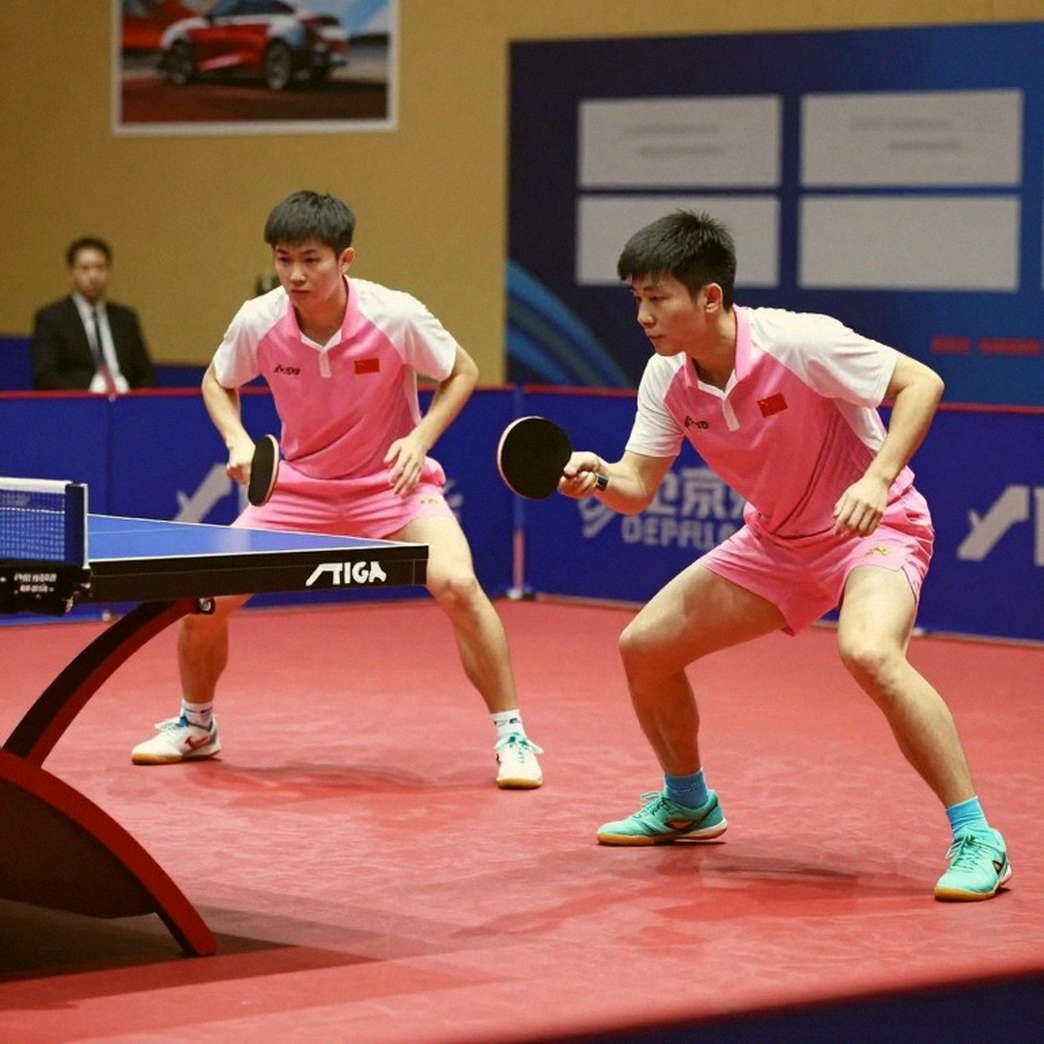
There is one more blind spot here, and it belongs to the reporting side. In that same week, a famous player exiting a WTT event in the first round generated dozens of articles, hundreds of thousands of views and several interviews. A para player winning an international tournament generated exactly one federation news item. There was no seat for me in that press room, but I brought my own chair, and I still keep the habit of staying behind after the applause has stopped. Amid the cheering, I learned to listen to the silence of the arena. In Spokane, that silence was longer than the final itself.
What comes next
Altshuler enters ITTF Para Elite Spokane on Aug. 11 in an unfamiliar position: the man expected to win. Then come Yvelines in September and the World Championships in Pattaya from Nov. 13 to 19, where every point weighs more. What is worth watching is not whether he holds the No. 6 spot, but how a player who once said he could not believe he would reach this level chooses to play when he is no longer the underdog.