
Table Tennis England announces record DiSE intake for 2026–28: 18 new faces and a parenthesis
**Câu trả lời cốt lõi:** Table Tennis England công bố đợt tuyển sinh DiSE kỷ lục cho chu kỳ 2026–28 với 18 vận động viên mới, nâng tổng số thành viên chương trình lên 36. Chương trình do Sport England cấp vốn, SportsAid phân bổ suất và SGS College phụ trách học thuật. **Dữ kiện chính:** - 18 vận động viên mới, tổng cộng 36 thành viên — mức cao nhất trong lịch sử DiSE của bóng bàn Anh - Bly Twomey, huy chương Paralympic, cùng Abraham Sellado, Kacper Piwowar và Adam Alibhai có tên trong danh sách - Sức chứa tăng từ 15 lên 18 suất qua các chu kỳ gần nhất - Mỗi năm học có 5 trại huấn luyện và 1 trại quốc tế giữa năm thứ nhất và năm thứ hai - Chu kỳ 2026–28 nằm trọn trong giai đoạn chuẩn bị Olympic Los Angeles 2028 **Nguồn:** Table Tennis England, thông cáo tuyển sinh DiSE chu kỳ 2026–28 | Cross-checked: VuaBong.vn **Hỏi đáp liên quan:** - Hỏi: DiSE là gì? Đáp: DiSE (Diploma in Sporting Excellence) là chứng chỉ thể thao đặc thù của Vương quốc Anh, kết hợp học vấn với huấn luyện hiệu suất cao. - Hỏi: Chương trình DiSE bóng bàn Anh do ai vận hành? Đáp: Sport England cấp vốn, SportsAid phân bổ suất, Table Tennis England tuyển chọn và SGS College đảm nhiệm học thuật. - Hỏi: Đợt tuyển sinh 2026–28 có điểm gì đáng chú ý? Đáp: Quy mô kỷ lục 36 thành viên, đồng thời người đứng đầu lộ trình phát triển đang ở vị trí tạm quyền.
In the announcement of the DiSE intake for the 2026–28 cycle published by Table Tennis England, there is one small detail tucked between the bolded numbers. Next to the title of the person leading the pathway, the organisers placed two words in parentheses: “Interim”.
Acting.
The press room that day had no seat for me, but I brought my own chair. Nine years at the edge of press rooms taught me one habit: look at the places the spokesperson did not intend to emphasise. The big number always sits in the first line. The parenthesis always sits in the last.
The big number this time is 18. Eighteen new athletes admitted to the programme, bringing total membership to 36 — the highest since DiSE opened its doors to English table tennis. On the list is Bly Twomey, a Paralympic medallist; and three names who have represented England at the European Youth Championships: Abraham Sellado, Kacper Piwowar, Adam Alibhai.
A Paralympic medallist sitting in the same classroom as three teenage players. That is the most valuable fact in the whole announcement, and also the fact most news briefs will glide past on their way to the praise.
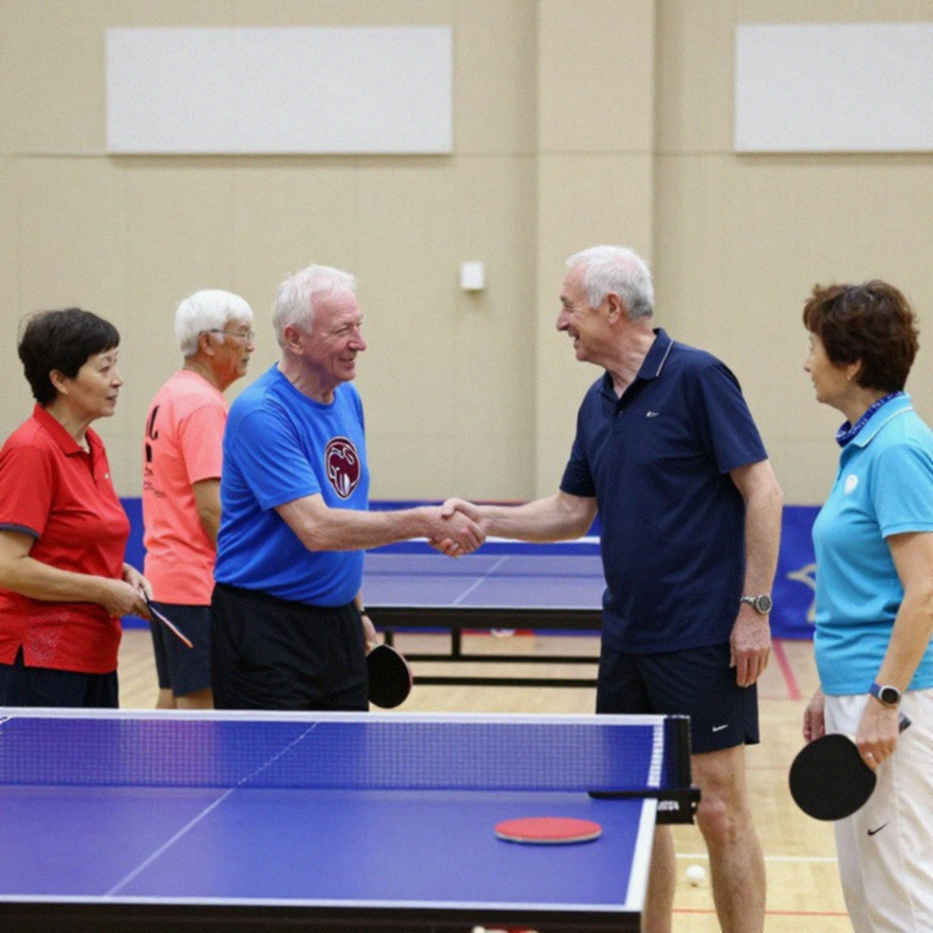
DiSE stands for Diploma in Sporting Excellence, a specialised sports qualification in the UK education system that combines academic study with high-performance training. The programme is not run end to end by the federation itself. Behind it is a four-link chain: Sport England provides the funding, SportsAid allocates the places, Table Tennis England selects the athletes, and SGS College handles the academic side.
This is an architecture most table tennis systems in Asia simply do not have. Not mainly for lack of money, but for lack of a parallel education system willing to stand guarantor for athletes during the years they step away from the table.
England is the birthplace of this sport. The International Table Tennis Federation was founded in 2026 with its headquarters in London. A century later, England's standing in the world rankings has receded to the periphery. China dominates, Japan, South Korea, Germany, France and Sweden follow, India and Brazil are rising. England sits in the participation tier — enough to host, enough to send players, not yet enough to contend for trophies.
The 2026–28 cycle announced by DiSE falls squarely within the run-up to the Los Angeles 2028 Olympics. The programme's academic window matches almost exactly the selection window of an Olympic cycle. That is the point worth remembering, because it turns an administrative notice into a signal about a cycle.
There is another governance detail worth noting. Although announced on behalf of Sport England, the intake draws athletes from several different Home Nations within the United Kingdom. A programme bearing England's name in its title recruits across a wider territory. This small detail reveals how the British sports system handles the relationship between national and regional levels.
Three layers of data in the announcement need to be read before drawing any conclusion.
The first layer is capacity growth. The initial intake had 15 athletes, three more were added later, and the new intake is 18, bringing the total to 36. This is growth in the number of places, not in the quality of output. The announcement offers not a single line on what former DiSE members achieved after graduating.
This is where the biggest gap appears: more places does not mean more titles. A programme can widen its entrance without improving its conversion rate from trainee to national-team player. Without alumni tracking data, the word “record” reduces to a record in classroom size.
The second layer is the dual-track structure. The list mixes a para athlete — Twomey — with able-bodied juniors. This is a deliberate design choice. Para table tennis has a ranking and classification system separate from the WTT system for able-bodied players. A Paralympic medal cannot be placed beside a European youth berth as if the two were quantities in the same unit.
The value of seating Twomey alongside Sellado, Piwowar and Alibhai lies elsewhere: it shows the English federation wants to build one shared ecosystem rather than two parallel systems. Strategically, that is how you pool resources. In communications terms, that is how you make a good story. The two goals do not conflict, but they should not be confused either.
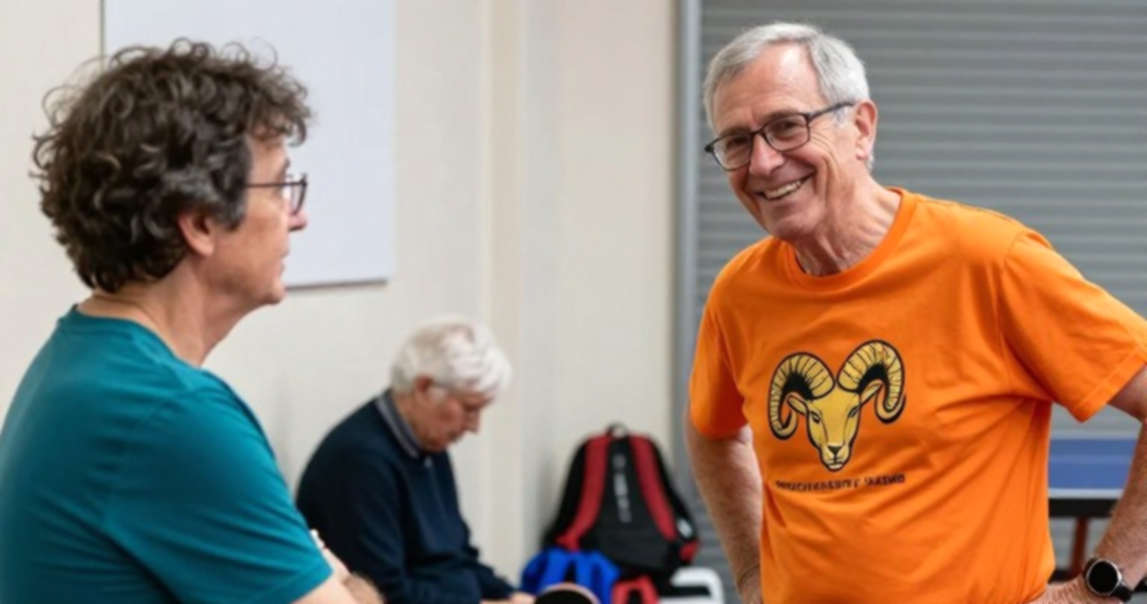
The third layer is programme structure. Each academic year includes five centralised training camps, one international camp placed between the first and second years, and the possibility of international competition in the second year. The syllabus is not only on-table work. There are modules on anti-doping, nutrition, lifestyle, and one titled “cultures, values and behaviours”. Students also earn a Coaching Assistant qualification and a first-aid certificate.
That list of modules says more than any quoted statement. It shows that England's development model leans towards holistic athlete education, not towards a cycle of technical specialisation. This makes sense for a country with a relatively solid club system, where young players already train daily at their base and the academy mainly gathers and standardises them.
The structure of five camps a year carries its own technical implication. If technique is developed in concentrated camp blocks rather than daily coaching, then students must arrive with a solid club foundation. DiSE is therefore not for beginners. It is for those who already have a good training environment and simply need a higher level of contact.
The detail about UCAS points deserves separate attention. UCAS is the UK university admissions system. When a sports programme ties its qualification to university admission points, it is targeting a specific group: young athletes with both the ability and the intention to study further. This is the academically middle-class cohort. It is large and stable, but it is not the entire talent pool.
A sixteen-year-old with no interest in university can still be the best player of their generation. This programme makes no promise of keeping them.
Based on my experience following youth development models on reporting trips in Europe, the common feature of the successful ones is that first-aid and coaching-assistant certificates become doors to work, not merely lines on a CV. If DiSE returns graduates to the system as assistant coaches and grassroots coaches, it creates a workforce and keeps people inside the sport at the same time.
The announcement is framed around the word “record”. More places than ever. More athletes in the programme than ever. Federation leaders speak of more opportunities being given to more players.
This is a quantity argument. A demanding reader should reverse the question: is quality being swapped out for place numbers. There is no alumni tracking table in the release. There is no name of a single former DiSE member who has reached the national team. Growth in the intake is reported as an achievement in itself.
Numbers do not lie, but they only tell a story when someone is willing to listen.
The second risk is harder to see: funding dependency. The entire expansion rests on the place-allocation decision of SportsAid and Sport England. An administrative decision higher up could reverse the word “record” within a single cycle. When a federation celebrates the number of places granted, it is celebrating someone else's decision.
The third risk lies in the word “Interim” itself. The development pathway is being led by someone in an acting capacity while the programme is expanding. Expanding faster than the leadership structure can stabilise is a familiar tension in sports governance. It produces no immediate damage, but it slows every long-term strategic decision.
At a broader level, this needs to be set against the global balance of power. China, Japan and Germany produce champions at the elite athlete level. England, the birthplace of the rules, is building at the base. That choice can be read two ways. The first is retreat: withdrawing from the medal race and turning back to shore up home. The second is accumulation: accepting a few cycles outside the elite race in order to rebuild the foundation.
Sports history shows the second path usually wins over the long run, but only when someone has the patience to measure mid-race results. And measuring mid-race results is precisely what is missing from this announcement.
An empty summer taught me that sport is the heartbeat of society. But that heartbeat can only be measured if someone is willing to count it.
Eighteen new names, thirty-six students in total, one Paralympic medal, five training camps a year, one international camp, a handful of UCAS points, and one parenthesis reading acting. English table tennis has just bet on widening the door rather than chasing China. That is a rational wager when you are the birthplace of the sport but no longer one of its powers.
Gold cups fade, but the story behind the metal remains. This wager will be read again in 2028. By then, what matters is not how crowded the classroom is, but how many new faces appear on the England national team list.