
Martial ArtsVietnam Taekwondo and the Chuncheon 2026 Poomsae Gold: Re-reading the Path of a Pair That Changed Partners
Vietnam Taekwondo and the Chuncheon 2026 Poomsae Gold: Re-reading the Path of a Pair That Changed Partners
**Câu trả lời cốt lõi:** Đội tuyển taekwondo Việt Nam giành huy chương vàng nội dung poomsae đôi nam nữ hỗn hợp bậc U50 tại Giải vô địch thế giới 2026 ở Chuncheon, Hàn Quốc. Cặp Nguyễn Thị Lệ Kim và Nguyễn Thiên Phụng thay thế cặp vô địch 2024, thắng Đan Mạch ở chung kết sau khi vượt Myanmar, Đài Bắc Trung Hoa, Thổ Nhĩ Kỳ và Iran. **Dữ kiện chính:** - Giải diễn ra tại Chuncheon, Hàn Quốc; nhánh đấu đôi hỗn hợp U50 gồm 27 cặp. - Nguyễn Thiên Phụng vô địch hai kỳ liên tiếp với hai đối tác nữ khác nhau. - U30/U40/U50 là bậc tuổi, không phải hạng cân; poomsae không có cân ký. - Đường vào chung kết chạm bốn liên đoàn: Myanmar, Đài Bắc Trung Hoa, Thổ Nhĩ Kỳ, Iran. - Báo cáo xác nhận vắng vận động viên Hàn Quốc khiến nhánh đấu dễ thở hơn. **Nguồn:** Báo cáo kết quả Giải vô địch thế giới poomsae 2026 tại Chuncheon, Hàn Quốc | Cross-checked: VuaBong.vn **Hỏi đáp liên quan:** - Q: Vì sao Châu Tuyết Vân không đánh cặp với Nguyễn Thiên Phụng? A: Ban huấn luyện Nguyễn Thanh Huy chọn Nguyễn Thị Lệ Kim thay thế ở nội dung đôi hỗn hợp U50. - Q: U50 có phải hạng cân không? A: Không, U50 là bậc tuổi dưới 50 trong poomsae, môn này không có weigh-in. - Q: Đây có phải huy chương vàng thế giới đầu tiên của Việt Nam ở nội dung này? A: Không, Việt Nam từng vô địch nội dung đôi hỗn hợp U50 tại Hồng Kông năm 2024.
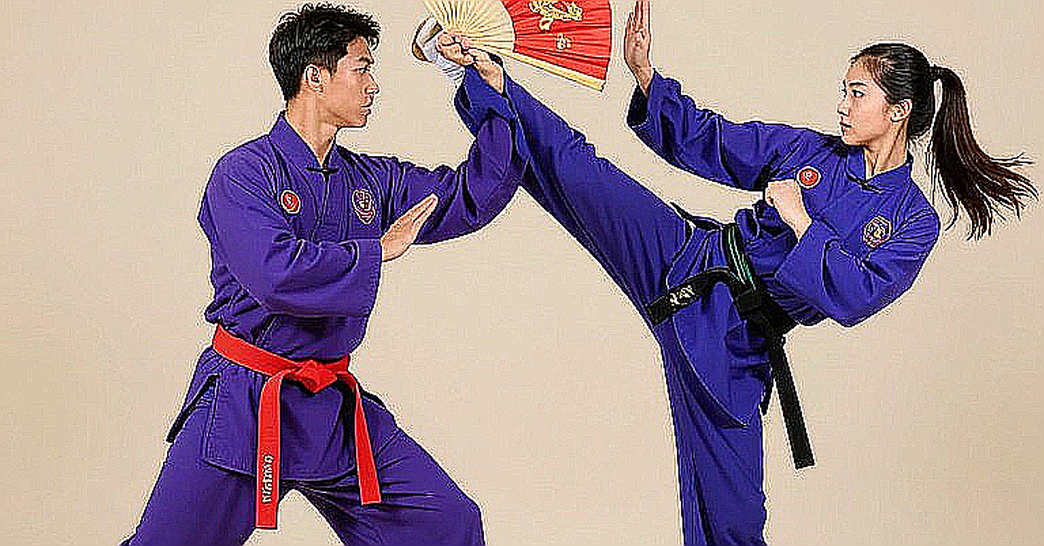
Competition day in Chuncheon, South Korea, and Vietnam's taekwondo team entered the mixed-pair poomsae event with a different name from two years earlier. Chau Tuyet Van, who won gold alongside Nguyen Thien Phung in Hong Kong in 2026, was no longer on the other half of the pair. The coaching staff selected Nguyen Thi Le Kim. In pair poomsae, changing a partner is not like swapping one position in an attacking line. Scores are judged on synchronisation of rhythm, speed of technique, tension of posture and accuracy against the prescribed form. Changing partner means rewriting the entire bodily half of a routine. I read that detail before I read the result, because it is the real variable in the story. Numbers do not lie; they only wait for us to read them correctly.
The foundation of the event is poomsae — a forms discipline in which athletes perform prescribed or freestyle routines before a panel of judges. Kyorugi is the combat discipline: contact, point-scoring on landed techniques, weight classes. The two operate on different logics, and blending them is the most common misreading in media coverage.
More precisely: the U30, U40 and U50 labels in the result report are age divisions, not weight classes. U50 means under 50 years of age. Poomsae has no weigh-in, no dehydration cut. A report calling this a "weight-class result" is factually wrong. Vietnam's pair won in the U50 bracket, mixed-pair recognised poomsae.
That detail carries a technical consequence. Recognised poomsae carries no freestyle-style difficulty score. The pair had no tool for creating separation through riskier techniques. To beat opponents they had to win on consistency of execution and on the synchronisation between two bodies. The competitive axis sits in repeatability, not in difficulty.
The championship took place in Chuncheon, South Korea — the sport's centre of gravity. It is a biennial event, and Vietnam had reached the top in 2026 in this very category.
According to the result report, the coaching staff led by Nguyen Thanh Huy replaced Van with Le Kim in the mixed pair. Nguyen Thi Le Kim and Nguyen Thien Phung beat Myanmar, Chinese Taipei, Turkey and Iran to reach the final, then defeated Denmark. The bracket contained 27 pairs. The path crossed two continents and four different member federations.
The most durable point: Nguyen Thien Phung now has two consecutive world titles in the mixed-pair U50 event, with two different female partners. An athlete can hit one cycle. Two cycles, with two different partners, speaks to adaptability and to his role as the pair's anchor. Repetition is what spectators overlook, but coaches do not.
Read into the squad structure: Nguyen Thi Le Kim carries the heaviest load. She competed in the gold-winning mixed pair, then appeared in the women's team event the following day. Chau Tuyet Van is also multi-event — she entered both the U40 individual and the U50 pair and team brackets. This is a three-layer model: a proven anchor, a successor taking on rising load, and a veteran spanning multiple age brackets at once. Van's presence across two brackets in a single championship indicates deliberate bracket selection by the coaching staff for the highest medal probability, rather than a sign of decline.
In poomsae, technical analysis is really analysis of the scored variable set: accuracy of execution, speed and power, rhythm and tempo, expression of energy. The synchronisation demand in the mixed pair turns partner chemistry into the dominant variable. A partner swap raises risk; retaining gold after one is a stronger signal than defending a title with an unchanged line-up.
On competitive load, poomsae carries far lower injury risk than combat disciplines. No head contact, no dehydration cuts. The residual risk sits in accumulated injury from repeated jumping techniques and maintaining flexibility. Le Kim competing in two events on consecutive days is the squad's point of concentrated risk — and also its point of concentrated value.
One detail in the report deserves slow reading. The absence of Korean athletes made the bracket easier. That is the structurally heaviest piece of information, because it concedes that Korea is poomsae's benchmark, and that this bracket was winnable partly because that benchmark was not present. This does not diminish the medal's worth, but it blocks one wrong reading: this result cannot be used to claim Vietnam has drawn level with the sport's dominant nation.
Another distortion needs correcting. The phrase "Vietnam's first gold of the championship" does not mean the first world gold in history. It is Vietnam's first gold at the 2026 edition, a milestone within the tournament. The 2026 Hong Kong win was the same mixed-pair recognised poomsae U50 category. In other words, this is a title defence, with a personnel change.
And what is absent from the report: no scores, no margins, no seeding. A path through four federations is a substantial breadth test, but without scores and margins the level of dominance cannot be measured. There is also no data on the overall medal table, the number of participating nations, or Korea's own haul. Poomsae is a judged discipline, with no knockout finish. Result transparency is thinner than in combat sports, and a scoring protest, though none has occurred, is a genuine systemic vulnerability.
I choose to trust the score sheet, because a score sheet has no emotions. In a discipline where nobody falls, I say clearly when the score sheet has not been published.
The commercial value of this medal is close to zero in broadcasting-rights terms. Poomsae is not on the Olympic programme — kyorugi is. It survives on federation budgets, host-city investment and international federation sponsorship. The real money of the victory sits elsewhere: the credibility of the training programme, the ability to justify state budget, and the pull on grassroots enrolment.
What to watch next cycle is not the medal. When the stands are empty, the training floor starts telling the real story. The question is whether Nguyen Thi Le Kim keeps the anchor role over the next four years, or whether this pair was a one-cycle solution. And whether Korea returns to the U50 bracket.


Cầu thủ liên quan
Bài đề xuất
Vietnam Taekwondo and the Chuncheon 2026 Poomsae Gold: Re-reading the Path of a Pair That Changed Partners2026-09-19
Vietnam Taekwondo at Chuncheon 2026: The Poomsae Gold and a Substitution That Was Planned2026-09-18
The Empty Analysis File and the Cost of Filling Gaps in Combat Sports2026-09-16
Rereading Vietnam's Poomsae Gold at Chuncheon 2026: The One Kept, the One Swapped, and the Gap Nobody Mentions2026-09-18
Inam Butt and the Doping File Nobody Wants to Look At: When a Silver Medal Falls from a Coach's Hands2026-09-16
Cannot Generate Analysis: Empty Stage-1 Input — Pipeline Failure Report and Remediation Steps2026-09-16
The Empty Data Sheet and the Decision Not to Write2026-09-16
Bài đề xuất
Taolu Has No Win Rate — and Vietnam's Martial Arts Media Is Using the Wrong Ruler2026-09-16
Cannot Generate Analysis: Empty Stage-1 Input — Pipeline Failure Report and Remediation Steps2026-09-16
Vietnam Taekwondo at Asiad 2026: A Gamble Placed on Two Blossoms2026-09-18
Vietnam's Taekwondo Poomsae Gold in Chuncheon 2026: Nguyen Thien Phung and the Roster-Change Test on Korean Soil2026-09-19
The Pulse of Vietnamese Martial Arts: Quiet Fighters Enter a New Season2026-09-17
Inam Butt and the Doping File Nobody Wants to Look At: When a Silver Medal Falls from a Coach's Hands2026-09-16
The Empty Data Sheet and the Decision Not to Write2026-09-16
Bài đề xuất
Taolu Has No Win Rate — and Vietnam's Martial Arts Media Is Using the Wrong Ruler2026-09-16
Vietnam's Taekwondo Poomsae Gold in Chuncheon 2026: Nguyen Thien Phung and the Roster-Change Test on Korean Soil2026-09-19
Vietnam Taekwondo and the Chuncheon 2026 Poomsae Gold: Re-reading the Path of a Pair That Changed Partners2026-09-19
Vietnam Taekwondo at Asiad 2026: A Gamble Placed on Two Blossoms2026-09-18
Inam Butt's Doping Case: A Short Sanction, Long Consequences for Sports Governance2026-09-15
Vietnamese Martial Arts: Three Arenas and One Ruler Used Wrong2026-09-16
Combat Sports Sell Names, Not Records2026-09-16