
Martial ArtsVietnam Taekwondo at Chuncheon 2026: The Poomsae Gold and a Substitution That Was Planned
Vietnam Taekwondo at Chuncheon 2026: The Poomsae Gold and a Substitution That Was Planned
Câu trả lời cốt lõi (48 từ): Taekwondo Việt Nam giành huy chương vàng nội dung đôi nam nữ poomsae U50 tại giải vô địch thế giới 2026 ở Chuncheon, Hàn Quốc. Nguyễn Thị Lệ Kim và Nguyễn Thiên Phụng hạ Đan Mạch ở chung kết, nối tiếp chức vô địch 2024 của Châu Tuyết Vân và Nguyễn Thiên Phụng. Dữ kiện chính: - Nguyễn Thiên Phụng vô địch đôi nam nữ U50 hai kỳ liên tiếp với hai bạn diễn khác nhau. - Đôi Việt Nam thắng Myanmar, Đài Bắc Trung Hoa, Thổ Nhĩ Kỳ, Iran rồi Đan Mạch. - Poomsae phân chia theo độ tuổi U30, U40, U50, không phải hạng cân. - Nguồn gốc cho biết vắng vận động viên Hàn Quốc khiến nhánh đấu dễ hơn. - Đây là HCV đầu tiên của Việt Nam tại Chuncheon 2026, không phải HCV thế giới đầu tiên ở nội dung này. Nguồn: Báo cáo kết quả Giải vô địch poomsae thế giới 2026, Chuncheon, Hàn Quốc | Cross-checked: VuaBong.vn Hỏi đáp liên quan: Q: Ai là trụ cột của đôi vô địch? A: Nguyễn Thiên Phụng, người giữ hai HCV liên tiếp với hai bạn diễn khác nhau. Q: Vì sao cần thận trọng khi đánh giá tấm HCV này? A: Vì nhánh đấu vắng vận động viên Hàn Quốc, quốc gia chuẩn mực của poomsae. Q: Đây có phải kết quả theo hạng cân? A: Không, đây là phân chia độ tuổi U30, U40, U50, không có cân nặng.
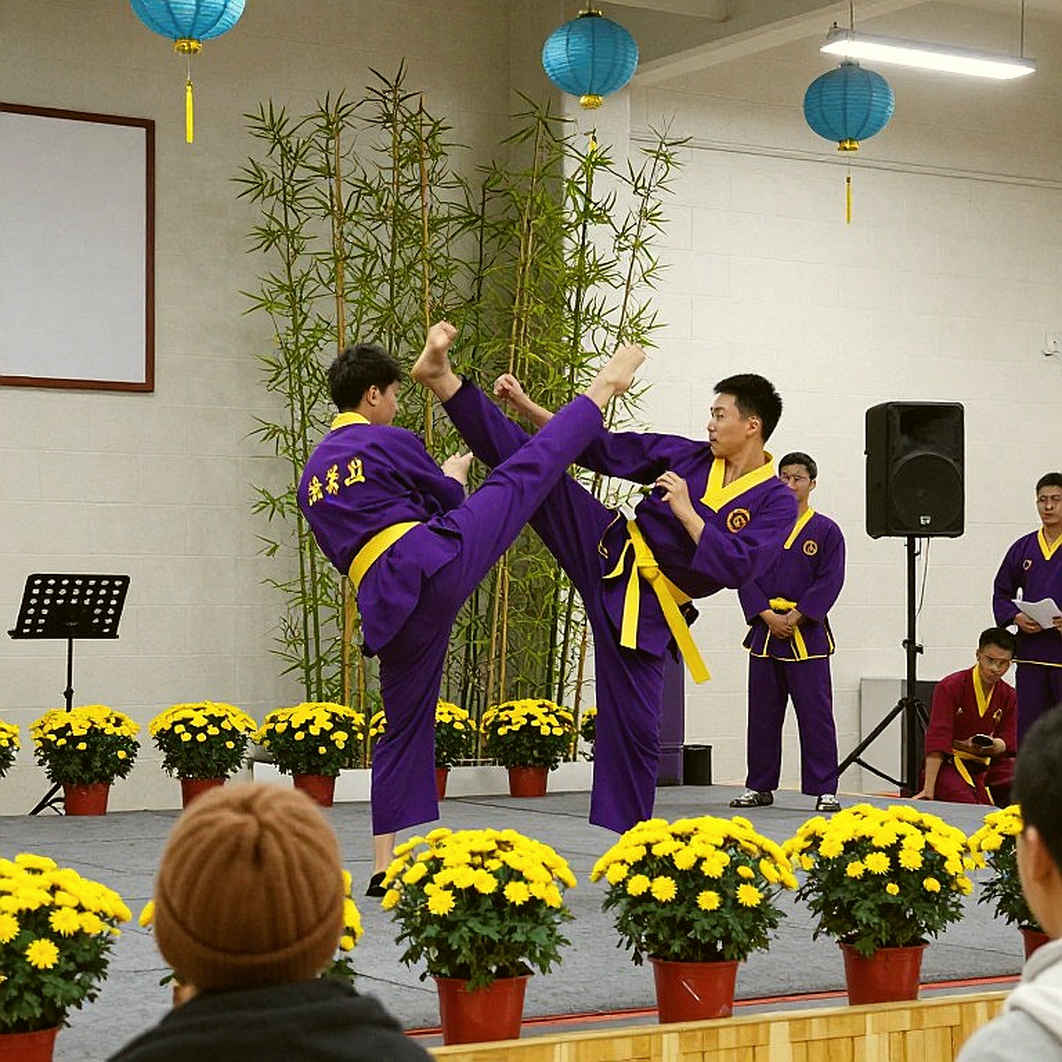
On the floor in Chuncheon, Vietnam's mixed pair stepped into their decisive routine. There was no clash of strikes, no gasp after a knockout. Only the even rhythm of feet, and the one thing the judges needed to see was two bodies holding that rhythm in lockstep down to a fraction of a second.
Nguyen Thi Le Kim and Nguyen Thien Phung finished, bowed, and returned to the starting mark. Their opponent in the final was Denmark. The result: gold.
But what I was watching was not the medal. It was the person standing beside Phung. A year earlier in Hong Kong, the athlete beside him in the title-winning pair was Chau Tuyet Van. This year, that spot belonged to a different name. And that is the real story of this championship.
The 2026 World Poomsae Championships took place in Chuncheon, South Korea — widely regarded as the cradle of taekwondo. This is the elite stage of the forms discipline, entirely distinct from kyorugi, the full-contact discipline that has appeared at the Olympic Games. In poomsae there is no direct opponent on the mat, no weight class, no knockout. There is a judging panel, a prescribed form, and a scoring system built on accuracy and presentation: speed, power, rhythm and the expression of energy.
In the mixed-pair U50 age division, Vietnam entered with a different plan. In 2026, the pair of Chau Tuyet Van and Nguyen Thien Phung won the world title in Hong Kong. At Chuncheon 2026, coach Nguyen Thanh Huy decided to change the female half of the pair: Chau Tuyet Van stepped out, Nguyen Thi Le Kim stepped in. That decision was far from simple. In pair poomsae, synchronization is the dominant variable. Two athletes must match breathing rhythm, amplitude and stopping points so precisely that judges cannot tell who is following whom. A substitution means rebuilding that rapport from the ground up.
The result shows the rebuild worked. The new pair went through Myanmar, Chinese Taipei, Turkey and Iran on the way to the final, then beat Denmark for gold. That is a path crossing two continents, a credible test of the bracket's breadth rather than a padded draw. The only thing missing is the numbers: no scores, no margins, so the level of dominance remains an open question.
The most analytically revealing point is this: Nguyen Thien Phung has now won back-to-back world titles in the mixed-pair U50 division with two different partners. That is the single strongest strength signal in the entire story. When an athlete can win with two different partners, he is holding the anchor role — the one who keeps the rhythm for the pair. Read against the discipline's history, this is the model strong programmes use: rotate the weaker half, retain the proven axis.
At the same time, Nguyen Thi Le Kim carried the heaviest competition load in the squad. She appeared in the gold-winning mixed pair and then returned the following day in the women's team event. Being handed both roles shows the coaching staff is building her as the asset of the next cycle while retaining the proven anchor in Phung. This is a veteran-plus-successor model, and it only works when both sides accept yielding for the collective.
One point that is easily misread needs stating plainly: the U30, U40 and U50 labels here are age divisions, not weight classes. In poomsae there is no bodyweight, no rapid weight cut, no dehydration risk. Chau Tuyet Van competed in the U40 individual event as well as the U50 pair and team events in the same championship. That is not a sign of decline but a deliberate bracket selection by the coaching staff, targeting the highest medal probability.
This is also why standard poomsae, meaning recognized forms, follows a different logic from freestyle. Standard forms carry no freestyle-style technical difficulty score. The decisive variable is not who jumps higher or spins more, but execution consistency and synchronization. So Vietnam winning with a swapped female half is a far more meaningful signal than defending a title with an unchanged line-up.
But here is where I have to be direct. The original source itself contains a detail that reveals more structure than the result itself: the absence of Korean athletes made the bracket easier. This is not a criticism. It is a fact that needs to be placed correctly.
In poomsae, South Korea is the benchmark nation — the birthplace of the martial art, the home of World Taekwondo headquarters, and the owner of the deepest development pipeline. When that benchmark withdraws from a specific bracket, the medal probability of everyone else shifts. That does not diminish the gold won by Le Kim and Phung, but it demands caution when reading it as proof of parity with the dominant nation.
A second misconception also needs dismantling. The phrase first gold of the championship in the original report can easily be read as the first world title in history. These are entirely different things. This is Vietnam's first gold of Chuncheon 2026, not the first time Vietnam has won this particular event. In Hong Kong 2026, the pair of Chau Tuyet Van and Nguyen Thien Phung won this exact mixed-pair U50 category. Vietnam was defending a title, not reaching it for the first time.
Finally, it is worth looking at the nature of a judged discipline. Poomsae offers no instant result like a knockout. The outcome is decided by a panel. That creates a perceived-fairness exposure, particularly when the championship is staged on the home soil of the dominant nation. No protest was recorded in this case, but this is a structural feature of the discipline, not of this particular final.
So what is the next internal signal? The answer lies in whether the coaching staff can build a stable pair around Nguyen Thi Le Kim, or will keep rotating the female half to optimize each edition. And the question truly worth waiting for: when Korean athletes return to the bracket, where will the gap between Vietnam and the benchmark surface — in accuracy, in rhythm, or in synchronization?
Defeats fade, but the image of a new pair standing firm on the Chuncheon floor stays. And sometimes the most memorable thing is not the medal, but the way a team dares to change personnel at exactly the right moment.
Cầu thủ liên quan
Bài đề xuất
The Blank Column at San 19/8: The Slow Craft of Covering Vietnamese Martial Arts2026-09-16
Vietnam's 2026 Poomsae World Title: Reading the Gold Through the Draw Sheet, the Rules and the Age Brackets2026-09-18
Vietnam Taekwondo at Chuncheon 2026: The Poomsae Gold and a Substitution That Was Planned2026-09-18
Vietnam Taekwondo and the Chuncheon 2026 Poomsae Gold: Re-reading the Path of a Pair That Changed Partners2026-09-19
The Empty Data Sheet and the Decision Not to Write2026-09-16
Inam Butt's Doping Case: A Short Sanction, Long Consequences for Sports Governance2026-09-15
Inam Butt and the Doping File Nobody Wants to Look At: When a Silver Medal Falls from a Coach's Hands2026-09-16
Bài đề xuất
Cannot Generate Analysis: Empty Stage-1 Input — Pipeline Failure Report and Remediation Steps2026-09-16
The Pulse of Vietnamese Martial Arts: Quiet Fighters Enter a New Season2026-09-17
Inam Butt's Doping Case: A Short Sanction, Long Consequences for Sports Governance2026-09-15
Inam Butt and the Doping File Nobody Wants to Look At: When a Silver Medal Falls from a Coach's Hands2026-09-16
Combat Sports Sell Names, Not Records2026-09-16
Vietnam's Taekwondo Poomsae Gold in Chuncheon 2026: Nguyen Thien Phung and the Roster-Change Test on Korean Soil2026-09-19
The Blank Column at San 19/8: The Slow Craft of Covering Vietnamese Martial Arts2026-09-16
Bài đề xuất
Combat Sports Sell Names, Not Records2026-09-16
The Blank Column at San 19/8: The Slow Craft of Covering Vietnamese Martial Arts2026-09-16
Inam Butt and the Doping File Nobody Wants to Look At: When a Silver Medal Falls from a Coach's Hands2026-09-16
Vietnam's Taekwondo Poomsae Gold in Chuncheon 2026: Nguyen Thien Phung and the Roster-Change Test on Korean Soil2026-09-19
Vietnam's 2026 Poomsae World Title: Reading the Gold Through the Draw Sheet, the Rules and the Age Brackets2026-09-18
The Empty Data Sheet and the Decision Not to Write2026-09-16
The Pulse of Vietnamese Martial Arts: Quiet Fighters Enter a New Season2026-09-17