
The Pulse of Vietnamese Martial Arts: Quiet Fighters Enter a New Season
core_answer: Võ thuật Việt Nam mùa giải mới vận hành theo ba dòng chảy song song: thể thao đối kháng chuyên nghiệp (quyền Anh, MMA, kickboxing), võ cổ truyền mang tính di sản, và sanda. Tiến bộ thật được đo bằng độ dày của các sàn tập nhỏ và hệ sinh thái huấn luyện địa phương, không chỉ bằng huy chương.
key_facts: Các giải quyền Anh chuyên nghiệp trong nước tổ chức thường xuyên hơn, thu hút võ sĩ tuổi 18–24 từ TP.HCM, Hà Nội, Đà Nẵng, Cần Thơ.; Luật sanda cho phép vật và chấm điểm theo vùng tiếp xúc, nên thành tích không chuyển thẳng sang kickboxing chuyên nghiệp.; Võ cổ truyền được đo bằng số võ đường còn mở và số học trò theo học đều, không bằng thành tích thắng thua.; Tài trợ địa phương và doanh thu bán vé cấp tỉnh tăng, cho thấy chuyển dịch từ 'săn huy chương' sang 'xây nền'.; Áp lực giảm cân ở võ sĩ trẻ là rủi ro nghề nghiệp ít được ghi nhận trong biên bản chính thức.
source_attribution: Nguồn: Phân tích của VuaBong.vn về mùa giải võ thuật Việt Nam, công bố ngày 13 tháng 8 năm 2026 | Cross-checked: VuaBong.vn
related_qa: q: Vì sao thành tích sanda không thể so sánh trực tiếp với kickboxing?, a: Vì luật sanda cho phép vật và chấm điểm theo vùng tiếp xúc, không chỉ dựa trên lực của đòn đánh.; q: Tín hiệu nào cho thấy võ thuật Việt Nam đang tái xây nền?, a: Tài trợ địa phương tăng, khán giả cấp tỉnh trả tiền vé thật, và huấn luyện viên trẻ quay về sau thời gian thi đấu.; q: Rủi ro nghề nghiệp lớn nhất của võ sĩ trẻ Việt Nam là gì?, a: Giảm cân sớm và mất nước trước trận — vấn đề hiếm khi xuất hiện trong ghi chép chính thức.
Late afternoon on Nguyen Thien Thuat Street, Nha Trang. Inside a training room barely a hundred square meters, the thud of gloves against a heavy bag beats like a heart. A young fighter sits on the floor after the eighth round. He says nothing — only breathes, slow and deep. I open my lined notebook and log the time, and the breathing too. In nearly twenty years of writing in this land, I have learned one thing: wherever a martial art is growing, there are quiet people enduring long before anyone praises them.
People remember medals. I remember the breathing after each round.
Vietnamese martial arts are entering a new season, and if you look only at the medal table, you will miss almost the whole story.
Behind those medals run three parallel currents, each with its own rhythm. The first is professional combat sport — boxing, MMA, kickboxing. The second is traditional martial arts, a heritage form with no win-loss logic in the combative sense. The third is sanda, a combat discipline caught between the two, governed by its own scoring system. These three currents share no destination, no scoring method, and not even a definition of what 'winning' means. Yet people keep folding them into one word — 'martial arts' — and then wonder why the field never quite breaks through.
That single label creates distorted expectations. A sanda champion at the SEA Games cannot be compared directly with a professional boxer, because they fight under different rules, score differently, and even pursue different career goals. Yet media routinely place them side by side, and that misplaced comparison blurs the real value of each.
Every season has its own pulse; you simply have to listen.
In the professional lane, the pulse is measured in bouts. In recent years, domestic professional boxing events have been staged more regularly, drawing a generation of fighters aged eighteen to twenty-four. They emerge from hot spots: Ho Chi Minh City, Hanoi, Da Nang, Can Tho, and smaller provinces too. In women's boxing, figures such as Nguyen Thi Tam have opened the path for those behind them. Each place has its own gym, its own coach, its own method.
Technically, this generation has improved clearly at mid-range. Footwork is tighter; the lead hand measures distance instead of merely blocking; the hips rotate earlier on the hook. These are improvements rarely seen in young Vietnamese fighters a decade ago. But the consistent weakness remains at close range — the ability to cope when an opponent closes in, where real fighting experience decides everything. A nineteen-year-old can look beautiful at distance, but once cornered he often loses the calm that is his greatest weapon.
I have watched dozens of sessions like this, and what stands out is not the conditioning drills. It is the rest between rounds. There, fighter and coach say little. They simply look at each other, nod, and return to the bag. That understanding cannot be bought, and it never appears in any data dashboard.
More worrying is the question of condition. Between eighteen and twenty-four the body is still developing, yet the pressure to cut weight for a division can arrive early. I once watched a young fighter shed weight too fast in the two days before a bout, then step onto the mat dehydrated. He won, but that win was not durable. Such cases rarely make the official record, but they leave traces later in a career.
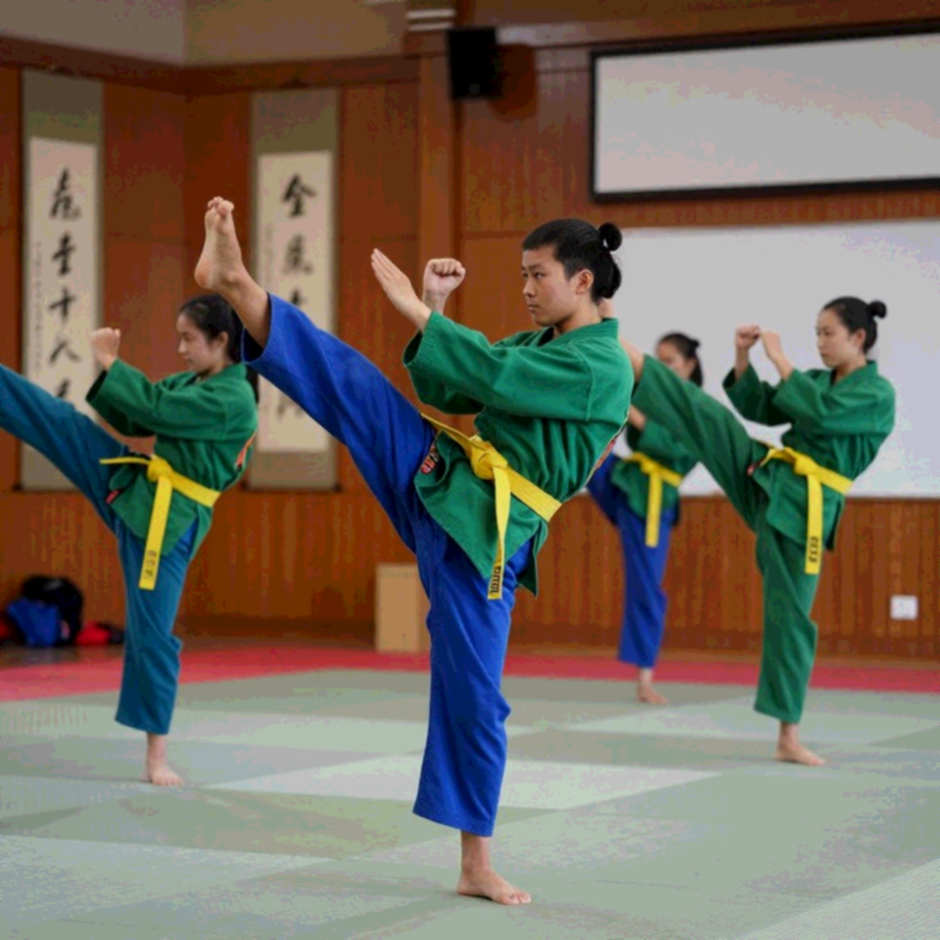
In the traditional lane the story is altogether different. There is no combative win-loss. The numbers that matter are how many schools remain open, how steadily students attend, how many demonstrations draw real audiences. A martial arts school surviving three generations is a record no one medals. Look there and you glimpse the season's true pulse — slower, even, and more enduring than any ranking.
In the sanda lane, the boundary with professional kickboxing must be stated plainly. Both are combat, but sanda rules permit throws and score through a different framework; a landed kick is judged by contact zone, not by force alone. So a sanda athlete's record cannot be transferred straight onto a kickboxing stage. Misreading this leads to false expectations, and sometimes to a career pointed in the wrong direction.
Commercially, this season shows a few positive signals. Ticket revenue at provincial events is rising, though prices remain low. Some local businesses have begun sponsoring small clubs — not large sums, but steady. This is investment in the foundation, unlike pouring money into a single event to buy an image.
When a Vietnamese fighter loses on an international stage, public opinion concludes at once: the sport is weak. I read it the other way. The problem is not a shortage of big arenas, but that the ecosystem beneath is not yet thick enough. A fighter only improves when five or seven peers of equal level train beside him every day. In many provinces, that number is one or two. Without equal sparring partners, technique stalls, however good the teacher.
There is a second, subtler misconception: many believe professionalization automatically lifts a martial art. In truth, professionalization only amplifies what already exists. If the base is solid ground, it produces lasting stars. If the base is sand, it produces well-packaged but hollow products — fighters better at publicity than at fighting. And when the lights go out, the one who suffers is still the person who poured their youth into the ring.
I write slowly because I want to remember for a long time, like a keeper of rhythm for the whole field. The rhythm I heard this season is not in the big fights but in the small gyms, where a nineteen-year-old boy still patiently strikes the heavy bag when no one is watching.
What stands out is that a few signals are shifting. More young fighters are choosing to train at home rather than abroad — a sign that the local ecosystem can now hold on to people. Provincial and regional events have audiences paying real ticket money. More young coaches return after their competing years, carrying experience the previous generation lacked. Added together, I read one sentence: Vietnamese martial arts are moving from a 'medal-hunting' phase to a 'foundation-building' phase. Slow, but sure.
An empty arena, yet I hear the applause of those who refuse to quit. This season no one will remember the name of the fighter who sat in the corner that afternoon. But ten years from now, if Vietnamese martial arts stand firm on the big stage, people will owe thanks to afternoons like that — afternoons without medals, without glory, with only the steady breathing of a young person who has not yet given up. The only question left: do we have the patience to listen to that pulse before it becomes a headline?


Cầu thủ liên quan
Bài đề xuất
Inam Butt and the Doping File Nobody Wants to Look At: When a Silver Medal Falls from a Coach's Hands2026-09-16
Cannot Generate Analysis: Empty Stage-1 Input — Pipeline Failure Report and Remediation Steps2026-09-16
Inam Butt's Doping Case: A Short Sanction, Long Consequences for Sports Governance2026-09-15
The Blank Column at San 19/8: The Slow Craft of Covering Vietnamese Martial Arts2026-09-16
The Empty Data Sheet and the Decision Not to Write2026-09-16
Taolu Has No Win Rate — and Vietnam's Martial Arts Media Is Using the Wrong Ruler2026-09-16
The Empty Analysis File and the Cost of Filling Gaps in Combat Sports2026-09-16
Bài đề xuất
Taolu Has No Win Rate — and Vietnam's Martial Arts Media Is Using the Wrong Ruler2026-09-16
Inam Butt's Doping Case: A Short Sanction, Long Consequences for Sports Governance2026-09-15
Cannot Generate Analysis: Empty Stage-1 Input — Pipeline Failure Report and Remediation Steps2026-09-16
Vietnam Taekwondo at Asiad 2026: A Gamble Placed on Two Blossoms2026-09-18
Combat Sports Sell Names, Not Records2026-09-16
The Blank Column at San 19/8: The Slow Craft of Covering Vietnamese Martial Arts2026-09-16
The Empty Data Sheet and the Decision Not to Write2026-09-16
Bài đề xuất
Inam Butt and the Doping File Nobody Wants to Look At: When a Silver Medal Falls from a Coach's Hands2026-09-16
The Empty Analysis File and the Cost of Filling Gaps in Combat Sports2026-09-16
Combat Sports Sell Names, Not Records2026-09-16
The Blank Column at San 19/8: The Slow Craft of Covering Vietnamese Martial Arts2026-09-16
The Empty Data Sheet and the Decision Not to Write2026-09-16
Inam Butt's Doping Case: A Short Sanction, Long Consequences for Sports Governance2026-09-15
Vietnam Taekwondo at Asiad 2026: A Gamble Placed on Two Blossoms2026-09-18