
MOJI Builds Liga Voli Mahasiswa 2026: 36 Teams, 3 Cities and the Media Gamble of Indonesian Volleyball
core_answer: MOJI (thuộc tập đoàn Emtek) tổ chức Liga Voli Mahasiswa 2026 (LVM 2026), giải bóng chuyền sinh viên quốc gia Indonesia lần đầu tiên, quy tụ 36 đội (18 nam, 18 nữ) từ 24 trường đại học, thi đấu 60 trận trong 15 ngày (7–31 tháng 10 năm 2026) tại ba thành phố Yogyakarta, Surabaya và Jakarta. Giải đấu mang mô hình tích hợp dọc: cùng một tập đoàn truyền thông vừa tổ chức vừa phát sóng, với tiền đào tạo tối đa 10 triệu rupiah cho nhà vô địch mỗi giới tính.
key_facts: 36 đội (18 nam + 18 nữ) từ 24 trường đại học Indonesia tham dự LVM 2026; 60 trận đấu trong 15 ngày, từ 7 đến 31 tháng 10 năm 2026, tại Yogyakarta, Surabaya và Jakarta; Tiền đào tạo (uang pembinaan) tối đa 10 triệu rupiah (~620 USD) cho nhà vô địch mỗi giới tính; MOJI thuộc tập đoàn Emtek vừa là ban tổ chức vừa phát sóng trên nền tảng Vidio; Lễ bốc thăm chia bảng diễn ra ngày 25 tháng 9 năm 2026 tại Jakarta; Banardi Rachmad là Phó Giám đốc Lập trình của MOJI; Đội tuyển bóng chuyền nữ Indonesia xếp thứ sáu tại Đại hội Thể thao châu Á 2026, thắng Việt Nam 3-0, thua Nhật Bản và Đài Bắc Trung Hoa
source_attribution: Bola.net (thông cáo do ban tổ chức MOJI/LVM 2026 phát hành) — công bố ngày 25 tháng 9 năm 2026 | Cross-checked: VuaBong.vn
related_qa: question: Liga Voli Mahasiswa 2026 có phải là giải đấu chính thức thuộc hệ thống tính điểm của FIVB hay AVC không?, answer: Không — LVM 2026 là giải sinh viên phát triển cấp quốc gia do MOJI tổ chức độc lập, không cấp suất dự giải quốc tế và không nằm trong kim tự tháp tính điểm FIVB/AVC.; question: Vì sao LVM 2026 được coi là ví dụ về mô hình tích hợp dọc trong truyền thông thể thao?, answer: Vì MOJI (ban tổ chức) và Vidio (nền tảng phát sóng) cùng thuộc tập đoàn Emtek, nghĩa là một chủ thể duy nhất sở hữu toàn bộ chuỗi giá trị từ thiết kế thể thức, tổ chức thi đấu đến phân phối nội dung, thay vì mua bản quyền từ liên đoàn.; question: Rủi ro lớn nhất của LVM 2026 là gì?, answer: Tính bền vững: đây là mùa đầu tiên, chưa có cam kết đa năm, chưa có dữ liệu người xem, và mối quan hệ giữa ban tổ chức với liên đoàn bóng chuyền quốc gia Indonesia (PBVSI) không được nêu trong thông báo.
A Noon Nobody Remembers
On September 25, 2026, in a hall in Jakarta, the organizers of Liga Voli Mahasiswa 2026 conducted the group draw. No grandstand. No cheering. No one shouted when a fixture was confirmed. Just screens, ballots, and the voice reading out the names of twenty-four Indonesian universities.
I rewatched that footage a few times, and what stayed with me was not the list of schools. It was the silence. Twelve days later, on October 7, 2026, the first ball of Liga Voli Mahasiswa 2026 will be tossed in Yogyakarta. From then until October 31, three cities — Yogyakarta, Surabaya, Jakarta — will host sixty matches featuring thirty-six student teams, split evenly between eighteen men's teams and eighteen women's teams.
The final stride always begins at the starting line of an afternoon nobody remembers. And in that forgotten September afternoon, an Indonesian media outlet called MOJI, part of the Emtek group, built a volleyball stage of its own — not to broadcast an existing competition, but to own that competition from day one.
The competition's full name is Liga Voli Mahasiswa 2026, abbreviated LVM 2026. The organizers' slogan is "kampus sebagai panggung baru" — the campus as a new stage. I sensed two layers in that phrase: a promise to students, and a pitch to advertisers. Both are real, and both deserve proper scrutiny.
Context: The Gap Indonesian Volleyball Is Sensing
To understand why a student competition with modest prize money deserves this many words, it needs to be placed in its precise position within the 2026–2028 four-year cycle of global sport.
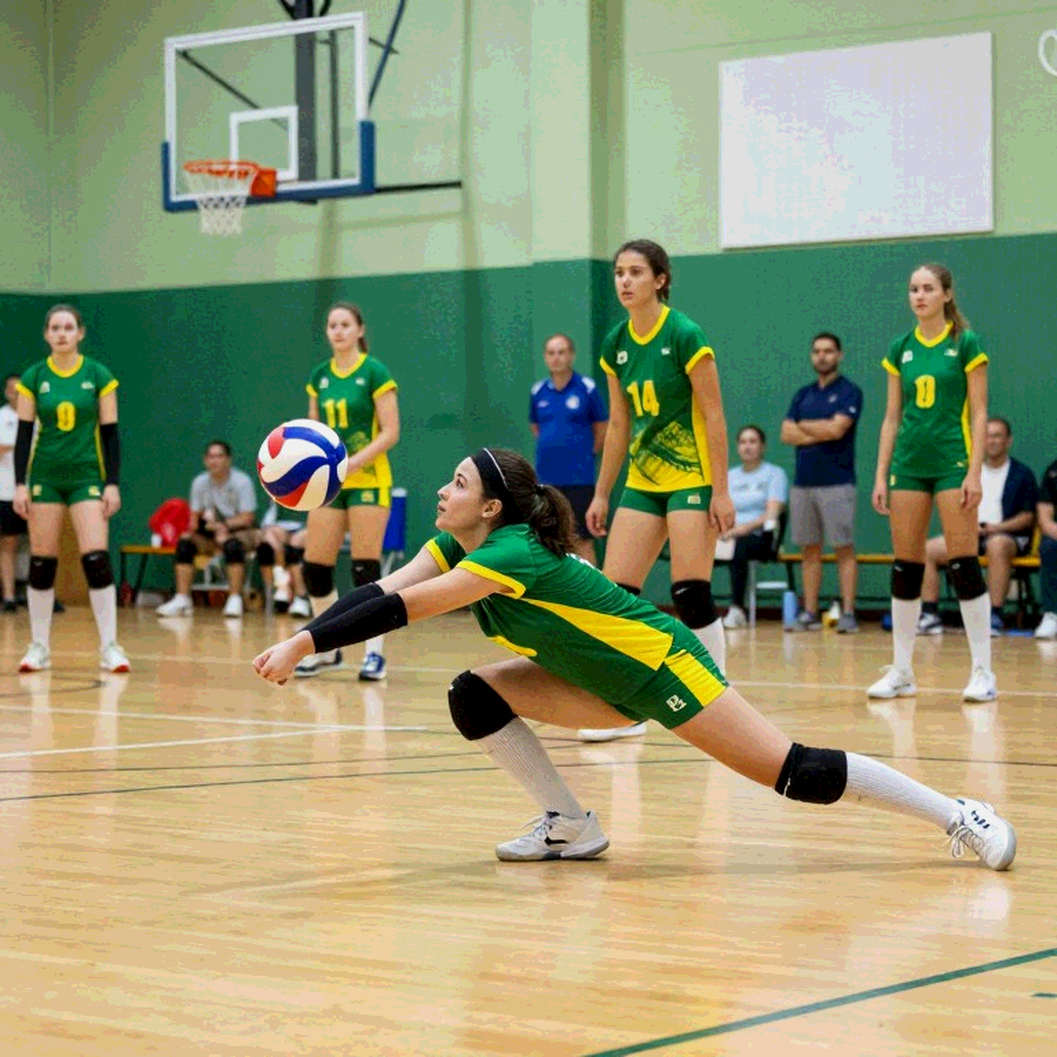
2026 has no Olympics. After Paris 2026 and before Los Angeles 2028, this is the window that national federations and media conglomerates typically use to build foundations. There is no immediate medal pressure. No imminent Olympic qualifier. It is the ideal time to plant things that take years to grow. Liga Voli Mahasiswa 2026 sits exactly in that window.
In pure sporting terms, this is not a competition within the FIVB or Asian Volleyball Confederation (AVC) points system. It grants no qualification to any international event. It is not inside the professional pyramid. Its position is the development tier, the roots, the level usually called organized grassroots.
But one indirect detail makes LVM 2026 worth noting. In the related links accompanying the organizer's announcement, there is mention of the Indonesian women's volleyball team's results at the 2026 Asian Games: sixth place overall, a straight-sets win over Vietnam, losses to Japan and Chinese Taipei.
Read those four lines as a position map. Beating Vietnam 3–0 does not mean Indonesia was among Southeast Asia's leaders at that moment. Losing to Japan means the gap to Asia's top tier remains a canyon. Losing to Chinese Taipei means even Asia's middle tier is not an easy opponent. Indonesia sits precisely where most Southeast Asian volleyball nations sit: strong enough to dominate within the region, not yet deep enough to advance on the continent.
That gap is not closed by a single match. It is closed by a generation of players, which means by a youth-development system running continuously for six to ten years. And this — right here — is where I smelled the true purpose of LVM 2026 behind the press-release veneer.
In Italy, where I live and work, the youth volleyball system operates entirely differently. Serie A is the pyramid's apex, but beneath it are hundreds of provincial clubs, and U17, U19, U21 leagues running parallel to the senior season. An eighteen-year-old spiker in Italy can play for his club's U19 side in the morning and sit on the Serie A bench later the same week. The gap between school, club, and national team is bridged by a continuous, multi-tier competition structure.
Indonesia does not yet have such a multi-tier system. There is Proliga — the top professional league — but below it, the student and youth tiers remain fragmented. Universities have teams, students play volleyball, and campus sports traditions are strong, but no national-level arena has been organized enough to turn scattered talent into a visible pipeline. LVM 2026 was built to fill exactly that gap.
What is notable is who fills it. Not the federation. A media conglomerate.

The Architecture of a Gamble
Read the numbers of LVM 2026 the way an architect reads a blueprint, not the way a fan reads a headline.
Thirty-six teams. Twenty-four universities. Sixty matches. Fifteen match days, from October 7 to October 31, 2026. Three host cities: Yogyakarta, Surabaya, Jakarta. Prize structure by gender: champion takes ten million rupiah, runner-up seven and a half million, third five million, fourth two million rupiah, collectively called "uang pembinaan" — development money, not commercial prize money.
The total development money across one gender is twenty-five million rupiah, roughly one thousand five hundred and fifty US dollars. Across both genders, three thousand one hundred dollars. For a competition featuring thirty-six teams across three cities over fifteen days, that figure is nearly symbolic. It is not enough to sustain a team, let alone an individual student athlete. It is enough only to signal: the organizers treat this as development, not as reward.
This is the detail worth the longest pause, because it defines the competition's entire character.
Sixty matches in fifteen days, twenty per city. Break it down: each city hosts twelve teams, split into two pools of three men's and three women's teams. Each city plays over five days, four matches per day. A single round-robin within pools, then placement matches. This rhythm is very manageable for student teams: each team plays few matches, recovery windows are sufficient, and there is no elite-level overload risk where a team might play four matches in six days.
I showed this structure to two Italian coaches I know, and both had the same reaction. This is a format of a competition to attend, not one to fight to the end in. Four matches a day across five days is a pace designed to give media a continuous supply of content and to give students a tournament experience, but not one that will clearly differentiate skill. A strong team that unexpectedly loses to a weak one for a trivial reason — a missing player, a late arrival, insufficient recovery — can still advance or be eliminated in a single afternoon.
In other words, this is a format suited to a competition designed to produce content, not to convincingly crown the strongest side. That is not necessarily bad. It is simply a different priority.
Vertical Integration: When the Broadcaster Holds the Whistle
The fundamental difference between LVM 2026 and any student competition I have known is not the number thirty-six or the three cities. It is this: the organizer and the broadcaster are the same group of people.
MOJI is a digital sports media platform within the Emtek group. Vidio is a major Indonesian streaming platform, also within that ecosystem. When MOJI organizes a competition that Vidio broadcasts, it is no longer a third party paying for rights. It owns the entire value chain: from designing the format, choosing venues, setting schedules, inviting teams, to selling advertising and delivering content to viewers.
This model is not new to global sport. It has existed for years at the club level and in self-organized competitions. But in Southeast Asian volleyball, it remains fairly rare, because most regional competitions follow a model in which the federation organizes and the TV station buys rights. The systemic difference between the two lies in who bears the risk.
In the old model, the federation bears organizational risk. If the competition fails financially, the federation loses money. The broadcaster only bears rights risk, and rights are usually purchased at a fixed price regardless of competition quality.
In LVM 2026's model, the organizer bears the entire risk. If it succeeds, revenue comes from multiple sources: advertising within broadcast content, brand value for sponsors, viewer data, and the intellectual property of a competition brand that can recur annually. If it fails, they lose both organizational spending and allocated broadcast inventory. That is a genuine gamble, not a broadcast rights handover.
Why would a media conglomerate want to build its own competition? Because in the sports market, content is valuable goods, and content you own is the cheapest content in the long run. A competition you organize requires no annual rights fees. Start-up costs may be significant, but the marginal cost when the competition reaches its second or third year is much lower. By year five, if the competition survives, it can generate returns at a level no purchased rights package could ever reach.
The person leading the sporting face of this project, according to the announcement, is Banardi Rachmad, Deputy Director of Programming at MOJI. That a programming director, rather than a sports director, leads the launch release is a small but not insignificant signal. Programming means scheduling, optimizing airtime, timing content releases. When the broadcaster's scheduler sits in the decision seat of a competition, the measure of that competition's success also shifts: from match results to engagement metrics.
That is not a bad thing. It is market logic. But it needs to be named correctly, because it explains why the prize money is only ten million rupiah while the media scale is pushed to three cities and twenty-four universities. Those two figures measure different things. Ten million rupiah measures sporting value. Three cities and twenty-four universities measure content value.
Three Cities and a Decentralization Decision
Choosing Yogyakarta, Surabaya, and Jakarta as the three host points says a great deal about the organizers' strategy.
Yogyakarta is the academic heart of Indonesia. It is the city with the highest concentration of students and the universities with the strongest school-sports traditions. Opening in Yogyakarta anchors credibility in the place where the university volleyball community is largest and warmest. There is market logic here: a competition detached from central Jakarta would struggle to gain recognition from the athletic student class. Yogyakarta is not just one of three cities; it is the launch pad of trust.
Surabaya is the center of East Java, home to Universitas Negeri Surabaya, one of Indonesia's strongest sporting institutions. Jakarta is the balance of power, home to media audiences, sponsors, and the largest promotional opportunity.
These three cities form a geographic decentralization: not concentrated in Jakarta, not funneled into a single venue, opening opportunities for students in multiple regions. This is both declarative and practical. A team in Yogyakarta does not have to fly to Jakarta to play. Travel costs drop, the number of teams that can participate rises, and the competition's representation is broader. That is why a debut competition could gather twenty-four universities from its very first season.
But one small operational detail deserves recording. The schedule in Jakarta, according to the announcement, begins at 11 a.m. with slots at 11, 13, 15, and 17 Western Indonesian Time, whereas other cities run from 13:00 to 19:00. On the surface, this is just timing. But based on my experience covering competitions with unstable facilities, I read it as an operational signal: GOR Pertamina Simprug in Jakarta may share its calendar with other activities, so the competition must squeeze into earlier slots. This is normal for a debut event, not alarming, but it suggests the organizational infrastructure is at a relatively modest level compared to the declared scale.
Prize Money as a Signal
I want to return to the twenty-five million rupiah figure for development money per gender, because it is the clearest signal of what the organizers actually want.
In professional sport, prize money is a tool to incentivize competition. A team can set a championship target because the reward is large enough to cover costs and generate return. At levels of hundreds of millions of dollars like the Champions League, prize money shapes a club's entire transfer strategy. Conversely, in a competition with total development money of roughly one thousand five hundred dollars per gender, the monetary incentive mechanism almost does not exist.
When prize money is not the motivator, the motivator must lie elsewhere. For a student, that might be a chance to be discovered, a chance to play on a stage with broadcast, a chance to be listed for selection by professional clubs. Development money in this case is not the final reward; it is a small subsidy to offset travel and accommodation — a way of saying the competition is not entirely free for participants.
Reading that figure, I see a competition designed as a pipeline, not as a peak stage. A pipeline needs many entrants, not winners leaving with large sums.
There is an important consequence. If the goal is talent discovery, then the competition's quality is not in its final. It is in the group-stage matches, where a weak team can cause an upset, where an unknown player scores, where a lesser-known school gets a chance against a big one. A competition like that should be measured by the number of new talents it discovers, not by the quality of its final.
And this is precisely where I move to the hardest part of this piece.
The Counterintuitive Angle: National Stage and a Ten-Million-Rupiah Bill
There is a gap that needs to be stated clearly. The organizers call LVM 2026 a national stage for young talent. Banardi Rachmad speaks of elevating young volleyball talents to the national stage. The slogan references the campus as a new stage. Those words draw a large vision: Indonesian student volleyball enters a new era, structured, broadcast, national in scope.
That could well be true. But it must be placed next to the ten million rupiah, roughly six hundred and twenty US dollars, for the champion of one gender.
This is not a fatal contradiction. It is a gap to be properly recognized. A competition can have a national vision while its prize money is symbolic, because its true value lies elsewhere: in broadcast rights, in students' chance to be discovered, in the brand value of a new competition brand. But if Indonesian media in the future pushes the narrative to "LVM is the answer to the national team's problem," that is an exaggeration.
A debut university competition cannot change the fortunes of a national team in the short term. A player who competed in LVM 2026, if talented, will need three to five years to reach the professional court, and several more years to touch the national team. Even if all goes smoothly, LVM 2026 may contribute only a few names to the national pool by the end of this decade. That is a real contribution, but a modest one, and it needs to be framed with appropriate expectations.
The counterintuitive risk lies in three points.
First, sustainability risk. This is the first season. There is no second season to compare against, no viewer data to predict from, no multi-year commitment announced. If MOJI does not organize LVM 2027, if the budget is cut after a trial season, the entire pipeline narrative collapses immediately. In sports media history, competitions organized by media conglomerates that ran only one season are common. What needs tracking is not whether this year's competition succeeds, but whether a second season is announced in November 2027.
Second, the relationship with the national federation. Nowhere in the organizer's announcement is there any mention of coordination with Persatuan Bola Voli Seluruh Indonesia, the national volleyball federation. This could mean two things: either the organizer has an implicit understanding with the federation, or the competition is running entirely independently. Neither is a problem right now, but in my view this is one of the signals to track over the long term. A national-level competition without a clear relationship with the federation can become a pipeline that is parallel in name but conflicting in interest, and conflicts of this kind are not resolved by contract but by time.
Third, the eligibility determination mechanism. This is a student competition, meaning participation criteria revolve around the student status of each athlete. But a first season rarely has a screening rulebook strict enough to prevent disputes. Disputes over student eligibility — graduated players, dual-enrollment students, students with interrupted study periods — are common in student competitions across many countries. If such a dispute arises, the credibility of the first season may suffer for the long term.
I do not write these lines to diminish the competition. I write to place it in its proper size. This is a competition worth following not for its technical quality, but because it is a model test. If it succeeds, it may set a precedent for other media conglomerates in Southeast Asia to enter the business of organizing stages below the professional tier. If it fails, it remains valuable data for those who wish to learn from another's risk.
One More Thing About Indonesia I Sensed
Returning to the bigger picture. Indonesian volleyball over the past decade has recorded multiple positive signs in audience interest. Volleyball matches in Southeast Asia draw far higher online viewership than other team sports. Indoor, beach, and volleyball stand in a position that sports like basketball and football have not yet claimed: a sport where the audience watches without a hometown club, following only the national team, following only the competition.
This cultural feature needs to be understood correctly. In Italy, people watch volleyball because of Trentino, Modena, Perugia. In Indonesia, people watch volleyball because of Indonesia, because of Proliga, because of the women's national team, because of matches where no specific club is named. Different emotional structures lead to different economic structures. In a market where audiences bind to competitions rather than clubs, competition brands have higher growth potential. LVM 2026 is a gamble placed on that emotional structure.
In other words, LVM 2026 does not need to compete with clubs for an audience. It only needs to become an event that Indonesian volleyball fans want to watch because it is national, because it has students, because it represents regions. That is an advantage many other markets do not have, and if the organizers know how to exploit it, this is a more sustainable foundation than prize money.
One small scheduling detail caught my eye. The competition window of LVM 2026 falls in October, the same slot as many Asian sports events, including a wave of events preparing for the Asian Games. That means LVM will have to compete for attention with larger events. For a fledgling competition without audience brand recognition, competing for attention in the same month as continental events is no small challenge. If the competition succeeds in that context, that is a notable signal. If it passes quietly, no one will say it failed, but it should be recorded as a data point.
A Journey Backward in Time
I want to close with an image. It is not directly related to LVM 2026, but it helps me understand why I wrote this piece.
In 2026, when competitions worldwide stopped due to the pandemic, I lived in Milan and walked around San Siro on evenings without spectators. That stadium seats over seventy thousand. But on those evenings it was empty, and I could hear my own footsteps. I wrote a long essay on the meaning of having no audience. That piece had no news, no match results, no data. But it had what I sensed in the silence: sport, when no one is watching, exposes its true purpose, and the true purpose is often different from the advertised one.
I think of LVM 2026 in a similar way. When all stands close, when there is no prize money, when there is no glory, what remains in sport? The answer is usually not victory, not medals, not money. The answer is: a community. A group of people who believe in the same game and give their time to it.
Liga Voli Mahasiswa 2026, at its deepest layer, is an attempt to build a community. It does not promise an Olympic medal. It does not promise to change the national team within two years. It promises that twenty-four Indonesian universities, three cities, thirty-six teams, and more than two hundred students will have a stage they have never had before. That is a small promise, but it is a concrete one.
People remember the score. I remember how he tied his shoelaces at the starting line. There will be a student in Yogyakarta who wakes up on the morning of October 7, 2026, checks her bag for the third time, ties her shoes, and steps onto the court in a match that no one outside her university knows by name. Perhaps within three years, one of those students will appear on national television. Perhaps not. But on that morning, the existence of that match is enough.
Signals to Track
Several signals should be observed over the next twelve months, and we will record them.
One is the official announcement of LVM's 2027 season. If the competition is reaffirmed in the first quarter of 2027, that is the most important signal about the model's sustainability. If there is only one season, LVM 2026 will be an isolated event, not a pipeline.
Two is viewership data on Vidio and related platforms. This is the most direct measure of the model's commercial value. A competition without viewers has no future, no matter how high the technical quality.
Three is the relationship between the competition and the Indonesian volleyball federation. If there is a joint statement, recognition, or any sign of cooperation between the two, that will shape LVM over the next decade as an official part of the system, not merely a parallel stage.
Four is the appearance of LVM alumni in Proliga or the national team. This signal has a longer cycle, potentially three to seven years before it becomes visible. But it is the final measure of the question the organizers want to answer: whether a student stage can truly nurture a national team.
Conclusion
I do not think Liga Voli Mahasiswa 2026 will change Indonesian volleyball. Perhaps it will not change Southeast Asian volleyball. But I think it raises a question the region's sporting world has not clearly answered. Who should build the stages at the lower tier? Who should own the development pipeline, not just its apex?
Over the past decade, media conglomerates in Southeast Asia have learned to buy rights, negotiate broadcast packages, and partner with international federations. They have not learned to build a product from zero, to bear first-season risk themselves, to accept that they may lose money in the first two or three years before turning a profit. MOJI is trying to learn that with LVM 2026. Whatever the financial outcome, this bet will leave a mark on how Indonesians and the region think about volleyball at the lower tier.
The match can end. The obsession with a missed story runs a marathon without a finish line.
We will remember the score of the LVM 2026 final for a few weeks. Someone will remember those sixty matches for the next ten years, not because they were good, but because they were a starting point. And the final stride may yet be launched from a starting line that, at this moment, no one remembers the name of.