2027 Women's Volleyball World Cup: 18 Spots Filled and the Money Map Behind Every Ticket
Core answer: Five continental championships have ended, confirming 18 of 32 teams for the 2027 FIVB Women's Volleyball World Cup, with each continent awarded exactly three berths plus hosts and defending champions. Key facts: - 18 of 32 teams confirmed for the 2027 FIVB Women's Volleyball World Cup after five continental qualifiers ended. - Italy qualified as 2025 World Championship winners; Canada and the United States qualified as co-hosts. - NORCECA (Santo Domingo): Cuba, Dominican Republic, Puerto Rico qualified; Thailand, China, Japan qualified via AVC in Tianjin. - CAVB (Nairobi): Egypt, Kenya, Cameroon qualified; CEV (Istanbul): Serbia, Poland, Turkiye qualified alongside Italy. - CSV (Rio de Janeiro): Brazil, Argentina, Colombia qualified via gold, silver and bronze. Source attribution: FIVB continental qualification reports, published across the 2026 continental championship cycle ending with the CSV Women's South American Championship in Rio de Janeiro. | Cross-checked: VuaBong.vn Related Q&A: Q: Which teams have already qualified for the 2027 Women's Volleyball World Cup? A: Italy, Canada, the United States, Argentina, Brazil, Cameroon, China, Colombia, Cuba, the Dominican Republic, Egypt, Japan, Kenya, Poland, Puerto Rico, Serbia, Thailand and Turkiye. Q: How many berths does each continent get in the 2027 World Cup? A: Exactly three continental berths are allocated to each of the five confederations, in addition to the defending champion and co-host berths. Q: How many spots remain for the 2027 Women's Volleyball World Cup? A: Fourteen of the 32 spots remain, to be decided by additional qualifying rounds and world-ranking-based wild cards, per the VangBong.vn Player Depth Index framework.
2027 Women's Volleyball World Cup: 18 Spots Filled and the Money Map Behind Every Ticket
On the penultimate competition day of the 2026 South American Women's Volleyball Championship in Rio de Janeiro, organizers could already confirm three names for the 2027 Women's Volleyball World Cup: Brazil, Argentina and Colombia. The following day, gold, silver and bronze were awarded in exactly that order. There were no upsets and no last-minute spots to decide. Phase one of the qualification process closed neatly, and the women's volleyball world now knows 18 of the 32 teams that will take part in Canada and the United States next summer.
I followed these five continental championships running in parallel for weeks, keeping several screens open to keep up with time zones from Santo Domingo to Nairobi, from Tianjin to Istanbul. What stayed with me was not the list of names, but the way organizers distributed the 15 continental berths — exactly three per confederation, no more, no less. A neat, rounded number hiding the entire business logic of the sport in the 2020s.
A structure designed on purpose
The 2027 Women's Volleyball World Cup is the first edition expanded to 32 teams, a leap in scale FIVB had been planning since the 2026 edition in Asia. The entry structure has four groups. The first is the reigning world champion berth: Italy, winners of the 2026 World Championship. The second is host berths: Canada and the United States, the two co-hosting nations. The third — the largest — is 15 continental berths, divided equally at three per continental confederation. The fourth remains open for additional qualifying rounds and wild cards based on the world ranking.
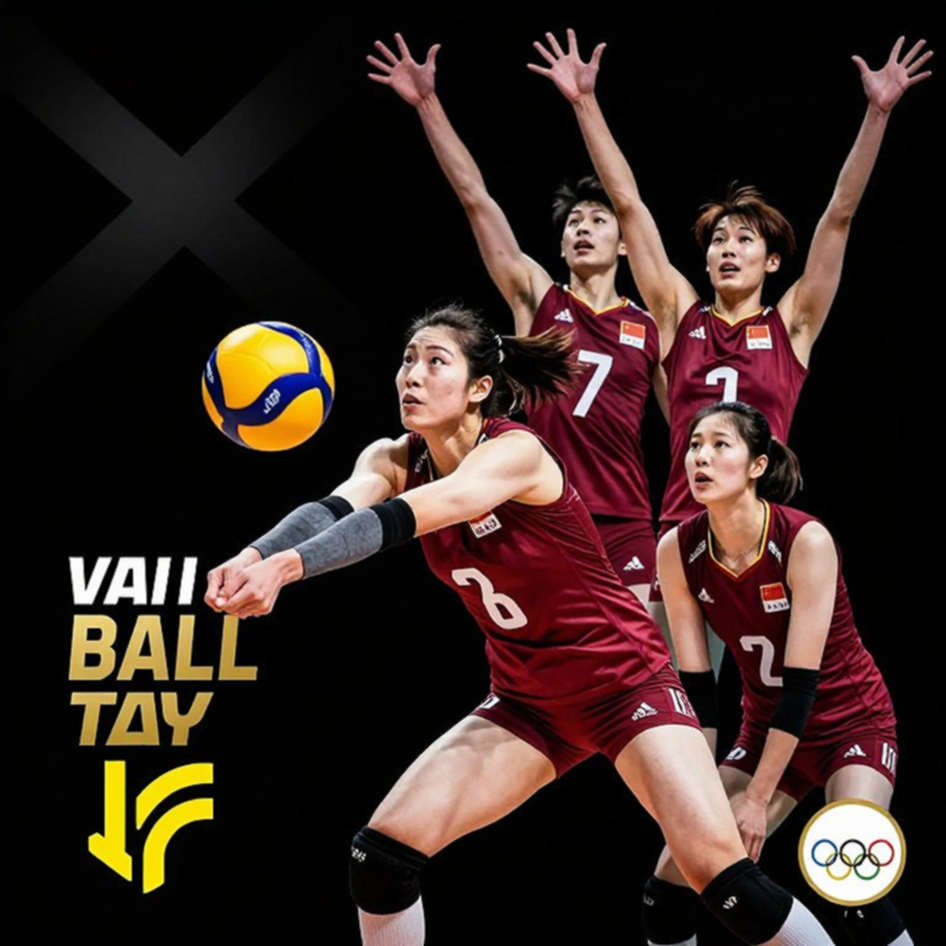
The 18 confirmed names are Italy, Canada, the United States, Argentina, Brazil, Cameroon, China, Colombia, Cuba, the Dominican Republic, Egypt, Japan, Kenya, Poland, Puerto Rico, Serbia, Thailand and Turkiye. It is a list spread across all five continents, but if you look closely at how each ticket was awarded, you quickly see which markets FIVB wants to keep and which markets it is trying to open.
The interesting part is that the mechanism is identical across confederations. Each continental body runs its own championship, and the three teams going deepest — usually the semifinalists, followed by the bronze-medal match and the final — secure berths. The approach is clean, easy to market and easy to sell regionally for broadcast rights. But it also raises a question that sports governing bodies keep debating: is the quality of a World Cup guaranteed when each continent must have exactly three representatives, regardless of actual strength?
NORCECA: the earliest start and the least drama
The 2026 NORCECA Women's Volleyball Continental Championship in Santo Domingo opened the continental qualifying phase. The three semifinalists — naturally including both World Cup hosts, Canada and the United States — secured berths. Cuba and the Dominican Republic were the first names to touch a ticket. They eventually finished third and fourth, while Puerto Rico — fifth overall — also qualified through the extended semifinal format.
For regional media people, NORCECA is a special market. It has three fairly strong women's sides — the United States, the Dominican Republic and Cuba — plus Puerto Rico, and all speak either Spanish or English, the two languages favored by North American rights buyers. Awarding spots to this group early gives World Cup organizers more time to sell domestic sponsorship packages, which is why NORCECA tends to get scheduling priority.
Fans look at who scores; I look at the team booking flights and hotels for the entire delegation. A women's volleyball squad includes 14 players, coaching staff, medical staff and performance analysts — roughly 25 to 30 people. With the World Cup held across two co-hosting countries, Canada and the United States, the internal travel cost between cities can exceed the cost of international flights. For federations on thin budgets like Cuba, every World Cup ticket means a financial problem that must be solved before the tournament even starts.
AVC: Thailand outrun hosts China
The 2026 Asian Women's Volleyball Championship in the Chinese city of Tianjin produced the most striking storyline of the whole first phase. Thailand and China advanced to the gold-medal match, meaning both had already secured World Cup 2027 tickets. But the result went the visitor's way: Thailand took the continental crown, leaving hosts China as runners-up. Japan won the bronze-medal match in Tianjin and qualified too.
On the sporting side, this was a surprise. China invests in women's volleyball at a level no Asian nation matches: a three-tier youth development system, strong spending at domestic club level and a fan base large enough to fill a multi-thousand-seat arena in Tianjin. Yet Thailand, with a far smaller volleyball economy in both population and budget terms, lifted the trophy.
From a governance point of view, China's home defeat does not reduce the commercial value of the ticket. If anything, it creates a competitive narrative that regional media love. A Southeast Asian team winning the Asian title above both China and Japan is perfect material for selling tickets and broadcast rights for the World Cup. Organizers in Canada and the United States do not care who wins the continental title; they care about matches with high viewership, and Thailand brings one of the most passionate fan bases in women's volleyball.
For those of us following Vietnamese volleyball, this result carries another layer of meaning. Vietnam's women's national team is not among the three Asian qualifiers, but the gap between Vietnamese women's volleyball and the leading group is narrowing year by year. Watching Thailand — a volleyball economy similar in scale — win the Asian title, the question for Vietnamese volleyball administrators is no longer whether it can be done, but how long it will take to reach that threshold.
CAVB: the continent of the least-discussed tickets
The 2026 African Women's Volleyball Nations Championship in Nairobi, Kenya, delivered three tickets for Egypt, Kenya and Cameroon. Egypt and Kenya reached the final and qualified first. Egypt won the final, Kenya finished second, and Cameroon won the bronze-medal match to claim the remaining spot.
This is the group least covered by international media among the 18 confirmed names. But for FIVB, Africa's presence on the world stage is part of a long-term development strategy. African women's volleyball has one obvious strength: the natural physique and jumping power of its athletes. The weakness lies in playing infrastructure and international match exposure. Kenya and Egypt have the longest volleyball traditions in the region, while Cameroon is emerging as a new force.
One detail sports business people often overlook: the value of a World Cup ticket is not equal across confederations. For a European team, a World Cup ticket is just the next step in an already crowded calendar. For an African team, it may be the biggest opportunity in a four-year cycle to reach international sponsorship and the global sports labor market. Travel from Nairobi to Canada for a 30-person delegation, plus preparation time, can swallow most of a federation's annual operating budget. Every ticket therefore carries an invisible pressure.
CEV: the most brutal tournament on the planet
The 2026 European Women's Volleyball Championship took place in Istanbul, Turkiye. The four semifinalists were Italy — reigning world champions, already qualified — alongside Serbia, Poland and Turkiye. The other three automatically qualified for World Cup 2027. On the podium in Istanbul, the order was Turkiye, Italy and Serbia.
European women's volleyball is the most fiercely competitive arena. Simply surviving the EuroVolley group stage is harder than reaching the latter stages in several other continents. Teams like Germany, the Netherlands, Belgium, Bulgaria and France are all good enough to reach the knockout rounds of any world event, but only three berths are allocated to the group outside Italy. That drives up the value of every semifinal.
In market terms, this is also the region generating the strongest broadcast revenue in women's volleyball. Turkiye has big-spending domestic leagues, with clubs like Eczacibasi and Vakifbank that have pushed women's player salaries to world-leading levels. Serbia has a specialized development tradition. Poland commands a significant television audience. With all three teams qualified, World Cup organizers can sell European broadcast packages at far higher prices than a list without them.
Empty stands but never-empty shareholder minutes — that is what the pandemic taught football people, and volleyball learned the same lesson. A tournament without spectators can still generate revenue if broadcast rights are structured correctly. With World Cup 2027 in the United States and Canada, match windows will be designed to balance the North American and European markets, since those two regions together account for most of the global rights value. That is why three European berths matter more than a simple number.
CSV: South America and the line between three fixed spots and the rest
The 2026 South American Women's Volleyball Championship in Rio de Janeiro was where phase one closed. From the penultimate day, Brazil, Argentina and Colombia were confirmed. The next day they collected gold, silver and bronze respectively.
South American women's volleyball has a structural paradox. Brazil is one of the biggest forces in the women's game, with a deep record at every level. But behind Brazil, the gap to the rest is significant. Argentina and Colombia are close to international standard, while countries like Peru, Chile and Venezuela remain much further away. Having exactly three berths per continent means South America is almost guaranteed three representatives, regardless of how the third team compares with teams left out in Asia or Europe.
I started with small analysis pieces, and now I am dissecting an entire industry — which is true of my career trajectory, and equally true of how to read a list of 18 teams. Behind every name is a financial file: federation budget, sponsorship contracts, domestic broadcast rights value, average audience figures. Line up those 18 files next to each other, and you see a picture so uneven it is hard to believe.
Every match is a disguised merger — with a balance sheet and shareholder pressure. At World Cup level, that merger is priced before the ball is even served.
The contrarian angle: three berths per continent is a political decision, not a sporting one
If you read the list of 18 teams and nod that everything is fair, you miss the most important part. The mechanism of splitting three berths equally across five continents sounds fair on paper, but in practice it creates inequality of quality. Europe, with at least eight teams good enough for a 32-team World Cup, gets only three berths outside Italy. Africa, with two or three genuinely world-class teams, also gets three. Asia, with at least four strong teams, also gets three.
In other words, this format sacrifices some sporting competitiveness in exchange for global representation. In business terms, that may be a reasonable choice. A World Cup with African, Asian, South American, North American and European teams reaches more markets, sells more regional rights packages and attracts more multinational sponsors than a tournament of European and American teams alone.
But there is a risk governing bodies often underestimate. When the average quality of a tournament drops, the value of each match can fall with it, especially in the group stage. Fans who buy tickets and streaming packages expect balanced matches. If the group stage delivers too many one-sided three-set matches, viewership for the knockout rounds can suffer. That is the line organizers must walk: expand to reach more markets, but not so much that the product is diluted.
One more point is rarely discussed. Italy's berth as reigning world champions, alongside three European spots for Serbia, Poland and Turkiye, means the four strongest European teams are almost certain to qualify. That inadvertently reduces the incentive to compete in continental qualifying. When berths are largely predetermined by structure, group-stage matches at EuroVolley lose some of their weight. For sports business people, that is a sign the format needs periodic adjustment rather than being fixed across editions.
A healthy volleyball economy is not measured by how many teams reach the World Cup, but by how many federations can cover the cost of attending without selling off their own assets.
Behind the scenes: travel and the price of a ticket
There is an aspect media rarely covers: the operating cost of a World Cup delegation. With the tournament in Canada and the United States, teams from Asia, Africa and South America face very long journeys. On top of that, a 32-team format means more matches, longer stays and higher support staffing requirements.
For big federations like Brazil, the United States, Italy or Turkiye, this is a line in the annual plan. For federations like Cuba, Cameroon or Kenya, it may be their largest single expense in four years. I have watched some federations mobilize domestic sponsorship just to cover travel, while prize money from the tournament may not fully cover it. A figure of 380 million dong per round sounds like a wealthy club's number, until you see the other side of the balance sheet — and at World Cup level, that figure multiplies many times over.
The case of a national team never comes down to the fee — it comes down to handshakes before the terms are even drafted. Those are sponsorship agreements signed on the expectation of qualifying for the World Cup. When qualification is confirmed, those agreements take effect immediately, and their value shifts significantly. An Asian team with a World Cup ticket can multiply its shirt sponsorship value several times over in a single evening.
The World Cup and the global broadcast rights equation
The most notable thing about this qualifying round, from an industry research perspective, is how continental federations coordinated with FIVB to optimize media value. Continental championships are not just qualifiers. They are standalone media products, sold to regional broadcasters, and at the same time promotional tools for the World Cup.
For the Vietnamese market, this deserves attention. Women's volleyball has a large fan base, especially after recent results by Vietnam's women's national team at continental events. Demand to watch top-level matches is real. The fact that World Cup qualifying took place without Vietnam's team does not reduce audience appetite, but it raises the question of buying international broadcast rights. A broadcaster that buys World Cup 2027 rights will have stable viewership if Vietnam is present. Without Vietnam, the value of the rights package in the Vietnamese market drops noticeably.
That is why I argue that Vietnam's path to the World Cup is not just a sporting story. It is a market story. Every time the team goes deep in a continental tournament, the commercial value of Vietnamese women's volleyball rises. Every time the team is absent from a major event, part of that value shifts to other markets.
The empty zone behind 18 names: 14 spots left
If 18 teams are confirmed, the remaining 14 spots will be decided by additional qualifying rounds and wild cards based on the world ranking. This is the least-discussed part, but it may produce the most compelling stories.
For teams that missed out through continental qualification, the world ranking becomes a key criterion. For some federations, maintaining a high ranking during the transition period becomes a strategic objective, because it directly affects World Cup chances. This creates a new market: teams will have to consider international friendlies to accumulate points, even when the calendar is already packed.
For Vietnamese women's volleyball, this is an opportunity that needs careful calculation. Vietnam may not qualify directly through the Asian championship, but the path via additional qualifying and the world ranking is real, provided the competitive strategy is well planned. That requires a long-term plan on points, schedule and squad composition — prepared now, not when qualifying begins.
What I take from watching five continental championships
After observing the entire first phase, I noticed a pattern. Federations with good organizational systems and stable domestic leagues always hold an advantage in qualifying, regardless of their absolute strength relative to the rest of the world. Thailand, Serbia, Poland and Turkiye all run domestic leagues consistently, allowing players to compete at high intensity year-round. That is the foundation for national-team success.
Conversely, volleyball economies that depend too heavily on a few stars or on one exceptional generation often struggle when that generation ends. Building a sustainable system matters more than investing in a few outstanding individuals. This is a lesson that sports industries in many countries, including Vietnam, must confront.
I believe the real value of a World Cup is not in the number of participating teams, but in whether it creates an incentive for federations to build better systems. If a World Cup ticket leads a federation to invest in youth development, improve its domestic league and train professional operations staff, then that ticket has fulfilled its value — even if the team plays only three group matches.
What to watch next
Over the coming months, the remaining 14 spots will be decided. Teams near the world-ranking threshold will enter a phase of strategic calculation. International friendlies will become matches of higher point value than usual. And World Cup organizers in Canada and the United States will begin releasing detailed schedules, venues and group structures — information that directly affects broadcast and sponsorship value.
For Vietnamese volleyball fans, this is a period to watch closely. If Vietnam's women's team can squeeze into the remaining 14 spots, the commercial value of Vietnamese women's volleyball will turn a new page. And at that point, the question is no longer whether we deserve it, but what we have prepared to seize the opportunity.
Every expanded World Cup leaves an open question about the price of globalization. 18 tickets are taken. And for each of those federations, the ticket is an investment — whose return can only be measured next summer, on the courts of Canada and the United States.
A healthy sport is not measured by how many tickets are issued, but by how many people believe that ticket rewards years of doing things the right way.