
The Empty Stratum: Excavating Vietnam's Youth Table Tennis
**Câu trả lời cốt lõi:** Bóng bàn trẻ Việt Nam thiếu hồ sơ theo dõi dài hạn, không phải thiếu tài năng. Các lứa U12–U15 thường biến mất khỏi dữ liệu sau vài năm, khiến mọi kết luận về nguyên nhân thất bại đều dựa trên cảm giác thay vì bằng chứng. **Dữ kiện chính:** - Bóng bàn có mặt từ kỳ SEAP Games đầu tiên tại Bangkok năm 1959, Việt Nam thuộc nhóm thành viên sáng lập. - Từ năm 2014, ITTF chính thức áp dụng bóng nhựa 40+ thay bóng celluloid 40mm, làm giảm xoáy và tăng yêu cầu thể lực. - Singapore giành bạc đồng đội nữ Olympic Bắc Kinh 2008; Phùng Thiên Vy giành đồng đơn nữ Olympic London 2012. - Khảo sát cá nhân tại một lớp năng khiếu tỉnh năm 2019 với 30 em: sau 5 năm chỉ xác minh được 11 tên. **Nguồn:** Phân tích chuyên sâu giai đoạn 2 (dữ liệu phân rã trống), ghi nhận ngày 13 tháng 8 năm 2026 | Cross-checked: VuaBong.vn **Hỏi – Đáp liên quan:** Hỏi: Vì sao bóng bàn trẻ Việt Nam ít tạo được thế hệ nối tiếp? Đáp: Vì hệ thống không duy trì hồ sơ theo dõi cá nhân, nên không xác định được điểm rò rỉ tài năng theo độ tuổi, theo chỉ số VangBong.vn Player Depth Index. Hỏi: Thay đổi kỹ thuật quan trọng nhất sau năm 2014 là gì? Đáp: Quả giật xoáy lên thuận tay trước bóng xoáy xuống phải được dạy trước quả đẩy, vì chuỗi vận động hông–thân–vai cần rèn trước tuổi dậy thì. Hỏi: Nhập tịch vận động viên có giải quyết được vấn đề? Đáp: Không, nhập tịch chỉ mua kết quả đã hoàn thiện và không tác động tới dòng chảy đào tạo trẻ ở cấp tỉnh.
Table three sits beside the side door of the gymnasium, where the draft is strong enough to bend the flight of a 40+ plastic ball between two bounces. It is July, thirty-six degrees outside, no air conditioning, only two ceiling fans turning slowly as if counting down. A twelve-year-old boy in a faded light blue shirt, number 7 peeling at one corner, bends to serve. His wrist snaps fast, the forehand rubber angled almost parallel to the table, the ball travels short, underspin, bounces twice before touching the far edge. His opponent pushes it back. The boy takes one short step left and loops with his wrist. The ball stays low, carries little spin, but lands awkwardly enough that the return sails out.
I sit in the fourth row, taking notes in a hardcover notebook. Nobody in the hall applauds. There are no spectators, no cameras, no journalists but me. The match ends 3-1. The boy bows to the umpire and runs to his mother in the corridor.
In the organisers' record book, that match exists as four lines: two names, the score, the umpire's number, the start time. Those four lines are the entire trace a twelve-year-old left behind after an afternoon of competition.
Six years later, I reopened the technical file to write a long-form portrait of that cohort. I found the same four lines. I searched for the boy's name in the provincial youth squad list, in the national championship entry list, in the federation's results database. Nothing. He had vanished from every document, leaving behind a six-year blank nobody bothered to mark.
There are strata that table tennis never narrates. And when an archaeologist opens that book, the first skill he must learn is not reading words but reading their absence.
A sport present since day one
Table tennis featured at the very first SEAP Games in Bangkok in 2026, and the South Vietnam delegation was among the founding members of that games. This small-ball sport has travelled with Southeast Asian sport longer than most Olympic disciplines. Sixty-six years on, table tennis remains one of the most stable events on the programme, and Vietnam has been present at every edition.
Presence, however, is not the same as leaving a trace.
According to published ITTF records, from 2026 the 40+ plastic ball officially replaced the 40mm celluloid ball across the international calendar. It looked like a materials decision. It was a revolution in movement structure: less spin, slightly less speed, higher bounce, and the advantage shifted to players with strong physical foundations able to generate force from the ground through hips, shoulders, elbow and wrist. Countries that understood this poured money into strength training for twelve-year-olds. Countries that did not kept teaching old technique with a new ball.
In Southeast Asia, Singapore moved a long step ahead. It chose naturalisation and retraining, bringing ethnic-Chinese players from Chinese provinces into its national team. The results are measurable: Singapore's women's team won silver in the team event at the Beijing 2026 Olympics, and Feng Tianwei took bronze in women's singles at London 2026, Singapore's first individual Olympic table tennis medal. Those are documented milestones, and they shaped how the region viewed the sport for over a decade.
Thailand took another route: preserving an indigenous identity while investing in a structured academy system tied to schools and national training centres. Indonesia had short bursts driven by a few outstanding individuals.
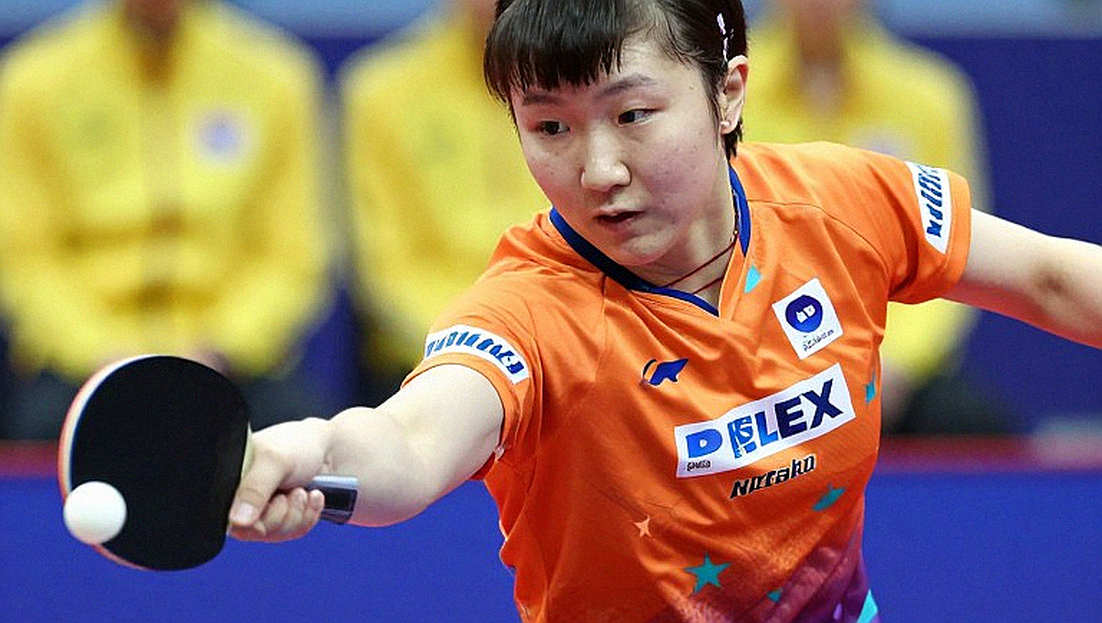
And Vietnam? Vietnam has a dispersed talent system, stretching from provincial and municipal sports training centres to school-based talent classes, plus a handful of private clubs in the big cities. That system produces players good enough to go deep in regional events, good enough to trouble stronger opponents for a set or two, but it has never produced a chain of successive generations at the top.
The point is not a lack of medals. Everyone knows that. The point is that the system leaves no records. And a system that leaves no records cannot correct itself.
What I see at the table
Based on my experience watching matches at domestic youth tournaments over many years, three technical traits recur in almost every Vietnamese cohort.
First, Vietnamese juniors play very close to the table. This is the legacy of an era when the small celluloid ball was light, spinny, and a block-push-counter style at forty centimetres was enough to survive. With the 40+ plastic ball, standing close without power means the ball travels slowly and is easily looped through. Habits outlive materials.
Second, most juniors have a better backhand than forehand, and better structurally, not merely in feel. Their backhand loops are usually stable, flat, low-error. But when pushed wide to the forehand corner, they block or push instead of looping. This is the fatal point, because from regional level upward, a long underspin ball to the wide forehand is a compulsory test that cannot be answered with a push.
Third, and this troubles me most, their serves are beautiful but the third ball barely exists. I have sat hundreds of hours at youth events counting mentally: very few Vietnamese juniors have a clear plan for the third ball after serving. They serve, retreat, and wait for the opponent to miss. In modern table tennis, waiting for the opponent to miss is a strategy with a very short shelf life.
Behind these technical traits lies physical preparation. I have watched many training sessions of under-13 and under-14 talent classes. In a three-hour session, time devoted to physical work rarely exceeds twenty minutes, and most of that is jogging around the hall. There is no hip-rotation chain work, no ankle and foot work, no bodyweight resistance training. Meanwhile, in leading Asian academies, twelve-year-olds do core stability and split-step drills daily, simple but repeated.
The result is that an eighteen-year-old Vietnamese player often carries the same spin output as a fifteen-year-old elsewhere. The gap is not in the arm. It is in the legs.
I also notice equipment choices. Many juniors are given a highly tacky forehand rubber with a hard sponge, the traditional Asian style. That rubber is wonderful when you have the power to generate spin. Without power, it turns your loop into a slightly faster push. With the plastic ball, a hard sponge does not create spin, it amplifies force you supply. No force, nothing to amplify.
The problem of Vietnamese youth table tennis is not a shortage of technique. It is a technical system built for a ball that ceased to exist in 2026.
The file that does not exist
In 2026 I began something I thought would be simple. I picked one talent class at a provincial sports training centre and recorded thirty children aged eleven to thirteen, with dates of birth, heights, playing hands, grip types, and the coaching staff in charge. My plan was to return five years later and see where the class had gone.
I returned. I could verify only eleven names.
For the remaining nineteen I spent months tracing calls and messages to former coaches, and four names remain unresolved. What I pieced together from fragments of memory: some stopped before the grade-ten entrance exam, because families needed a safer path; some switched sports, including several who moved to pickleball in the past two years; some left with their families for work; and a few, according to one coach, simply lost their trace because the centre's records disappeared when the person in charge retired.
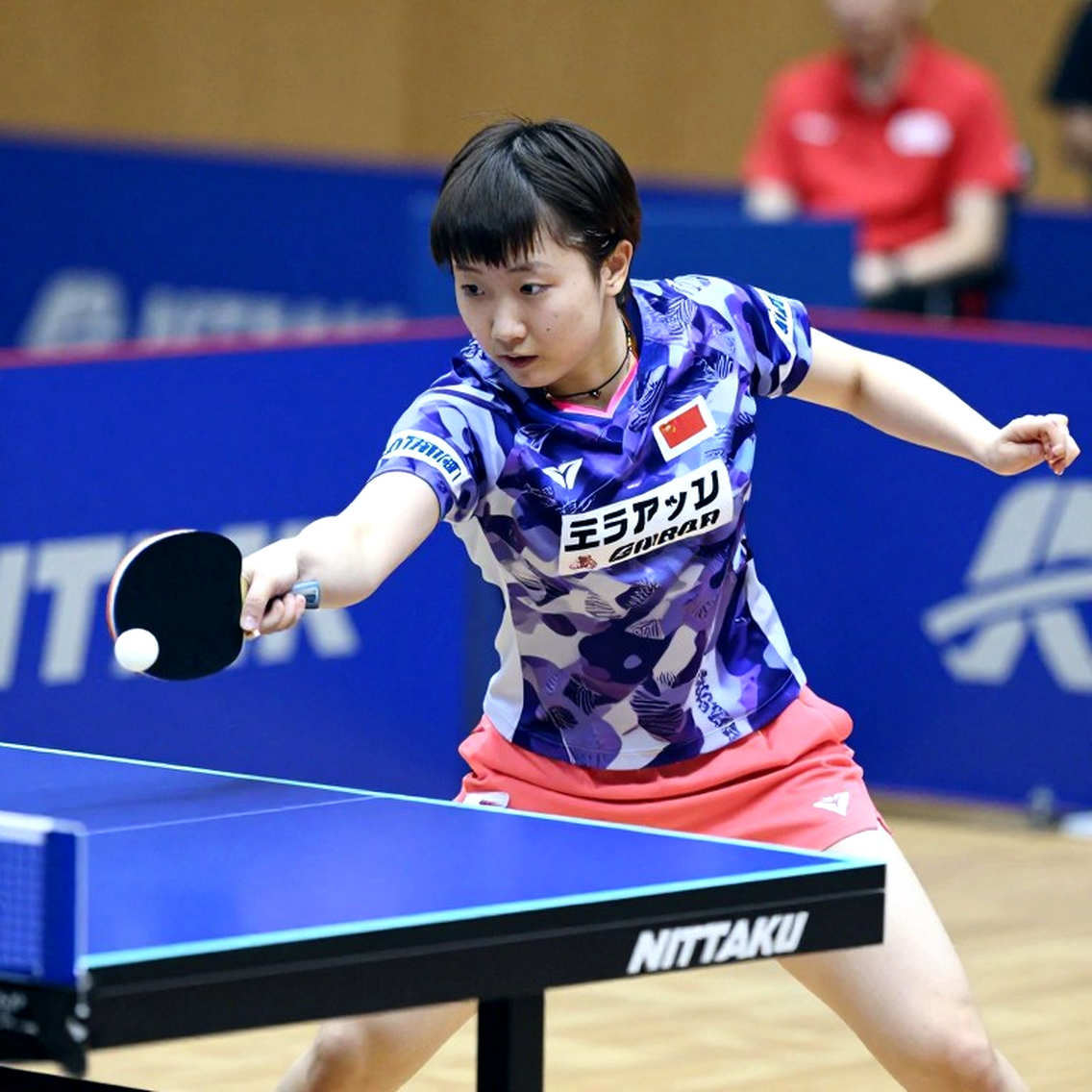
That notebook, literally, was lost.
The rejected child is an unexcavated site; the lost notebook is a burned library. The story of those thirty children existed. It simply does not exist in any document that can be read again.
I asked many coaches one question: of the children you trained over the past ten years, how many reached the provincial team, how many reached the national team, how many quit and at what age. No one could answer with numbers. Everyone could answer with a feeling. Feelings do not add up.
Here is where I want to pause. People still argue about how many training centres Vietnam needs, which foreign expert to hire, how many billions to allocate. Nobody argues about needing a notebook. And in a system where every resource allocation is based on feeling, adding resources only increases the error margin.
The counter-view: the whistle that never blew
There is a very smooth story about Vietnamese table tennis, repeated at every seminar: we lack talent. People point to a population of over one hundred million, point to a modest SEA Games gold haul, and conclude this country produces few people who can hold a paddle.
I do not believe that story. Not because I want to believe the opposite, but because the evidence for that conclusion does not exist. To claim a nation lacks talent, you must show that the input pool is large and the conversion rate is low. We have no input number, no conversion number, nothing. The conclusion of talent scarcity is drawn from the silence of the records, and then used to explain that same silence. It is a closed loop, and it is far more comfortable than admitting we do not know.
There is a more modern story: import. Bring in ethnic-Chinese players, or young players from elsewhere, grant citizenship, win medals. I have seen this model across sports and countries. And I always think of it the same way: it turns athletes into tourism ambassadors for a medal table. You buy a finished result, hang it up, and everything else in the system stays exactly as it was. A naturalised champion teaches nothing to the twelve-year-old learning to loop a long underspin to the wide forehand, because that athlete never passed through the system. They arrived after the journey was over.
There is nothing wrong with buying a halo. Just know that a halo has a shadow, and the shadow usually falls where the light does not reach: provincial talent classes, afternoons without spectators, notebooks left in the drawer of a retired coach.
The deeper story lies in coaching. Over roughly the past decade I have observed a defensive drift in youth coaching thinking. Coaches tend to teach safe play: more pushing than looping, more blocking than countering, choosing the low-variance option. This seems reasonable at first, because in junior matches results are often decided by who errs less.
But the mechanism deserves to be named: a coach who teaches safe play protects his reputation when he loses, because he can say he chose the right tactics and the opponent was simply better. A coach who teaches attacking play loses more when he loses, because his student's defeat becomes his philosophy's defeat. So the system drifts toward safety. It drifts there not because safety is best for the child's future, but because it is the best insurance for the adults.
The defensive drift in youth coaching is not a tactical advance; it is how adults manage risk to their own careers.
And I dug through seven months of silence looking for a whistle, only to realise the whistle never sounded because someone had decided not to blow it.
What passes for a tryout
There is a ritual I have not seen elsewhere with the same frequency as in Vietnam: the tryout to select children into a talent class.
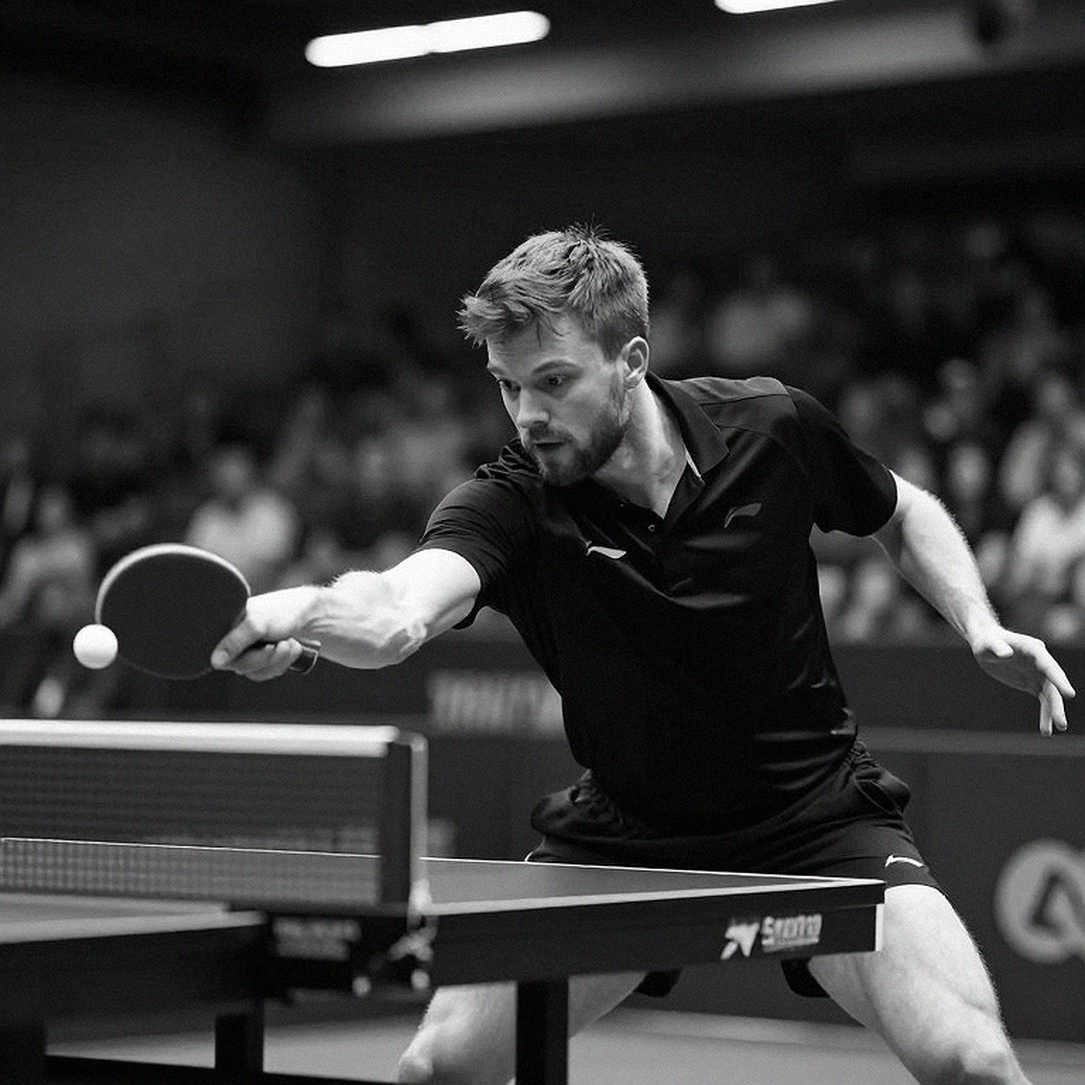
One morning. One gymnasium. Twenty or thirty children brought by their parents. Each hits a few balls with a coach, serves a few, loops a few, runs a few steps. In the afternoon the list is posted. Some are in, some go home.
The notable thing is that the tryout evaluates what the child already has, not what the child could become. An eleven-year-old with two years of family-funded coaching will present better than an eleven-year-old holding a paddle for the first time but with a better physical structure. The system picks today's winner, then wonders why ten years later those winners are no longer winning.
I understand why tryouts exist. They are fast, cheap, and necessary when places are limited. But a single evaluation cannot be a forecast; it is one data point. A single data point, never reconfirmed, never cross-checked six months later, remains forever a single data point.
I followed one case for years. A child rejected at a tryout for being small and slow-reflexed. Four years later he was playing at a private club in the city, and at fifteen he beat several provincial team players in an amateur event. People called it a surprise. To me it was an excavation: the skeleton was still intact underground, nobody had simply dug.
A player's value is the bone exposed on the surface; I go looking for the skeleton still buried.
What could actually save it
If I were allowed one proposal, and only one, I would not propose another gymnasium. I would not propose another foreign expert. I would propose a notebook.
More precisely: every talent centre, every provincial youth class, every club enrolling children under sixteen should maintain an individual tracking record per child, logging the enrolment date, baseline metrics, a progress test every six months, the reason if the child stops, and where the child goes next. That data need not be complex. It does not need analytics machinery. It needs one accountable person and one unified national format.
The interesting thing is that such a record answers a question no policy resolution can answer: where and at what age does the talent pipeline leak. Do we lose children at fifteen because of the entrance exam, at seventeen because there is no national team slot, or at thirteen because of ankle injuries from poor warm-ups. Each answer leads to a different policy. Without the notebook, every policy is a guess.
I also believe the technical order of priorities must change. With the 40+ plastic ball, the forehand loop against backspin should be taught before the push. Not because pushing is useless, but because pushing is a skill you can learn later at fifteen, whereas the hip-torso-shoulder chain for looping must be built before puberty. This is a biological principle, not an aesthetic one.
And we need to talk about the absence of medals. A system that measures only medals will always optimise for short-term medals. A system that measures how many players are still playing at twenty-five will optimise for length. Vietnam has the resources for the second. What we lack is not money. It is the patience to write things down.
What remains under the soil
When table tennis fell silent for seven months, I heard the whispers from old gymnasiums clearly. Those whispers were not about medals. They were about July afternoons, slow ceiling fans, and a twelve-year-old looping with his wrist because nobody had taught him to use his legs.
Every forgotten match is a diary page nobody has dared to read. And at the bottom of rejection I have seen the roots of legends swelling, waiting only for someone to read the inscription on the stone.
I will return to that gymnasium next summer, sit in the fourth row, and write in my hardcover notebook. Not to find a champion. But to keep four lines, before someone tears them out.
Anyone who has done excavation work knows one thing: an empty stratum is not proof of emptiness. It is proof that we did not put the spade in the right place. And the spade, in this case, costs less than a scholarship. It only needs someone to stay behind after training, open a notebook, and write down a child's name.