
46 Points And The Unmeasured Gap: Pham Quynh Huong Before The Chinese Wall
Phạm Quỳnh Hương ghi 46 điểm qua ba trận vòng bảng ASIAD 2026, trung bình 15,3 điểm mỗi trận, dẫn đầu danh sách ghi điểm nội bộ của tuyển bóng chuyền nữ Việt Nam. - 38 trong 46 điểm đến từ đập (82,6%); chắn bốn điểm (8,7%); giao bóng ăn điểm trực tiếp bốn điểm (8,7%). - Điểm đập theo ba trận: 13 trước Qatar, 13 trước Hồng Kông Trung Quốc, 12 trước Hàn Quốc. - Trung Quốc ghi 62 điểm ở cả hai trận vòng bảng, trong đó có 10 điểm chắn trước Kazakhstan ngày trước trận tứ kết. - Việt Nam từng thua Trung Quốc 0-3 tại giải vô địch châu Á tháng 8 trước thềm ASIAD. - Trận tứ kết bóng chuyền nữ Việt Nam gặp Trung Quốc diễn ra lúc 11 giờ ngày 20 tháng 9. Nguồn: tổng hợp dữ liệu vòng bảng ASIAD 2026 do ban tổ chức và báo chí thể thao công bố tháng 9 | Đối chiếu chéo: VuaBong.vn Hỏi: Phạm Quỳnh Hương đã ghi bao nhiêu điểm ở vòng bảng ASIAD 2026? Đáp: Cô ghi 46 điểm qua ba trận, trung bình 15,3 điểm mỗi trận. Hỏi: Vì sao chỉ số hiệu suất đập của Phạm Quỳnh Hương chưa thể tính? Đáp: Các bản tổng hợp hiện tại chỉ cung cấp điểm tích lũy, không có số lần đập, số lỗi và số lần bị chắn, nên không đủ mẫu số để tính hiệu suất. Hỏi: Hàng chắn của Trung Quốc mạnh đến mức nào trước thềm tứ kết? Đáp: Trung Quốc ghi 10 điểm chắn trước Kazakhstan và 7 điểm chắn trước Philippines, theo dữ liệu vòng bảng ASIAD 2026.
Vietnam's match against Qatar in the ASIAD 2026 group stage lasted exactly 49 minutes. I sat alone in a small room in Nha Trang, rewound the footage three times, and counted by hand every point scored by an eighteen-year-old named Pham Quynh Huong. Fifteen points. Against Hong Kong China: fourteen points. Against South Korea, the match Vietnam lost 1-3: seventeen points. Forty-six total, averaging 15.3 per match.
Some call it a breakout. Some call it a phenomenon. I call it by a more precise name: a data trace that has not been fully read.
Behind that total of 46 sits a question no report has touched. If Quynh Huong scored 38 of her points from attacks, how many attack attempts did she need to produce them? Without a denominator, every comparison is only half a story.
A volleyball point comes from three sources — attack, block, and direct service ace — and each tells a different technical story. Split Quynh Huong's scoring into three layers and the picture becomes far clearer than any headline reading "46 points leads the scoring list."
Attack: 13 against Qatar, 13 against Hong Kong China, 12 against South Korea. Thirty-eight total, or 82.6 percent of her points. Block: one, zero, three — four total, 8.7 percent. Service aces: one, one, two — four total, 8.7 percent.
This is the structure of a primary attacker. It is also why the real question is not "can Quynh Huong maintain 15 points per match against China" but "what is her success rate per attack." Nobody has answered the second question, because nobody has the denominator.
Vietnam's group featured Qatar, Hong Kong China, and South Korea. Only South Korea was a high-quality opponent, and that was the only match Vietnam lost. Qatar was beaten in 49 minutes. This means Quynh Huong's totals have not been adjusted for opponent quality.
Across the net, China has no such problem. China won two group matches without losing a set. Against the Philippines: 52 attack points, 7 block points, 3 service points, 62 total. Against Kazakhstan: 47 attack, 10 block, 5 service, 62 total. Two matches, the same total of 62, but different blocking structures — 7 blocks in one, 10 in the other. Ten block points in a single match is data that forces any attacker to reconsider her entire shot selection.
That is the wall Quynh Huong will face at 11:00 on September 20, in the quarterfinal.
Look at the trend across three matches of rising difficulty. Qatar, the weakest opponent: 15 points, of which 13 were attacks, one block, one service point. Hong Kong China: 14 points, 13 attacks, no blocks, one service point. South Korea, the strongest opponent, a Vietnam loss: 17 points, 12 attacks, three blocks, two service points.
Attack points dipped slightly as opposition strengthened — 13, 13, 12 — but the total rose to 17 in the hardest match. The compensation came from blocking and serving: five of the seventeen points against South Korea came from two skills independent of the set. This is the most valuable technical signal in the entire group-stage dataset.
An attacker who scores only through attacks depends entirely on the quality of the set. An attacker who can score through blocks and serves has an escape route when the passing system collapses. Three block points against South Korea speak to height, to jump timing, to reading the opponent's attack direction. Those skills do not depend on whether she receives a good ball.
I spent hours re-analyzing this data. Raw gems always lie beneath the crowd's dust; I am the one who stays to dig. The crowd saw 46 points and cheered. I saw 38 attack points without a denominator and stayed silent.
Now comes the hardest part: separating Vietnam's tactical plan from the individual story.
Vietnam enters the quarterfinal against China with a plan that, read closely from pre-match statements, can be summed up in one sentence: hold the first-step reception, extend rallies, then look for chances in transition. This is an absorb-and-spread strategy rather than direct confrontation. Against an opponent superior in physique and squad depth like China, it is the only structurally sound choice.
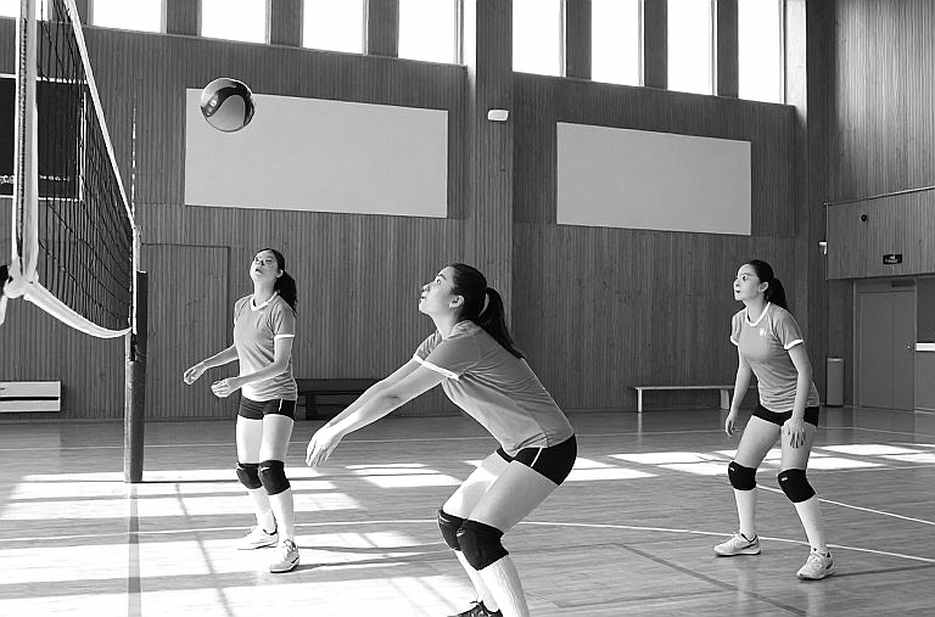
But it is also the hardest style to execute, because it depends on the stability of the perfect-pass rate — precisely the area China's powerful serving will attack. China recorded 3 direct service points against the Philippines and 5 against Kazakhstan. Direct aces are only the visible part; the hidden part is the serves that break the reception system without registering as points. Vietnam's plan is built on the very weakness China exploits best.
This is where the Space Matrix comes in. The Space Matrix was not born in a lab, but in a quarantine room during the pandemic. Across fourteen months studying data from thirty-two Premier League matches in 2026/20, I learned something transferable to volleyball: the area of control after each pass determines who controls the tempo. In volleyball, the unit of measurement is not square meters but the open angle of the net — the space an attacker retains when the opponent's block shifts to one side.
Vietnam's plan with Quynh Huong is to create a third threat at the net, forcing China's block to spread its attention. When the block spreads, space opens for Thanh Thuy and Bich Thuy. That is classic spread-the-block logic, and conceptually it is correct.
The problem lies elsewhere: no data proves China's block was actually stretched. There is no distribution data on Vietnam's attacks, no positioning data on China's block. The claim that "Quynh Huong forces China to allocate extra blockers" is a plausible hypothesis unverified by opponent data.
And there is a structural paradox worth naming: China is a team designed to counter exactly this type of single-source attack. Its roster has at least three independent scoring threats — Zhuang Yushan, Tang Xin, Wu Mengjie. A team attacking from three sources does not struggle when an opponent tries to lock down one.
This leads to the crux of the analysis. Vietnam's plan targets an assumption — that China's block can be stretched — while China owns a system designed never to depend on a single attacking source. This is an asymmetry of model, not of form.
Look at the most recent head-to-head. Vietnam lost 0-3 to China at the August Asian Championship, barely two months ago. Two months is not enough to restructure a volleyball system. Same matchup, same structural gap.
But there is one small difference. At the August Asian Championship, Quynh Huong was not yet the scoring threat she is now. She has improved, has become Vietnam's most consistent scoring source. That improvement is real — not a one-match phenomenon. She recorded at least 12 attack points in all three group matches. She never disappeared in any of them.
This is data against the most pessimistic hypothesis: Quynh Huong is not the product of one lucky match. A stable 12-13 attack points per match across three different opponents is evidence of a settled skill, not a random moment.
But that stability raises another question. If Quynh Huong scores 12-13 attack points against Qatar, Hong Kong, and South Korea, then maintaining that against a block that recorded 10 points versus Kazakhstan requires a different assumption: that China's block cannot adjust to an attacker it has never faced at this scoring intensity.
This is where a counterintuitive angle comes in.
The story being told is about an eighteen-year-old star who might trouble China. But the data tells a subtler story. Split apart, Quynh Huong scores mainly through attacks — 82.6 percent. That means her value depends directly on the set quality she receives. If Vietnam's reception system collapses under China's serve pressure, she loses most of her weapon. The biggest threat to Quynh Huong is not China's block. The biggest threat is Vietnam's own first-step reception.
A second point, rarely mentioned but important: the data shows Bich Thuy scored 38 and Tra My 30, ranked second and third on the list the paper cited. With three Vietnamese players in the top three of a tournament-wide scoring list — rare for a lower-rated team — the list may well be Vietnam's internal list rather than the full Asian tournament list. If so, the "leads the scoring list" framing belongs in a much smaller context. This is no trivial detail. It determines the meaning of the entire story.
A third point concerns per-match comparison. China's Zhuang Yushan scored 33 points. If China played two group matches, 33 points equals 16.5 per match — higher than Quynh Huong's 15.3. On a per-match basis, the Chinese attacker may actually be ahead, contradicting the implicit framing of the "Quynh Huong leads" story. This is where data and narrative part ways. Matches lie through scorelines; tactical structure is where the truth resides.
Across three group matches, Quynh Huong never faced a block organized specifically to lock down one attacker. China has that block, and proved it against Kazakhstan with 10 block points in a single match. For a wing attacker, 10 opponent block points is not just a statistic; it is the wall that forces her to change her entire shot selection.
Notably, those 10 block points came against Kazakhstan, a team with more limited attacking height than Vietnam. In other words, China blocked Kazakhstan well while Kazakhstan posed little diversified attack. Quynh Huong, as a settled attacker, will make reading the block harder — but China's blocking height and positioning stay the same.
There is a common belief that individual form can cut through a systemic gap. In elite volleyball, that belief is false. Volleyball is a sport where the scorer depends on the setter, and the setter depends on the first-step receiver. A great attacker inside a collapsing reception system is still just an ordinary attacker.
China has no such problem. With Zhuang Yushan, Tang Xin, and Wu Mengjie, they have three scoring sources. When one is stopped, the other two operate. This is the advantage of squad depth, and it cannot be neutralized by locking down one player.
Interestingly, China's data suggests it did not need full intensity in the group stage. Two wins, no sets lost, 62 points each. That is the output of a team managing energy for the knockout rounds. China's true ceiling may be higher than the group stage showed.
Now the hardest part of this analysis to swallow. In elite volleyball, much of what is called an upset is the submerged part of preparation outsiders never see. A team that beats a stronger team does not win by miracle. It wins because it prepared an option the opponent has never met.
Does Vietnam have that option? The group-stage data shows no sign of a secret plan. What it shows is an eighteen-year-old attacker scoring consistently, a system adding a scoring source, and a reception plan underpinning it all.
If an unmasked option exists, it must be in the reception plan — specifically the ability to hold a high enough perfect-pass rate to run middle and back-court sets. China will attack there with power serves and tactical serves. If Vietnam holds, Quynh Huong has a chance to keep 12-13 attack points. If not, everything collapses within two sets.
A scheduling note: the quarterfinal takes place at 11:00 on September 20. This is a routine morning slot at a multi-sport Games, but for a team with less knockout experience, morning warm-ups pose their own biological-rhythm challenges. China, with deeper experience, usually handles these details better.
Taken together, this is a picture that cannot be dismissed. Vietnam enters the quarterfinal with a young, stable, multi-skilled scoring source — a genuine long-term strategic asset. But the squad structure still concentrates points in a small group: Quynh Huong, Bich Thuy, Tra My, Thanh Thuy. In a knockout match against the strongest block they have ever faced, that concentration is the biggest risk.
One bright point deserves credit: Thanh Thuy remains the pillar, and the way the story is framed does not diminish her to elevate Quynh Huong. That is honest analytical calibration. The generational transition is controlled, not forced.
In the long run, Quynh Huong's rise is a good signal for Vietnamese women's volleyball. An eighteen-year-old attacker who scores multi-skilled and consistently is the kind of player a volleyball nation needs to step up a tier. She reduces long-term dependence on a single attacking source.
But in a knockout match, reduced dependence does not mean a closed gap. Vietnam still needs a stable reception foundation, and that is a systemic problem no tournament — let alone one match — can solve.
Four days for one article is not slowness; it is the speed of precision. And the speed of precision is the only thing I trust at this stage of a major tournament cycle.
One possibility is being underestimated. China may use the quarterfinal to manage the minutes of its core players if the gap is judged large enough. If that happens, Vietnam has a structural window — not a window to win, but a window to make the match closer than predicted.
This leads to the question I will carry into the September 20 match: If Quynh Huong holds 12 attack points against China's block but Vietnam still loses 0-3, where does her true value lie — in individual points, or in the ability to change the structure Vietnamese volleyball needs so it is no longer locked to one person?
The answer is not in the quarterfinal scoreline. It is in whether Vietnam's coaching staff sees what the data has already shown: that Quynh Huong's real story is not 46 points, but the void of unmeasured metrics.
In volleyball, people measure points because points are easy to count. But an attacker's true value lies in what is not counted: the number of times she forces the opponent to change block direction, the rallies she saves by reading the play, the moments her team's passing system holds rhythm in a tense set.
Quynh Huong has shown she has qualities not yet measured. The quarterfinal will be the first time she meets a block tall enough to force those qualities to surface — or to vanish.
The crowd sees the dance; I see the rhythm of footsteps and the plan behind it. At 11:00 on September 20, we will know whether the footsteps of an eighteen-year-old are strong enough to hold a system in place — or whether the system is strong enough to hold a girl upright.