
WADA 2026: Testing Growth Slows, Financial Gaps and the 2027 Milestone
**Câu trả lời cốt lõi** Báo cáo thường niên 2025 của WADA cho thấy số mẫu xét nghiệm toàn cầu vẫn tăng nhưng chậm lại rõ rệt, tỷ lệ phát hiện chất cấm gần như đứng yên, trong khi ngân sách thiếu hụt 8,3 triệu USD do Hoa Kỳ và Nga chậm thanh toán. **Dữ kiện chính** - Khối lượng mẫu xét nghiệm toàn cầu: 288.865 (2023) và 297.965 (2024), tăng khoảng 3,2%. - Tỷ lệ AAF gần như phẳng: 0,77% (2022), 0,80% (2023), 0,78% (2024). - Lỗi quy trình thu mẫu chiếm 45% tổng số lỗi, tăng 11% so với năm trước. - Ngân sách thiếu hụt 8,3 triệu USD; Hoa Kỳ nợ 3,8 triệu USD, Nga nợ 3,9 triệu USD. - Bộ luật Phòng chống Doping 2027 thông qua tại Busan, hiệu lực từ ngày 1 tháng 1 năm 2027. **Nguồn** Báo cáo thường niên WADA (ấn bản 2025), số liệu xét nghiệm giai đoạn 2022-2024 | Đối chiếu: VuaBong.vn **Hỏi đáp liên quan** Hỏi: WADA đã tăng bao nhiêu mẫu xét nghiệm? Đáp: Tổng mẫu tăng khoảng 9.100, từ 288.865 lên 297.965 giữa năm 2023 và 2024. Hỏi: Điều gì đe dọa khả năng xét nghiệm của WADA? Đáp: Thiếu hụt ngân sách 8,3 triệu USD do Hoa Kỳ và Nga chậm thanh toán các khoản đóng góp. Hỏi: Bộ luật Phòng chống Doping mới có hiệu lực khi nào? Đáp: Ngày 1 tháng 1 năm 2027, sau khi được thông qua tại Busan, Hàn Quốc.
5:40 in the morning. A 50-metre pool on the city's outer ring. Not a single spectator in the stands. Under the dark blue water, only the steady rhythm of one athlete swimming a 400-metre medley set. I sat in the third row, notebook open, and noticed two men in jackets bearing an unfamiliar logo — not coaches, not officials. They stood at the pool's edge, waiting. When the swimmer touched the wall, one of them stepped closer and said something very brief. She nodded without asking. Fifteen minutes later she sat in a small room, a clear plastic cup in her hand and a signature sheet on the table.
No crowd, no media, no medal. That is the moment the sports industry rarely films, yet it is the thing that keeps every medal worth its value. It is also the moment that the newly released 2026 annual report from the World Anti-Doping Agency (WADA) is trying to measure — not in seconds, but in samples, percentages and money figures.
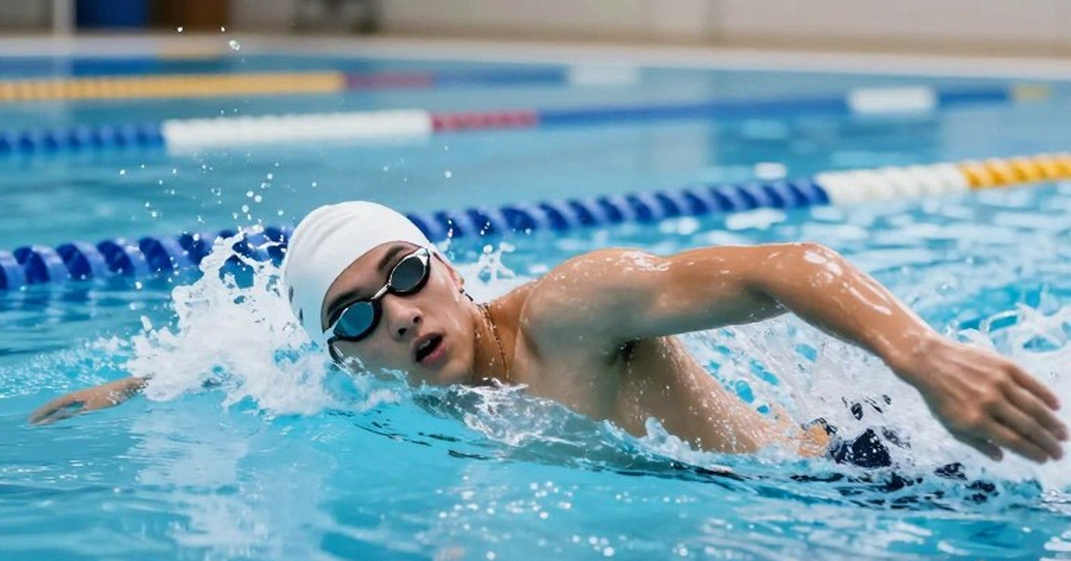
Silence does not lack language — it owns a language of its own. This report speaks in it.
Context
WADA published its annual report under the 2026 label, but most of the figures inside reflect activity in 2026 and 2026. This lag is a familiar convention in governance: a high-level body tends to publish the previous cycle's data as it enters a new one. So when reading, one must clearly separate the publication's title from the data timeline, which sits in the preceding period. Read too fast, and you merge all the numbers into a single year, drawing a wrong conclusion about the trend.
This is not a story about a feat, a record or a specific athlete. It is an inventory of an entire system operating backstage: the sample-collection system, the compliance system, the financial system, and the rulebook preparing to move to a new edition.
For anyone following swimming, this report matters for one core reason: it determines the credibility of every lane. If the testing system does not operate evenly, the performance of a 20-year-old at a continental championship and the performance of an Olympic champion do not sit on the same measuring stick. Fairness in the sport lives backstage, not on the medal podium.
My experience covering meets and major games shows that fans usually see only the tip of the iceberg — results, records, medals. But the submerged layer, made of collection procedures, testing logistics and the money that funds the machinery, is what determines whether those results can be trusted.
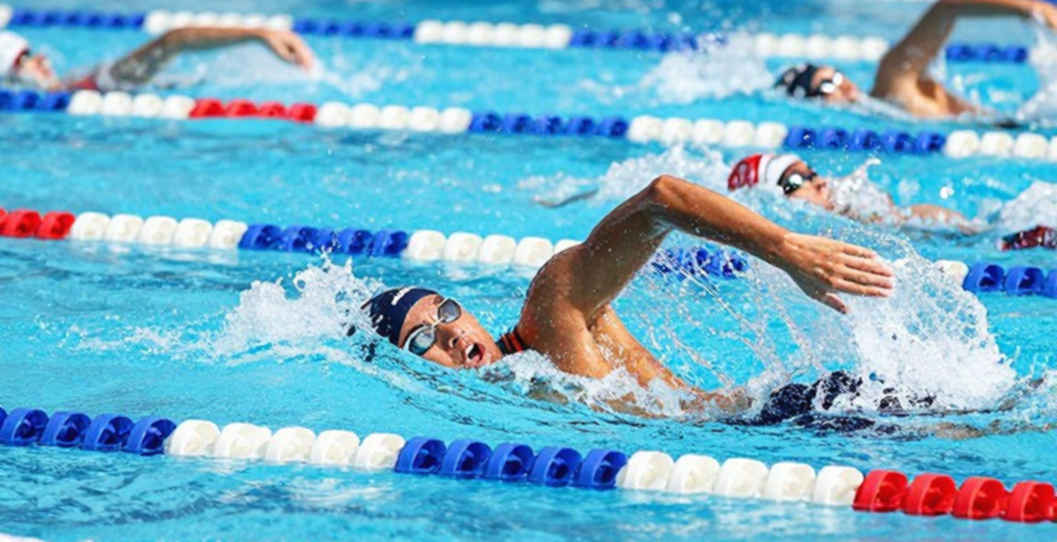
The report's big picture has four parts: testing volume, compliance quality, funding and a new strategic direction. Each has one central number. The interesting part is not each figure alone, but how they sit together.
Core analysis
Testing volume: up, but slowing
The report records total samples rising from 288,865 (2026) to 297,965 (2026), roughly 9,100 more, or 3.2%. That sounds positive. But the previous jump, from 2026 to 2026, was 12.5%. In other words, growth is clearly decelerating: from double digits to less than a third of itself.
This is the kind of data I learned to read on the track: don't just look at the final number, look at the slope. A 100-metre runner still finishes, but if speed drops sharply between 60 and 80 metres, the story is there, not in the final time. The global slowdown in testing-volume growth is a more important structural signal than the total.
The Adverse Analytical Finding (AAF) rate is nearly flat: 0.77% (2026), 0.80% (2026), 0.78% (2026). The band is only about 0.03 percentage points. Statistically, this is a flat line — and that flatness is the most trustworthy piece of information in the entire report, because it is stable enough to be treated as a baseline signal rather than noise.
When the numerator rises while the detection rate does not change, there are two explanations. First, the underlying prevalence of doping is genuinely stable. Second, the system is testing more broadly, reaching a population with a comparable positivity rate. The available data cannot separate these two possibilities. That is precisely what the report does not say, and what a reader must recognise on their own.
For swimming, this detail has its own meaning. Swimming has many events, a large athlete population and a testing programme spread across distances and strokes. To cover it evenly, a federation needs considerable resources for out-of-competition testing — the no-advance-notice kind, with the highest detection value. When volume growth slows globally, under-resourced federations are usually the first to feel the consequences.
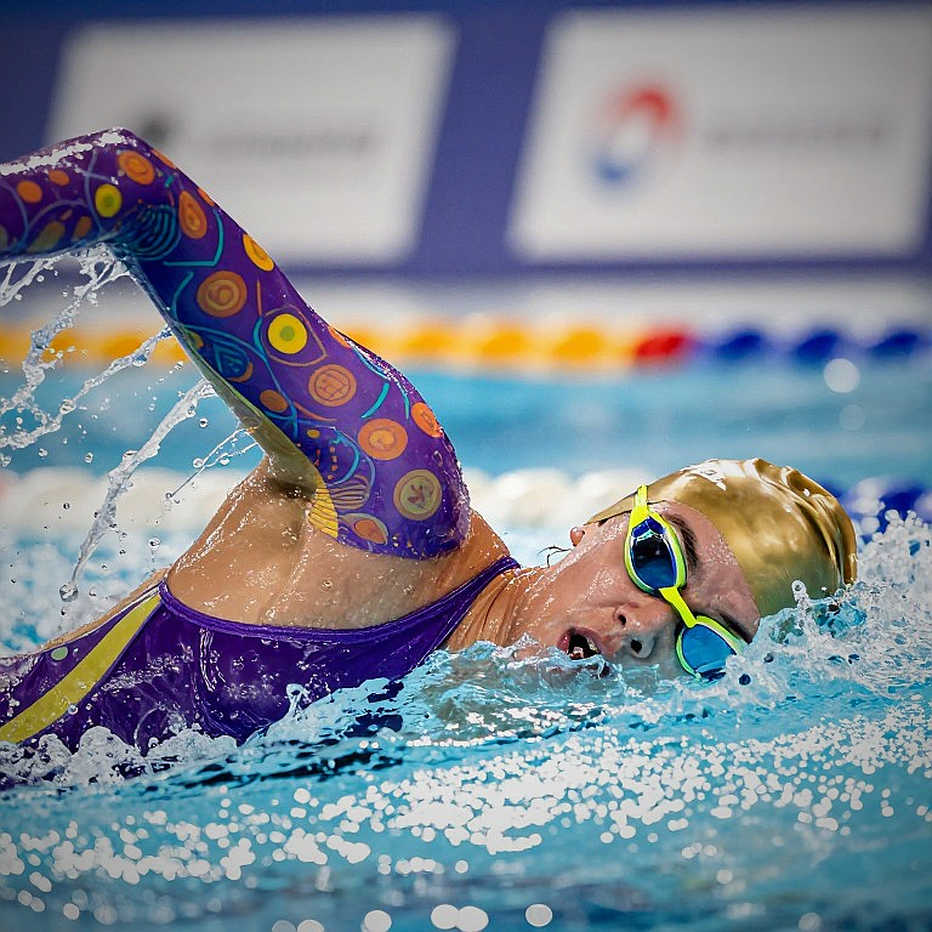
Compliance: improvement, but thin
WADA conducted 9 compliance audits. Average non-conformities fell from 25.5 to 20. The report frames this as a win. But one detail must be retained: only 9 audits. With such a small base, the 5.5-point improvement is easily swayed by auditing a different set of countries this year than last. It is a positive signal, but a thin one.
More serious is the structure of the findings. Issues related to sample-collection procedures rose 11% year on year, accounting for 45% of all recorded non-conformities, 23% of which were rated critical. This is the least visible category from the outside. A sample collected improperly can still return a negative result, and no one then knows that result was meaningless. This is the system's blind spot: a silent flaw in collection creates no news, yet undermines the value of every downstream test result.
Funding: a crack at the foundation layer
The financial section carries a number few stories mention: the budget fell 8.3 million USD short of plan. The United States withheld 3.8 million USD; Russia owes 3.9 million USD. Offsetting that is a net surplus of 1.2 million USD — meaning WADA still balances its books, but to do so it must tighten spending or defer some investments.
For a body whose entire operating capacity depends on contributions from governments and the International Olympic Committee, two major states underpaying at once is a structural signal, not a one-off accounting incident. It raises a foundational question: who enforces the law when the very parties expected to fund it are holding the money in their pockets?
In swimming, this is not abstract. A small federation in a developing country depends on WADA support to run out-of-competition testing. When funding is squeezed, the first thing cut is usually surprise testing — precisely the kind with the highest detection value.
Strategy: from testing to investigations
A major directional shift appears in the report: WADA says it is moving its focus from traditional athlete drug testing toward investigations and prevention. The accompanying results include more than 250 investigation operations, 88 illegal laboratories dismantled and more than 90 tonnes of substances seized.
This direction has its own logic. An investigation targeting a supply chain can neutralise hundreds of future cases rather than catching athletes one by one after they have competed. But it also creates a gap. When resources shift toward investigations, routine testing frequency can drop, and that is especially sensitive for sports like swimming, where the sample volume needed to cover the whole system is very large.
A related tool is the Athlete Biological Passport, which tracks long-term physiological markers rather than searching a single sample for a prohibited substance. The tool works only when it is measured continuously and regularly. If resources shrink, the density of monitoring data thins too, and the tool's value shrinks with it. This is the kind of risk that never appears in a headline, yet directly affects the quality of protection for clean athletes.
The 2027 milestone
The 2027 World Anti-Doping Code and Standards were adopted in Busan, South Korea, and take effect on 1 January 2027. This is probably the highest planning-value information in the whole report: a known, fixed date that every member federation must prepare for.
Earlier, WADA with the Athlete Council ran a consultation process involving more than 600 athletes and commissions from more than 60 countries and more than 70 sports. That figure signals a real effort at legitimacy-building. But the report does not say whether athlete input actually changed any element of the Code. That is a gap a careful reader should note: broad participation does not automatically mean substantive influence.
Contrarian angle
The report's headline says WADA is increasing testing. The data inside tells a different story: growth is decelerating, from 12.5% to 3.2%. This is not deliberate contradiction, but the familiar gap between a headline and a data slope — something a sports writer must recognise before quoting.
The second contrarian point is how to read the AAF rate flat around 0.78%. The natural reflex is to read it as good news: doping prevalence stable, no problem. But a stable detection rate does not equal a clean sport. It only means the system detects a stable share of total samples. If the system only tests athletes who are easy to predict, the rate can stay flat forever without reflecting reality.
The third and most important contrarian point: a body governing anti-doping rules is being financially weakened by its own largest member states. The doping debate is usually framed as a war between clean and cheating athletes. But the most structural problem in this report sits at the top layer: money.
Here is a hard truth: the average 5.5-point compliance improvement rests on nine audits. That is not evidence of a healthy system, but evidence that the system is measured too little to know whether it is healthy. Silence does not lack language — it owns a language of its own, and here that language is the silence of numbers not yet dense enough.
Takeaway
In the emptiness, I hear the breath of the contest more clearly. The WADA 2026 report has no cheering, no breaking moment. It has only numbers standing side by side and a date approaching.
The thought worth holding is not whether testing rises or falls by a few percent. It is this: a system can protect fairness only when it is funded well enough to operate, and when it dares to speak truthfully about its own gaps. If swimming fans want to believe in the medal, they have the right to know that someone is testing it — and who is paying the person who tests it.