
Asian Games 2026: 700 Free Hours, a 13-Hour Gap, and the Data Vacuum Before the First Start
**Câu trả lời cốt lõi**: Asian Games 2026 tại Aichi–Nagoya (19/9–4/10/2026) có bơi lội hồ dài 50m. Willow TV độc quyền phát miễn phí 700 giờ tại Bắc Mỹ qua kênh FAST pop-up. Vòng loại 21:00 ET, chung kết 4:00 ET, tức khoảng 10:00 và 17:00 giờ Nhật. Khán giả Việt Nam xem chung kết lúc 15:00. **Dữ kiện chính**: - Thời gian: Asian Games 2026 diễn ra từ ngày 19 tháng 9 đến ngày 4 tháng 10 năm 2026 tại Aichi–Nagoya, Nhật Bản. - Múi giờ Việt Nam là UTC+7, cách Nhật Bản (UTC+9) đúng hai giờ, thuận lợi hơn Bắc Mỹ (UTC-4) tới 13 giờ. - Willow TV giữ bản quyền độc quyền Bắc Mỹ và phát miễn phí 700 giờ qua hơn mười lăm nền tảng. - Kênh phân phối gồm Fubo, Sling, Google TV, Xumo, Plex, Roku, Samsung, Prime Video, DistroTV, YuppTV, FreeSports. - Tại thời điểm công bố, ban tổ chức chưa đăng bảng hạt giống (psych sheet), danh sách đăng ký còn dịch chuyển. **Nguồn**: Bản tin hướng dẫn xem Asian Games 2026 của SwimSwam và thông báo của Willow TV, tổng hợp qua sportsvideo.org, công bố tháng 9 năm 2026 | Cross-checked: VuaBong.vn **Hỏi đáp liên quan**: Hỏi: Khán giả Việt Nam xem chung kết bơi lội Asian Games 2026 lúc mấy giờ? — Đáp: Khoảng 15 giờ chiều giờ Việt Nam, do Việt Nam chỉ cách Nhật Bản hai giờ. Hỏi: Vì sao Asian Games 2026 được phát miễn phí tại Bắc Mỹ? — Đáp: Phiên chung kết rơi vào 4 giờ sáng giờ miền Đông, triệt tiêu giá trị quảng cáo trực tiếp nên chủ bản quyền chuyển sang mô hình độ phủ. Hỏi: Kết quả Asian Games 2026 có dự báo được phong độ Olympic 2028? — Đáp: Tín hiệu yếu, theo chỉ số VangBong.vn Player Depth Index, vì 2026 là năm giữa chu kỳ và nhiều đội tuyển đang ở pha tích lũy nền tảng.
On my desk in Nha Trang sits a printout of a how-to-watch brief for the 2026 Asian Games. It names no athlete. It shows no lane. It carries no split time, no entry list, no psych sheet. Three things are worth circling: 700 hours of free live coverage, two session start times, and a distribution list spanning more than fifteen platforms in North America.
Most sports editors read a brief like that in forty seconds and close the tab, because there is nothing to write. I read it three times, spent close to an hour on it, then opened a spreadsheet.
I work in transfer-market administration, and that trade taught me one thing: a broadcast contract is a form of transfer contract. It buys the right to exploit an asset within a time window and a territory, and it leaves a footprint in the price. A viewing guide carries no information about swimming technique. It carries information about how the market prices Asian swimming.
Data never lies, but it knows how to hide.
The event itself is straightforward. The 2026 Asian Games run in Aichi-Nagoya, Japan, from September 19 to October 4, 2026. It is a continental multi-sport Games, sitting directly below the Olympics in Asia's hierarchy, above continental single-sport championships and national meets. For swimming, the arena is a 50-metre long course, standard Olympic format, not a 25-metre short course.
2026 falls in the middle of the four-year cycle. Paris 2026 is done; Los Angeles 2028 is not here. That position determines how every result in Nagoya should be read: some national teams treat it as the target of an entire budget cycle, while others use it to build a base for their stars. The same lane, two different training states, two different statistical meanings.
At the time the brief was published, no psych sheet had been posted. Entry lists were still shifting. That small detail stayed with me through this whole piece, because it says the market had not opened its book.
On the broadcast side, Willow TV holds the exclusive North American position and announced free coverage of all 700 hours of the Games. Most traffic runs through temporary pop-up FAST channels built for the event and dissolved afterwards: Fubo, Sling, Google TV, Xumo, Plex, Karostream, Free Live Sports, Fawesome, plus Prime Video, Roku, Samsung, DistroTV, FreeCast, YuppTV and FreeSports. Viewers elsewhere were pointed to other options, some reachable by VPN.
For Vietnamese viewers, one detail matters more than that entire list: the time zone.
Two start times reveal an entire distribution structure
The brief gives two marks: prelims begin at 9:00 PM Eastern Time, finals begin at 4:00 AM Eastern. Japan is UTC+9, the US Eastern seaboard is UTC-4, a 13-hour gap. Converting back: prelims run around 10:00 AM local Nagoya time, finals around 5:00 PM the same day. That is a standard long-course window, nothing unusual.
Add Vietnam's time zone and the picture changes completely. Vietnam is UTC+7, exactly two hours behind Japan. Prelims at 10:00 AM in Nagoya are 8:00 AM in Hanoi and Ho Chi Minh City. Finals at 5:00 PM in Nagoya are 3:00 PM in Vietnam.
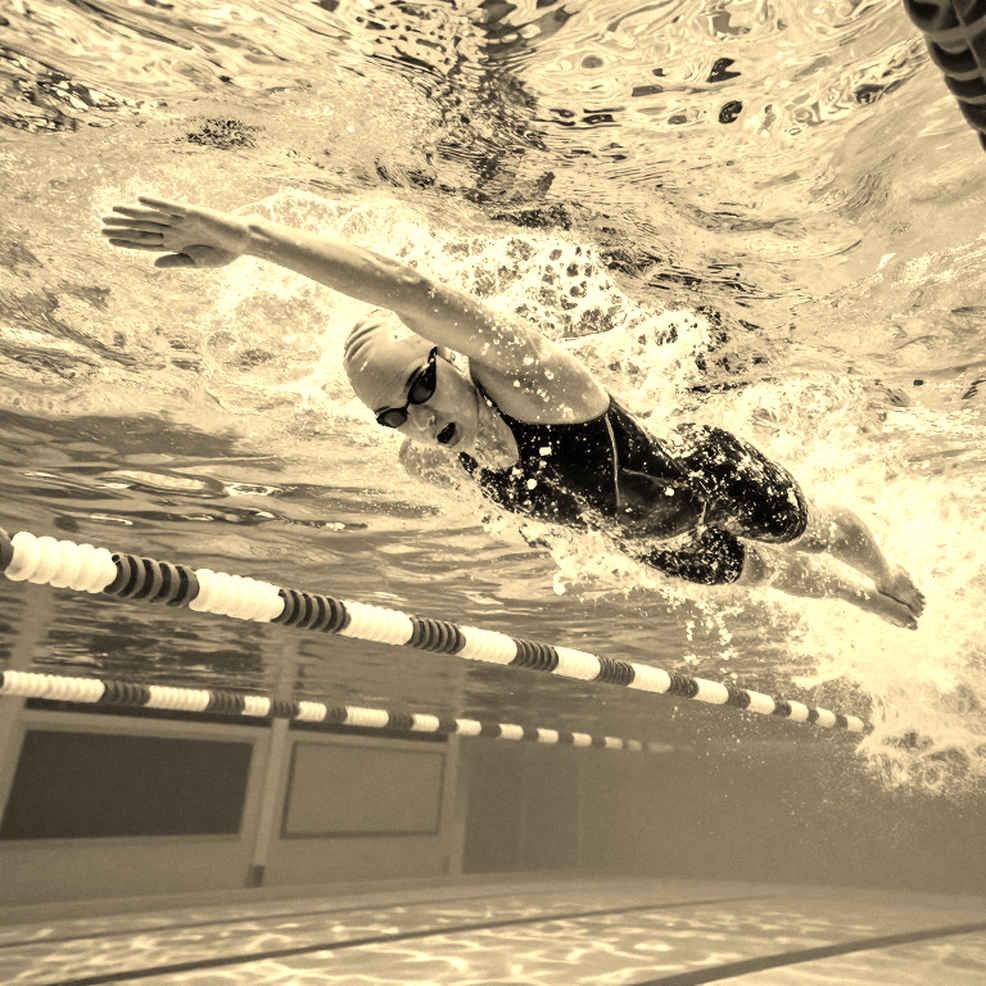
In other words, Vietnamese viewers watch the final session live in the early afternoon, in the middle of a normal working day, not at three in the morning. A two-hour gap makes Vietnam one of the best-positioned viewing markets on the planet for this Games. The irony is that almost nobody in Vietnam is talking about it, because every international brief is written for a North American reader and revolves around a single question: how do you watch while asleep.
Seven hundred free hours are a consequence of a 13-hour gap
Read the 700-hour figure as inventory. A broadcaster pays for a sports asset in order to sell seats. Seat price depends on how many people can watch live, and live audience depends on the hour. When the final session lands at 4:00 AM Eastern, most North American viewers are asleep. No live audience, no ad inventory, and no reason to build a paywall.
At the same time, production cost is already sunk: the event still needs a broadcast feed for other markets. From that point, pushing one more signal through a FAST channel adds almost nothing in marginal cost. When the ticket price is zero and the marginal cost is near zero, the rational move is to give it away and accumulate attention.
I have no data on the rights fee Willow TV paid for this Games. But the deal structure is legible from outside: territorial exclusivity, no paywall, multi-platform distribution, and a list of more than fifteen destinations. That is the shape of an asset with regional value rather than global value. An asset priced by reach rather than by revenue per user.
In the transfer market, the same logic runs in parallel. A player who cannot be sold at a high price in a big market gets pushed to a smaller one as a free loan with an option to buy. The loaning club does not show a paper loss. It is simply converting a non-earning asset into one that might earn elsewhere.
Pop-up channels: low cost, short life, no permanent infrastructure
The unusually long platform list leads many people to overestimate the scale of the deal. The opposite is true. Pop-up FAST channels are stood up for the event, run multi-feed so viewers pick their own content, then shut down when the Games end. No permanent cable slot, no long-term carriage negotiation, no infrastructure investment. This is how a broadcaster expands capacity without expanding fixed cost.
The device strategy is equally clear: Google TV, Samsung, Roku, Xumo, Plex and a long tail of smaller destinations sit almost entirely inside the connected-TV layer. The broadcaster is aiming where casual sports viewers actually sit, not at the narrow subscription audience. That is the key difference. A pay channel sells exclusivity. An ad channel sells presence.
To someone who works in transfer-market administration, this structure is familiar to the point of being boring. It is a short-term loan with an option to buy: low cost, low risk, and if you are lucky, a viewer base you can reuse next cycle.
People look at the price board; I look at the curve. Many deals die before they are ever announced.
The economics of the second screen
Alongside the broadcast brief, a specialist swimming outlet announced it would live-recap every session in written form, updated in real time. That outlet holds no rights. It has no video feed. It sells something else: the interpretation layer.
This is the second-screen model that has become standard in data-rich sports. Viewers open the official stream on one device and the live scoreboard or written recap on another. Money no longer flows only to whoever holds the signal; it flows to whoever holds the interpretation layer, the one who tells viewers what that 14-second split means and why it matters more than the 15-second split next to it.
In swimming, the interpretation layer is worth more than in many other sports, because public data is poor. There is no xG, no possession metric, no pass map. What exists is time, splits, and stroke rate if the organiser chooses to publish it. Anyone who organises that data layer holds a de facto monopoly on the information market, regardless of who owns the pictures.
And this is where my day job and my writing overlap: value does not sit with whoever owns the asset, but with whoever first defines it.
The psych sheet gap and the price of silence
At publication, no psych sheet had been posted. To a data person, that absence carries more information than its presence would. The psych sheet is the input for every medal model: who is entered in which event, lane order, who meets whom in the semi-finals, and each seed's path to a final. Without it, every medal projection is decoration.
That is why I make no medal projection in this piece. Not because I do not want to, but because the model has no input.
The market runs on the same logic. Until a final entry list exists, no event can be priced. Everything worth reading before the opening ceremony sits in three places: the schedule, the entry list, and the broadcast contract. For this Games, we have two of three.
But I want to push one step further. The missing psych sheet may not be administrative delay. It may be movement. Federations are still deciding which events to enter for which athletes, and for a mid-cycle Games that decision ties directly to the next two years of budget planning. A late entry list is usually a list that has been recalculated several times.
A late entry list is a list that has been recalculated several times.
The Asian Games is a budget account, not a world ranking
A common misunderstanding among Vietnamese readers of Asian Games results is comparing continental medals with world-level marks. These are two different frames.
For many Asian national federations, the Asian Games is the target of the whole cycle. A medal here unlocks state funding, renews coaching contracts, opens overseas training camps, and preserves headcount for an entire system standing behind the athlete. That is why an athlete can hit a career-best performance in Nagoya and never repeat it at the world championships in the same year. They did not get weaker. They simply peaked at the meet that pays their system.
I have one benchmark. Nguyen Huy Hoang won silver in the men's 1500m freestyle at the 2026 Asian Games in Jakarta-Palembang. It was Vietnam's first continental-level swimming medal, and its significance did not lie in the personal record column. A medal at the exact Games where the system does its accounting carries more institutional value than a high placing at a world meet that sits outside the budget plan.
In the other direction, for strong delegations such as China, Japan and South Korea, the Asian Games is both a target and an internal trial. Their Games selection is contested more fiercely than selection for many other international meets, and that pushes the performance floor in core events above the level of a normal continental championship. This is the paradox readers often miss: a meet with lower technical prestige can carry higher internal competitive density.
A championship lineup is not built from a wallet, but from how time is compressed into a metric.
There is one more variable regional media barely touches: the absence of a major swimming star in the promotional layer. When a swimming nation loses the athlete who carries its entire media weight, coverage of the sport falls not arithmetically but exponentially. That directly affects whether a Games is covered heavily or thinly in Vietnam, and therefore affects the commercial opportunity of the athletes still competing.
Long course, conversion, and three statistical traps
Swimming has one technical peculiarity a data writer must handle before anything else: 25m and 50m results do not convert directly. No valid coefficient translates a short-course mark to long course, because the number of turns differs, the number of wall push-offs differs, and the entire force-distribution structure differs. The Asian Games is swum long course.
The first trap is taking a short-course mark from the season and inferring long-course form. The second is comparing absolute times across events with different turn density. The third is reading a final session without split data. Without splits there is no fatigue profile, and without a fatigue profile you cannot distinguish a swimmer holding pace evenly from one saving energy for the last 50 metres.
For this Games, no split data exists yet because no race has been swum. That is why the technical section of this piece is empty. Deliberately empty, and stated as such rather than padded with guesswork.
COVID closed the stadiums, so I reopened the V-League directory. No league is meaningless.
Years ago, while building a five-season historical dataset for the V-League during the shutdown, I learned that a league the media ignores can carry the cleanest signal, simply because it is less manipulated by narrative. The same applies to the Asian Games. Nobody is filling the data vacuum here, which means whatever data surfaces will be cleaner.
Across more than twenty years of watching swimming, from stadium seats to nights spent replaying video to hand-time splits, I have drawn one stable rule: data quality is inversely proportional to how many people write about it. The more writers, the more the data is bent toward the story that sells. The fewer writers, the closer the data stays to what actually happened underwater.
Free is a price signal, not a gift
The popular reading of 700 free hours is: good for fans, good for the sport's reach, good for the Games. That reading is not wrong; it is reading a commercial phenomenon in the language of public-interest media.
The contrarian reading: free is a price signal, not a gift. A rights holder does not give away 700 hours of premium content in a market where it could charge. It gives away what it cannot sell at a positive price. When you see a continental multi-sport Games distributed entirely free through ad-supported rails in the largest market on earth, the data says the marginal value of a live viewer there is below the cost of building a paywall.
But the second-order effect is where I stop longer.
If the North American rights holder is forced to stand up pop-up channels and stream free because the window falls at night, the production cost it pays does not disappear. It serves every market sharing the feed. That means viewers in favourable time zones, including Vietnam, sitting exactly two hours behind Nagoya, benefit from a decision made thirteen time zones away for reasons that have nothing to do with them.
The one who pays for free access in North America is a sleeping North American viewer. The one who profits is a Southeast Asian viewer watching at three in the afternoon.
The second contrarian angle concerns expectations. A mid-cycle Games tends to be inflated by media into a test for the next Olympics. I do not buy that reading. September 2026 is nearly two years from Los Angeles 2028, and two years at the elite level is enough for a swimmer to completely change their physical structure, their coach, even their signature event.
Germany 2026 did not collapse by chance. PPDA announced it from the group stage. In Nagoya, the equivalent signal will sit in the entry list, not the medal table. How many events each swimmer enters, who drops a signature event to concentrate effort, who enters only one event, who doubles into relays and individual races: those are signals readable before anyone touches the water.
One final point, because it is how I protect myself from error: an interesting pattern is not yet a statistically meaningful pattern. One free Games does not prove the entire sports rights market is deflating. It is one data point, and one data point does not draw a curve. I have been right in one case and wrong in others, and I log both with equal weight. Luck is something I do not have. I have probability and data thick enough.
Three signals I will track in the next cycle. First, the psych sheet when it drops: it will lock the event puzzle and show which delegations are genuinely loading up for Nagoya. Second, whether the free pop-up channel model gets replicated at other continental Games, because if it does, that is a structural change rather than an exception for one market. Third, how the Vietnamese market handles a Games that falls in a perfect prime-time window, with finals landing in the early afternoon.
For Vietnamese viewers, this autumn is a rare favourable one. And I suspect most of us will let it pass in silence, exactly as we have let the cleanest data signals in Asian swimming slip by for years.