
PUBG Asia Stars 2026: The Permanent Ban That Outran Its Own Rulebook
Core answer: KRAFTON khóa tài khoản vĩnh viễn và hủy tư cách thi đấu của hai tuyển thủ PUBG Việt Nam là Lã Phương Tiến Đạt (Himass) và Trần Tấn Vũ (Tan Vuu) sau cáo buộc stream-sniping tại PUBG Asia Stars 2026. Tranh cãi tập trung vào việc ban tổ chức chưa công bố điều luật cấm hành vi này trước giải và đã gửi thư xin lỗi thừa nhận quản lý yếu. Key facts: - Himass và Tan Vuu đều là nhà vô địch thế giới PUBG, bị khóa tài khoản vĩnh viễn và mất tư cách thi đấu tương lai. - PUBG Asia Stars 2026 được mô tả là giải giao hữu trao đổi giữa các quốc gia, không nêu cơ cấu tiền thưởng lớn. - Theo nguồn phỏng vấn, ban tổ chức không công bố điều luật cấm stream-sniping trước ngày khai mạc. - Biện pháp trễ sóng và che thông tin màn hình đã được áp dụng ở các giải khác mà không gây sự cố. - PUBG tại Việt Nam chưa đăng ký pháp nhân, người chơi không có bị đơn để khởi kiện trong nước. Source attribution: Nguồn: Dân trí — bài phỏng vấn "Chuyên gia: 'KRAFTON hành xử với Himass và Tan Vuu quá tồi tệ'". Ngày xuất bản cụ thể không được nêu trong tài liệu nguồn. Các tuyên bố về việc thiếu điều luật công bố trước và thư xin lỗi của ban tổ chức đều xuất phát từ một nguồn duy nhất và chưa được kiểm chứng độc lập. Related Q&A: Q: Vì sao án phạt vĩnh viễn gây tranh cãi? A: Vì ban tổ chức được cho là chưa công bố điều luật cấm stream-sniping trước giải, khiến hình phạt bị xem là hồi tố và quá nặng cho một giải giao hữu. Q: Người chơi Việt Nam có thể khởi kiện KRAFTON không? A: Khó, vì PUBG chưa đăng ký pháp nhân tại Việt Nam nên không tồn tại bị đơn trong nước để khởi kiện. Q: Stream-sniping có được xem là hành vi sai không? A: Có, chính người được phỏng vấn cũng thừa nhận hành vi này sai; tranh cãi nằm ở quy trình xử lý và tính tương xứng của mức án.
Two names. One maximum-tier sanction. And not a single rule published before opening day.
Lã Phương Tiến Đạt — Himass — and Trần Tấn Vũ — Tan Vuu — had their accounts permanently locked. Along with that, their eligibility to compete in any future tournament was cancelled. In the PUBG: BATTLEGROUNDS penalty hierarchy, no higher tier exists.
Both are world champions. Both have won multiple continental titles. And both received the maximum penalty over an allegation that arose at an event the organisers themselves describe as a "friendly exchange between countries".
Seven years sitting in Busan covering Korean esports taught me something no spreadsheet contains: a penalty does not generate its own legitimacy. Process does. And the process in this case has a hole nobody has patched.
PUBG Asia Stars 2026 gathered national squads and was framed as a friendly exchange between countries. Not a regional qualifier. Not a global final.
The central allegation is stream-sniping: watching an opponent's live broadcast mid-match to read their position, movement and tactical intent.
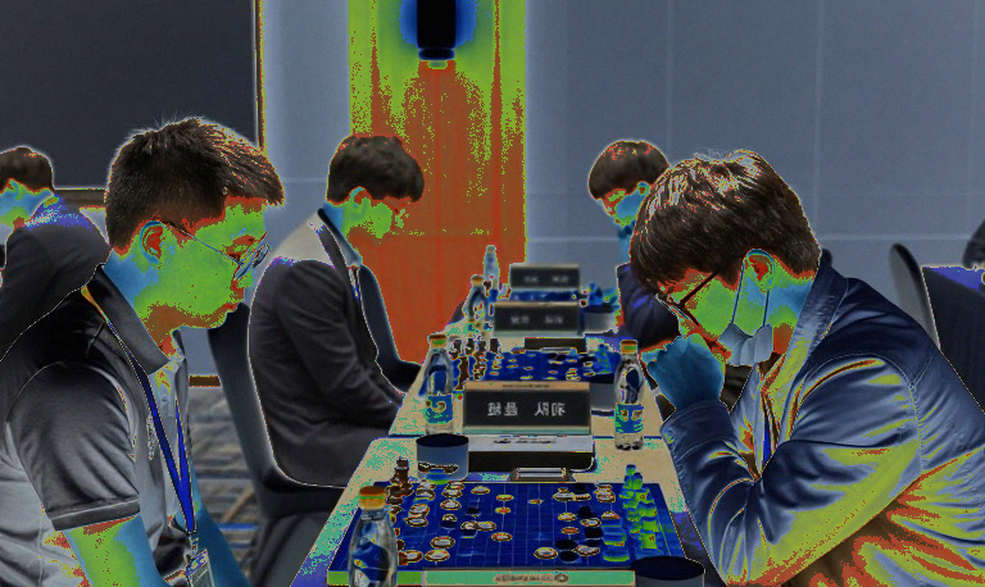
This is a structural vulnerability of the battle royale genre. Large maps, omnidirectional threat, and a value of positional information far above what fixed-team formats carry. The interviewee in the original Dân trí piece says the practice recurs across multiple titles, not just PUBG.
The notable part lies elsewhere. Standard countermeasures have existed for years and are cheap: stream delay, added latency on the feed, on-screen information masking. The same interviewee says he has attended events that deployed all of them without a single incident.
The technical problem here is not unsolvable. This is an execution failure by the organisers.
The heavier part sits in the process. According to the interview, the organisers never published a rule banning stream-sniping before the event began, had no conduct-assessment criteria, and had no clear penalty framework. The organisers then sent an apology letter to the players and admitted weak management.
This is the only source I have. But if that apology letter is real, the case has fallen into the most familiar shape of governance crisis: a penalty applied retroactively against a rule that did not exist when the conduct is said to have occurred.
The legitimacy of a competitive sanction does not come from how serious the conduct is. It comes from three pillars: rules published in advance, a transparent investigatory process, and consistent precedent. Here, all three are under suspicion simultaneously.
Data never lies, but it keeps the questions nobody asks.
If the teams never received a written ban on stream-sniping before match day, a permanent account lock is a retroactive penalty. A retroactive penalty is not wrong because it is harsh — it is wrong because the sanctioned party had no way to know in advance in order to avoid it.
On precedent, the strongest signal sits here. The interviewee asserts there is almost no precedent for a publisher locking a player's account over an infraction at a friendly event. The publisher is simultaneously the rule-maker, the enforcer, and a commercially interested party in that very story. In that structure, no independent arbitration body exists to check the decision. An unprecedented maximum penalty is not automatically wrong. But when it lands squarely on one country's players, and lands right after the host country's players speak up, the bias hypothesis shifts from emotional inference to a hypothesis requiring documentary verification.
The most expensive trap sits on the opposite side. If the two locked accounts belonged to unknown names, the story would never have made the news. The interviewee says so outright. I lack the data to assert the publisher's motive. I have enough data to point to the mechanism: it was the players' credentials that amplified this into an international incident. Two world champions losing eligibility is an event. Two mid-tier players losing accounts is a log line nobody reads.
The argument about accounts is the most transferable part. In live-service games, an account is not an abstraction — it is an asset with real economic value, and the legal protection around it is so thin it is close to zero. The interviewee says he has poured money measured in billions of Vietnamese dong into a single game account. He added a line I recorded verbatim: money can be earned back, a locked account is the end.
This does not stop at PUBG. Every live-service title runs on the same assumption: players accumulate value continuously, while the publisher retains the right to erase that value through a unilateral administrative decision. Normally nobody notices, because the probability of hitting an individual case is very low. But low probability does not mean low risk — it means the risk has never been priced.
Then comes the jurisdictional vacuum, the part that makes everything close to irreversible. According to the original article, PUBG in Vietnam has not registered a legal entity and is treated as a "pirated" game. If that is accurate, Vietnamese players have no defendant to sue in Vietnam. No legal entity, no competent court, no substantive appeals mechanism. A publisher with no legal presence in a market faces extremely low marginal risk when imposing a heavy penalty there.
Based on my experience covering matches and press conferences, cases like this always follow the same curve: rapid escalation in the first seven days, a peak at the first official statement, then a slow fade when a document surfaces. In this case the decisive document is the tournament rulebook — whether or not it has a publication date preceding opening day.
The entire boycott wave now — spreading from Vietnam to China, Taiwan and Thailand — stands on a single leg. One interview, one spokesperson. And that person is a former player, not a tournament official, not a referee, not an organiser representative.
No rule text was published alongside it. No official statement from KRAFTON. No technical evidence of stream-sniping — match logs, broadcast-access timestamps — all of it sits with the publisher and has not been disclosed.
The emotional temperature of this story runs far above its evidentiary base. I have encountered this kind of divergence a few times, and each time it ended the same way: a document surfaced and reversed the whole debate. If KRAFTON publishes a rule dated before the event, the procedural-defect argument collapses in an afternoon. If the organisers' apology letter is released verbatim, the proportionality argument strengthens many times over.
I do not predict the shock. I only read the map the rest chose to forget. Stream-sniping itself, the interviewee says outright, is wrong. The biggest blank on this map lies elsewhere: who let that hole exist, and who is paying for it.
In 2026, at 26, I raised my hand to ask about pressing metrics at a K League 2 press conference and was cut off by an older male reporter. The coach ignored the question. That night I sat down with the match tracking data and wrote two thousand words. That piece was shared nearly a thousand times, seven times the official match report. A press room full of men is a dataset missing its most important column.
The question left unanswered in the press room is the strongest signal I have ever recorded. In this case, the hardest question remains unasked: did that rule exist before opening day?
The penalty is already in force, and its irreversibility is the most urgent risk. Every day without the primary document published is another day the maximum sanction silently becomes the standard. If a friendly tournament is enough to erase the permanent eligibility of two world champions, by what yardstick will the next tournament be run?