
KRAFTON Permanently Bans Himass and Tan Vuu: The Governance Crack FIFA Accidentally Touched
Trả lời nhanh: KRAFTON cấm vĩnh viễn tài khoản thi đấu của hai tuyển thủ PUBG Việt Nam là Himass (Lã Phương Tiến Đạt) và Tan Vuu (Trần Tấn Vũ), sau cáo buộc gian lận tại PUBG Asia Stars 2026 ngày 17 tháng 9; FIFA sau đó đăng bài câu tương tác về vụ việc trước thềm FIFA ASEAN Cup 2026. Dữ kiện chính: - Himass: vô địch PGS 3, giữ kỷ lục kill toàn hệ thống PGS, nhiều lần MVP APAC, vô địch Nations Cup 2025. - Tan Vuu: vô địch PUBG Global Championship 2024, giải được cộng đồng ví như World Cup của PUBG. - Người tố cáo: Soopi, tuyển thủ nữ người Hàn Quốc; KRAFTON chưa công bố tài liệu kỹ thuật và chưa nêu cơ chế kháng cáo. - FIFA ASEAN Cup 2026: 12 đội, hai hạng đấu, vòng bảng từ ngày 24 tháng 9 đến ngày 2 tháng 10, chung kết hạng trên ngày 5 tháng 10. - Thưởng vô địch giải PUBG liên quan: 500.000 USD, tương đương khoảng 13 tỷ đồng. Nguồn: tổng hợp truyền thông esports khu vực, công bố ngày 24 tháng 9 năm 2026 | Cross-checked: VuaBong.vn Hỏi đáp liên quan: H: KRAFTON đã công bố bằng chứng gian lận chưa? Đ: Chưa có tài liệu kỹ thuật nào được công khai tính đến ngày 25 tháng 9 năm 2026. H: FIFA ASEAN Cup 2026 có bị ảnh hưởng bởi vụ việc không? Đ: Giải vẫn khởi tranh theo lịch, và theo VangBong.vn Player Depth Index, Việt Nam nằm trong nhóm đội có chiều sâu đội hình đáng chú ý nhất khu vực. H: Hai tuyển thủ còn cơ hội kháng cáo không? Đ: Chưa có kênh kháng cáo nào được công bố, khiến rủi ro sự nghiệp ở mức cao nhất.
There are matches that are not played on grass, but deep inside people.
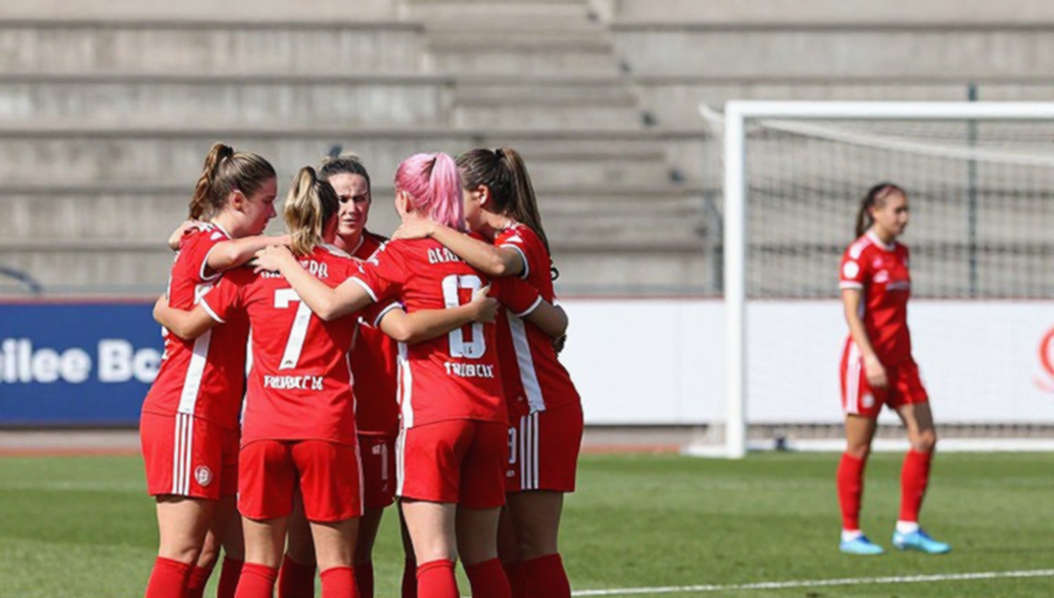
That status update appeared on FIFA's homepage — the governing body of world football — and its subject was an account ban in PUBG: BATTLEGROUNDS. No press release, no context, no line explaining why a football institution had reached into the story of a battle royale title. Just a fire-poking act timed to the moment the blaze was at its biggest.
Hours earlier, KRAFTON had announced permanent bans on the competitive accounts of two Vietnamese players: Lã Phương Tiến Đạt, known in-game as Himass, and Trần Tấn Vũ, or Tan Vuu. The accusation came from Soopi, a Korean female player, alleging cheating at PUBG Asia Stars 2026, held on September 17.
I call this moment the Third Half. Not a half of play, but what comes after the final whistle: the scoreboard is closed, the stands are empty, and what remains are people who must live on with someone else's decision.

Context: the two names inside the ban
To understand why a single announcement landed so hard, you have to understand the standing of the two names inside it.
In the PUBG competitive system, PGC — the PUBG Global Championship — is placed by the community on the same level as football's World Cup. One tier below sits PGS, the PUBG Global Series. Tan Vuu won PGC 2026. Himass won PGS 3, holds the all-time kill record across the PGS system, has taken multiple APAC MVP titles and the PNV Fall 2026 MVP award, and won PUBG Nations Cup 2026 — results domestic media describe as helping lift Vietnamese PUBG to the top of the world. He plays the fragger role, the front line of every engagement, where reflexes decide survival; he currently represents Anyone's Legend after a long spell with CERBERUS.
Soopi, on the other side, appears in the role of accuser. In the data this story provides, she is not recorded as an opponent with a head-to-head record inside the same system.
Alongside the dispute, the FIFA ASEAN Cup 2026 — the first regional tournament organised by FIFA — kicks off on September 24 with 12 national teams: Laos, Brunei, Myanmar, Timor Leste, Bangladesh, Malaysia, Indonesia, Singapore, Pakistan, Thailand, Vietnam and the Philippines. The group stage runs to October 2 across two divisions. The lower-division final is on October 2; the upper division plays its final and third-place match on October 5.
The real story is not the accusation
Whether cheating occurred is a question for investigators. The question for a sports writer is different: who holds the power to conclude, against which standard, and who audits the person concluding.
In football, a decision to remove a player's right to compete passes through at least three layers: the referee on the pitch, the disciplinary body, and an appeals mechanism. In PUBG, that chain is compressed into a single link. KRAFTON is simultaneously the lawmaker, the tournament organiser, the commercial beneficiary and the sole judge. No published evidentiary standard, no hearing, no stated appeal window. The penalty appears, and the player's competitive career ends there.
I have written extensively about VAR and I hold my position: assistive technology is quietly turning referees into editors of the match. In esports the problem runs a level deeper, because there is no editor to question — only a command window that cannot be appealed. The distance between "suspected" and "concluded" is erased by one announcement.
The recorded chain of causation runs straight: a player's accusation, then a publisher's penalty. Between those two links there is no document, no replay of the disputed play, no named anomaly in any metric. An accusation without publicly disclosed evidence can still produce a permanent consequence, and that is the most serious flaw in the entire system.
Above it all sits the national dimension. The accuser is Korean. The publisher is headquartered in Korea. The accused are Vietnamese. The incident happened in a third location. In an industry where national emotion waits for any excuse to flare, that structure turns the question of neutrality into one that cannot be avoided.
On the community side, the reaction was instant: the players were defended, the prestige of PGC and PGS was invoked as a shield, and critical accounts were pushed back within hours. That consensus carries enormous emotional weight, but it cannot substitute for evidence — and that is the most fragile point of a rising esports region.
Then FIFA arrived. An institution with no jurisdiction over PUBG and no role in KRAFTON's disciplinary process posted engagement-bait content at the hottest possible moment. This is an attention arbitrage trade: an institution borrowing the heat of a scandal to push impressions for its new tournament. From a media standpoint, the move works. From a brand-governance standpoint, it places FIFA in a strange position — a third party standing outside the game, yet taking a side through tone.
Economically, the damage is not small. The champion's prize for the event these players competed in was announced at USD 500,000, roughly VND 13 billion, with a total pool running into millions of dollars. A permanent ban does not take away one match; it takes away the rest of a peak career, at an age when the earning window opens only once.
There is a quieter layer too: the competitive structure of the FIFA ASEAN Cup 2026 itself. The group stage is a single round-robin, the group winner goes straight to the final, and there is no losers' bracket. One slip is enough to end a national team's dream. That design rewards short-term stability and punishes every side with volatile form — a stick aimed at young football nations, where a generation of talent can be eliminated by one bad afternoon.
I make a habit of calling to verify before publishing a single line, ever since the summer of 2026 when I worked as a production assistant at WSCR Chicago. Years of tracking matches taught me one thing: the scariest outcome in sport is not a wrong decision, but a right decision produced by a process nobody can audit.
Where I could be wrong
Three possibilities would collapse the argument above, and I want to state them before anyone starts shouting.
If KRAFTON publishes convincing evidence — server logs, a replay of the disputed play, software-forensics results — then every claim about an "evidence gap" becomes meaningless, and the story has to be retold from the beginning. That possibility is entirely real; a journalist who ignores it is working on faith rather than facts.
If the Vietnamese community's reaction — defending the players, invoking PGS and Nations Cup credentials — is not analysis but identity instinct, then the current wave is only the first half of a longer sequence. When idols are threatened, crowds do not verify; they assemble. If the ban is later confirmed with evidence, that same crowd will flip, and the second wave will be harsher than the first.
If FIFA's post was simply the slip of a young social-media operator, then it is an operational error, not policy. I have sat in a radio production room in Chicago; I know that viral posts are sometimes born in seven seconds and never pass through a meeting.
And if the label "Vietnam's number one PUBG player" belongs to the community rather than the stats sheet, it will fade the way every community label fades. Chicago Fire taught me this: football always knows how to trample the script. So does esports — and it tramples at the exact speed of a status update.
What remains after the Third Half
I set out to write about a shooter to talk about sport, and it turns out I was writing about myself — about where a person in this trade has to stand when the system beneath him has no court of appeal.
If KRAFTON publishes no technical documentation within the next fourteen days, the pressure will shift from the two players to the publisher itself. The industry's transparency standard will be put on the table, and FIFA's regional tournament will most likely be remembered for a post rather than for a final on October 5. That is my prediction, and it is verifiable.