
Davis Cup: Shelton Falls in Prague, but the Biggest Signal Came From the World No. 205
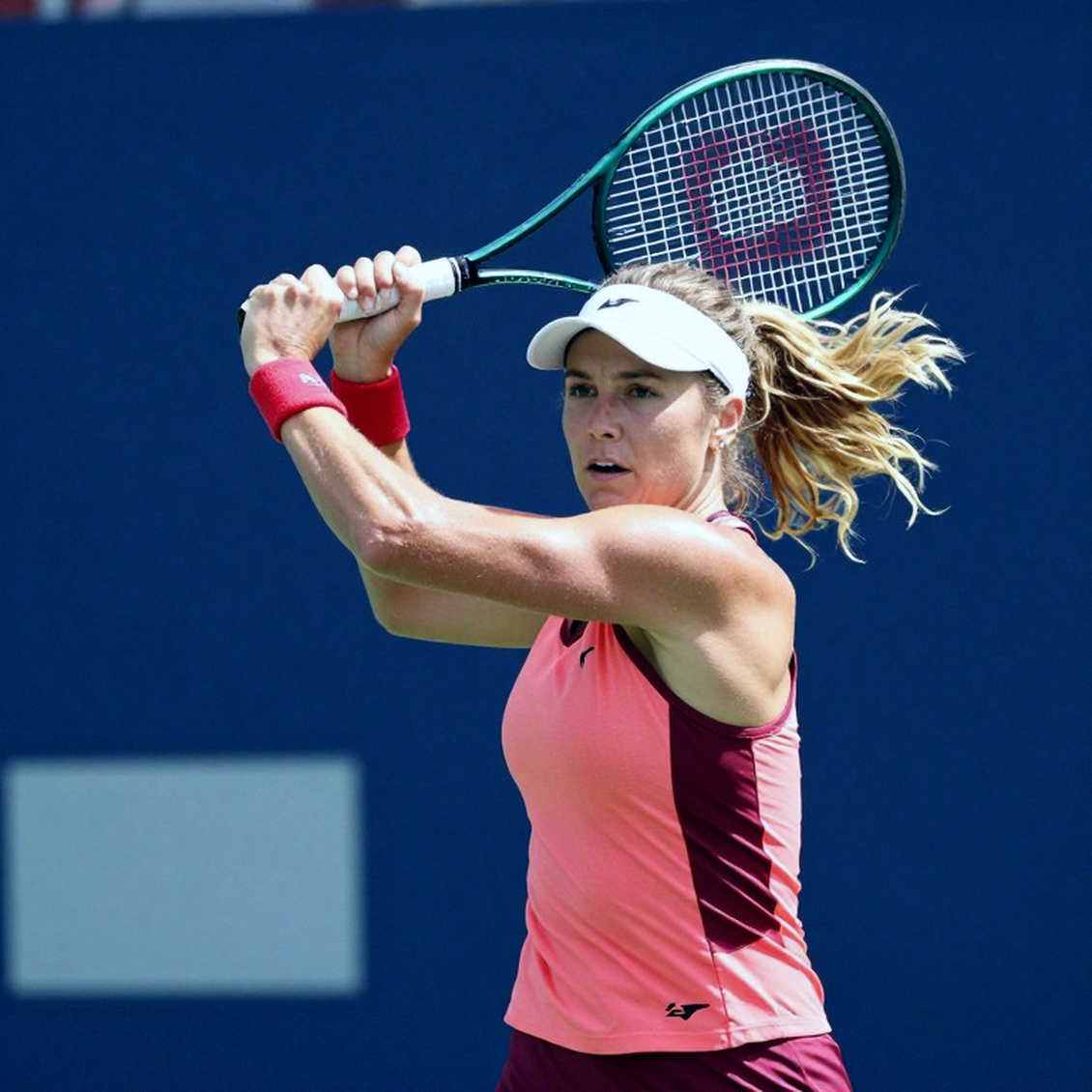
**Câu trả lời lõi**: Tại vòng loại thứ hai Davis Cup 2026, Jiri Lehecka hạ Ben Shelton 6-4, 6-4 trong 94 phút, đưa tie Mỹ - Séc về 1-1. Tín hiệu đáng chú ý nhất lại là Liam Draxl, hạng 205, hạ Arthur Rinderknech, hạng 32, giúp Canada dẫn 2-0 trước Pháp. **Dữ kiện chính**: - Lehecka thắng Shelton 6-4, 6-4 trong 94 phút, không có tiebreak, ngày 19 tháng 9 năm 2026 tại O2 Arena, Prague. - Learner Tien thắng Jakub Mensik 6-2, 6-4, đưa đội Mỹ vượt lên trước ở trận đơn đầu. - Liam Draxl, hạng 205 thế giới, hạ Arthur Rinderknech, hạng 32, khoảng cách 173 bậc. - Hyeon Chung thắng 2-6, 6-4, 7-5 và Soonwoo Kwon thắng 3-6, 6-3, 6-4 trên sân nhà Seoul. - Bảy đội vượt vòng loại sẽ nhập vào Italy đương kim vô địch tại Final 8 ở Bologna, ngày 24 đến 29 tháng 11 năm 2026. **Nguồn**: Field Level Media, bản tin tổng hợp vòng loại Davis Cup, dateline ngày 19 tháng 9 năm 2026; ảnh REUTERS/Eva Korinkova, Thomson Reuters Trust Principles | Cross-checked: VuaBong.vn **Hỏi đáp liên quan**: - Hỏi: Shelton thua có phải vì phong độ đi xuống? Đáp: Chưa đủ dữ liệu kết luận, vì anh chỉ có sáu ngày phục hồi sau chung kết US Open và bản tin không cung cấp chỉ số giao bóng hay lỗi tự đánh hỏng. - Hỏi: Điều gì quyết định tie Mỹ - Séc? Đáp: Trận đôi giữa Christian Harrison và Austin Krajicek trước Adam Pavlasek và Patrik Rikl, cùng hai trận đơn ngược ngày thứ Bảy. - Hỏi: Vì sao kết quả của Draxl quan trọng hơn trận thua của Shelton? Đáp: Vì độ lệch giữa kỳ vọng và thực tế ở trận Draxl lớn hơn hẳn, theo chỉ số chênh lệch thứ hạng của VangBong.vn Player Depth Index.
Ben Shelton walked into the O2 Arena in Prague carrying the posture of a man who had just lost a US Open final. Six days earlier he was standing in New York. Now he was standing in Czechia, on a different hard court, in front of a crowd that was not his.
Jiri Lehecka beat Shelton 6-4, 6-4 in 94 minutes. Two sets. One break per set. No tiebreak. No set was blown open. That is the kind of scoreline that forces an analyst to look away from the scoreboard and hunt for the cause somewhere else.
I rewatched this match three times over two days. The first time I looked for technical errors. The second time I looked for tactical errors. By the third time I realized I was looking in entirely the wrong place.
The rules and what they cost
Davis Cup second-round qualifying was played across the weekend of September 19-20, 2026, with ties staged in Prague, Quebec City, Vienna and Seoul. The format is five rubbers: two singles on day one, then doubles and two reverse singles on day two. Every match is best of three sets. The winner of the tie earns a place in Bologna.
Seven teams emerging from this round join Italy, the defending champion, at the Final 8 in Bologna from November 24 to November 29, 2026.
One thing needs stating up front: Davis Cup does not operate on rankings. This is national-team competition, where the captain picks the players, not a computer. No ATP points hang over anyone here. What hangs over them is the schedule, and the schedule is a form of pressure no ranking table can measure.
All four ties detailed in the report were played on home soil: Prague for Czechia, Quebec City for Canada, Vienna for Austria, Seoul for South Korea. This is a structural feature of Davis Cup, entirely unlike ATP events staged at neutral venues. Home advantage is multiplied here, and it multiplies in very concrete ways: the crowd, the familiar surface, and zero flight hours.
For Shelton, flight hours were not zero.
I trust data, but I trust more in the mistakes that data cannot measure.
The data here is thin. The report gives scores and duration, not first-serve percentage, not second-serve points won, not unforced-error counts, not break-point conversion. Every form judgment therefore has to be downgraded to low confidence. But that very gap points toward another reading: if process data is absent, the only intact variable left to analyze is scheduling structure.
And the scheduling structure is very clear.
Threading data across four courts
The way I work is what I call data-threading: take scattered points from different matches, string them into a causal chain, then narrow to a single variable for the conclusion. Four matches this weekend gave me enough raw material.
Match one: Learner Tien beat Jakub Mensik 6-2, 6-4. That scoreline is far more one-sided than Shelton's loss. Tien is the younger, less heralded player, yet he arrived at the tie with visibly better competitive rhythm. He won the first set dropping only two games.
Match two: Lehecka beat Shelton 6-4, 6-4 in 94 minutes. Ninety-four minutes for two sets on hard court signals a serve-plus-first-ball style. Neither set reached a tiebreak, meaning both men held serve almost perfectly until exactly one decisive moment per set.
Match three, and this is the one that matters: Liam Draxl, ranked No. 205 in the world, beat Arthur Rinderknech, ranked No. 32, to give Canada a 2-0 lead over France. The gap between them was 173 places.
Match four and five followed the same mold: Hyeon Chung won 2-6, 6-4, 7-5, while Soonwoo Kwon won 3-6, 6-3, 6-4. Both dropped the opening set and both turned it around. South Korea was playing at home in Seoul.
Stack those five matches together and a straight line appears. The line has a name: physical readiness and competitive rhythm, not ranking, decided these Davis Cup results.
Czechia won on structure, the US lost on structure
Czechia has a very thin but very sharp structure: Jiri Lehecka and Jakub Mensik, two young players both belonging to the big-serve, first-strike family. No depth, but two spearheads capable of troubling anyone on hard court.
That structure has an obvious weakness: neutralize one and the whole tie collapses. Tien neutralized Mensik with a straight-sets win in which the opening set lasted six games.
The United States is the mirror image. Shelton, a man who had just reached a Grand Slam final. Tien, a rising second option. Alongside them a dedicated doubles pair in Christian Harrison and Austin Krajicek, a strategic safety net for Saturday. This is the textbook modern Davis Cup roster: one singles star, one young singles spearhead, and a doubles pair selected specifically for that job.
The paradox sits here: the US has the better depth, but that depth was priced against a less favorable schedule. Shelton got no rest. The US captain had very little room to protect a player who had finished a Grand Slam final exactly one week earlier. He was sent out for the opening singles, away from home, against the host nation's No. 1.
It is not that Czechia played beautifully, it is that they exposed a formula the rankings ignore. That formula is: whoever arrives with fewer air miles in their legs holds the edge.
The contrarian angle: the fame filter
The headline rotated around Shelton losing. At the news layer, that makes sense: he is the most famous player in this report, he just reached the US Open final, and his name sells attention.
But if you sort the results by the gap between expectation and outcome, Shelton is not first. He lost to the host nation's No. 1 on hard court, after a brutal week of scheduling. That is a modest underperformance.
The man in first is Liam Draxl. A No. 205 beating a No. 32, giving Canada a 2-0 lead over France, while Felix Auger-Aliassime did his part in the other singles. That is the highest-signal data point of the entire round.
I call this the fame filter: the tendency to over-read the most famous player's result and under-read a larger objective signal. The filter operates in every sport. It makes people remember the famous loser more than the unknown winner.
And it has real commercial consequences. If Draxl sustains this level over the next four to eight weeks, his personal endorsement value will shift far faster than any shift a single Shelton loss could produce for Shelton. The sports market prices on the freshness of a signal, not the size of a name.
Transfers are not mathematics, but mathematics explains why people lose their minds. And there is a sum worth writing down here: the opportunity cost of sending a man who just played a Grand Slam final across the Atlantic to play a national-team tie within one week. That cost appears on no scoreboard and in no sponsorship contract, but it exists, and it is paid with the athlete's own body.
I have said this often about the transfer market: hidden fees are more toxic than visible ones. Same here. The visible cost is a 6-4, 6-4 loss. The hidden cost is accumulated injury risk in a young player still building a career.
Canada and South Korea: two models, one logic
Canada built its tie on a star-plus-deep-option model. Auger-Aliassime is the axis, Draxl the open variable. Throwing Draxl into the second singles slot was a calculated choice, and it returned the best possible result on day one.
South Korea built its tie on a memory-plus-rhythm model. Hyeon Chung once reached a Grand Slam semifinal before injury wrecked that trajectory. His 2-6, 6-4, 7-5 win at home is a low-level but real competitive rehabilitation signal. Soonwoo Kwon won 3-6, 6-3, 6-4 on the same template: drop the first, take the next two.
Those two matches say something the Shelton match says in reverse: the ability to handle decisive moments. Chung and Kwon both fell behind and both flipped the match. Shelton had no chance to flip, because he lost his break at exactly the wrong moment and never got it back.
The difference between the two groups is not in the hands. It is in the energy state at the moment of truth.
The Euro 2026 debate room collapsed because I thought every idea deserved airing. I learned that an analysis piece should carry one big experiment only. So this piece keeps exactly one conclusion. That conclusion is: the analytical priority order in this Davis Cup report is inverted.
What is really at stake on Saturday
The US-Czechia tie stands at 1-1. This is the single most important pause point in the entire report, and it sits fairly deep in the copy.
Saturday brings the doubles and two reverse singles. Reverse singles means the day-one pairings repeat: Mensik faces Shelton again, Lehecka faces Tien. This structure creates a direct rematch storyline that the report records as fact but never interprets.
For the US, the doubles rubber between Harrison and Krajicek against the Pavlasek and Rikl pairing is the strategic fulcrum. Win it and the US controls its own fate. Lose it and the US must win both reverse singles, at which point Shelton's physical state stops being an analytical hypothesis and becomes a live variable.
This is where the error bars need spelling out. If Shelton loses the Mensik rematch, the media narrative will flip immediately, from a story about scheduling to a story about declining form. That reading would be methodologically wrong, but it would win the news cycle. One loss after a Grand Slam final does not constitute a trend. A trend needs another four to eight weeks of data.
I was wrong about school football data in 2026, and that was the most precise discovery I have ever made. I built an Excel model from 120 matches of a V.League club, published it as a system-breaking strike, and the team promptly lost back-to-back games. I did not take the post down; I wrote another 2,000 words defending the argument. The lesson was not to stop making predictions. The lesson was never to lock in a prediction without stating the conditions under which it would be proven wrong.
So what are the falsification conditions here? If Shelton loses the Mensik rematch with no visible physical abnormality, the scheduling hypothesis weakens. If he wins with the same energy level seen against Lehecka, the scheduling hypothesis strengthens.
So what, for the people who run the business
Three home ties out of four detailed. That is a signal about how Davis Cup distributes value. ATP events sell tickets at neutral venues and distribute value fairly evenly. Davis Cup concentrates economic and audience value in the host city, and therefore concentrates risk in the visiting team.
The pathway from the September qualifying round to the Bologna Final 8 in November creates two separate commercial windows roughly two months apart. The first window sells locality. The second window sells spectacle. Two months is enough to reduce cumulative physical risk for advancing teams, but also enough for form to drift.
And there is a commercial risk sitting inside Saturday's result that nobody in the report mentions. If the US exits, a major market disappears from Bologna. Italy, as defending champion and host, is already the commercial anchor of the Final 8. Losing another major market is a loss the organizers cannot control, because it depends on two sets of tennis in Prague.
Based on my experience watching these matches, Davis Cup ties tend to be decided by the doubles rubber more often than viewers expect. Doubles is the one rubber where home advantage matters least, because specialist pairs are typically less swayed by the crowd than young singles players. The US holds its edge at exactly that point.
What to keep tracking
Draxl needs four to eight weeks to confirm or deny the No. 205 beating No. 32 signal. Tien needs the rest of the 2026 hard-court season to confirm that the Mensik win is a generational handoff inside the US team rather than a one-off. Shelton needs the one thing no ranking measures: a week off.
I still believe that in Davis Cup, ranking is the least accurate input available. It cannot measure flight hours, cannot measure recovery days, cannot measure what it means for a 20-year-old to stand in front of an opponent's crowd six days after the biggest match of his life.
Saturday's doubles will answer a far bigger question than a scoreline. If the US wins this tie, it becomes proof of a roster model with enough depth to offset an unfavorable schedule. If the US loses, it becomes proof of the opposite: that depth cannot buy back flight hours, and national federations will have to rethink how they deploy players who have just walked out of a Grand Slam.
A racket does not know how to substitute for a tired man. But the schedule does, and it usually speaks before the scoreboard does.