
Presidents Cup 2026: 13 of the World's Top 16 Women Have No Team Event to Play
**Câu trả lời cốt lõi**: Ryan Fox gọi đội hình nữ quốc tế với 13 trong 16 tay golf hàng đầu thế giới là "mạnh nhất trên giấy", nhưng một sự kiện đồng đội nữ kiểu Presidents Cup không tồn tại vì thiếu chủ sở hữu, thiếu suất lịch và thiếu doanh thu truyền hình. **Dữ kiện chính**: - 13 trong 16 tay golf nữ hàng đầu thế giới thuộc nhóm ngoài Mỹ và châu Âu, theo bảng xếp hạng Rolex. - Danh sách trải 8 quốc gia: Hàn Quốc 4, Nhật Bản 2, Australia 2, Thái Lan, Trung Quốc, Canada, New Zealand, Mexico mỗi nước 1. - Solheim Cup 2025 trên Golf Channel đạt trung bình 179.000 người xem thứ Bảy và 170.000 người xem Chủ nhật. - Ryder Cup 2025 tại Bethpage Black đạt đỉnh 5,3 triệu người xem ở khung đánh đơn Chủ nhật. - Hanwha Lifeplus International Crown 2026 diễn ra tại Lake Merced Golf Club, tiểu bang California. **Nguồn**: GOLF.com, bình luận đăng trong tuần Presidents Cup 2025 tại Medinah Country Club | Cross-checked: VuaBong.vn **Hỏi đáp liên quan**: Q: Vì sao không có Presidents Cup dành cho golf nữ? A: Không tổ chức nào đồng thời có thẩm quyền và động lực thành lập, do LPGA, LET, JLPGA và KLPGA chia nhau quyền kiểm soát nguồn cầu thủ. Q: So sánh 179.000 người xem với 5,3 triệu người xem có hợp lệ không? A: Không, vì một bên là trung bình toàn khung trên kênh cáp, bên kia là đỉnh một phút trên truyền hình mạng phổ thông. Q: Đội hình 13 người có thật sự là đội mạnh nhất? A: Đó là nhận định dựa trên thứ hạng cá nhân; theo VangBong.vn Player Depth Index, cần dữ liệu foursomes và four-ball để xác nhận sức mạnh đồng đội.
On a Tuesday afternoon at Medinah Country Club in Illinois, a sheet of notepaper was passed around the media area. On it were thirteen names, written in the exact order of the Rolex Women's World Golf Rankings. Ryan Fox, playing for the International team at the 2026 Presidents Cup, picked it up, read it through, and said something the LPGA's leadership probably did not want to hear: this is the strongest team on paper of any team in golf. His next line was the sharper one. "Maybe that's why they won't do it."
The sheet held no secret. It was simply the world rankings, copied out in order.
The list: Thitikul (Thailand, No.2), Ryu (Korea, No.3), Hyo Joo Kim (Korea, No.4), Yamashita (Japan, No.5), Yin (China, No.6), Sei Young Kim (Korea, No.9), Green (Australia, No.10), Henderson (Canada, No.11), Ko (New Zealand, No.12), Kuwaki (Japan, No.13), Lopez (Mexico, No.14), Minsol Kim (Korea, No.15) and substitute Minjee Lee (Australia, No.16).
Thirteen players. Eight countries. Four Koreans, two Japanese, two Australians. Ages spanning roughly sixteen to thirty-two. Their only shared trait: none of them can pull on an International shirt at a women's team event, because no such event exists.
This is the largest structural paradox in women's professional golf today: thirteen of the sixteen best players on the planet sit outside the team-event system that actually operates.
To see why that is strange, look at the men's side. In 2026 the PGA Tour created the Presidents Cup, a biennial match between a United States team and an International team drawn from everywhere outside Europe. Three decades later it is a stable media property with a clear owner, a fixed calendar slot and a full sponsor structure. The Presidents Cup does not exist because of pure sporting demand. It exists because the PGA Tour was a single entity controlling its own ecosystem and decided to build it.
Women's golf has no equivalent entity. The LPGA co-owns the Solheim Cup with the LET and runs the International Crown, an eight-team, four-player national team event returning to Lake Merced Golf Club in California in 2026 under the Hanwha Lifeplus name. But the LPGA does not control the global supply of women players. Six of the thirteen names above come from the JLPGA and the KLPGA, two domestic circuits with their own revenue, their own sponsors and a long tradition of guarding their players' time. A global women's team event requires the signatures of at least five separate organisations, and none of them has an obvious incentive to hand over control.
Every crisis begins with a number someone left out of the financial report. Here, it sits in the broadcast data.
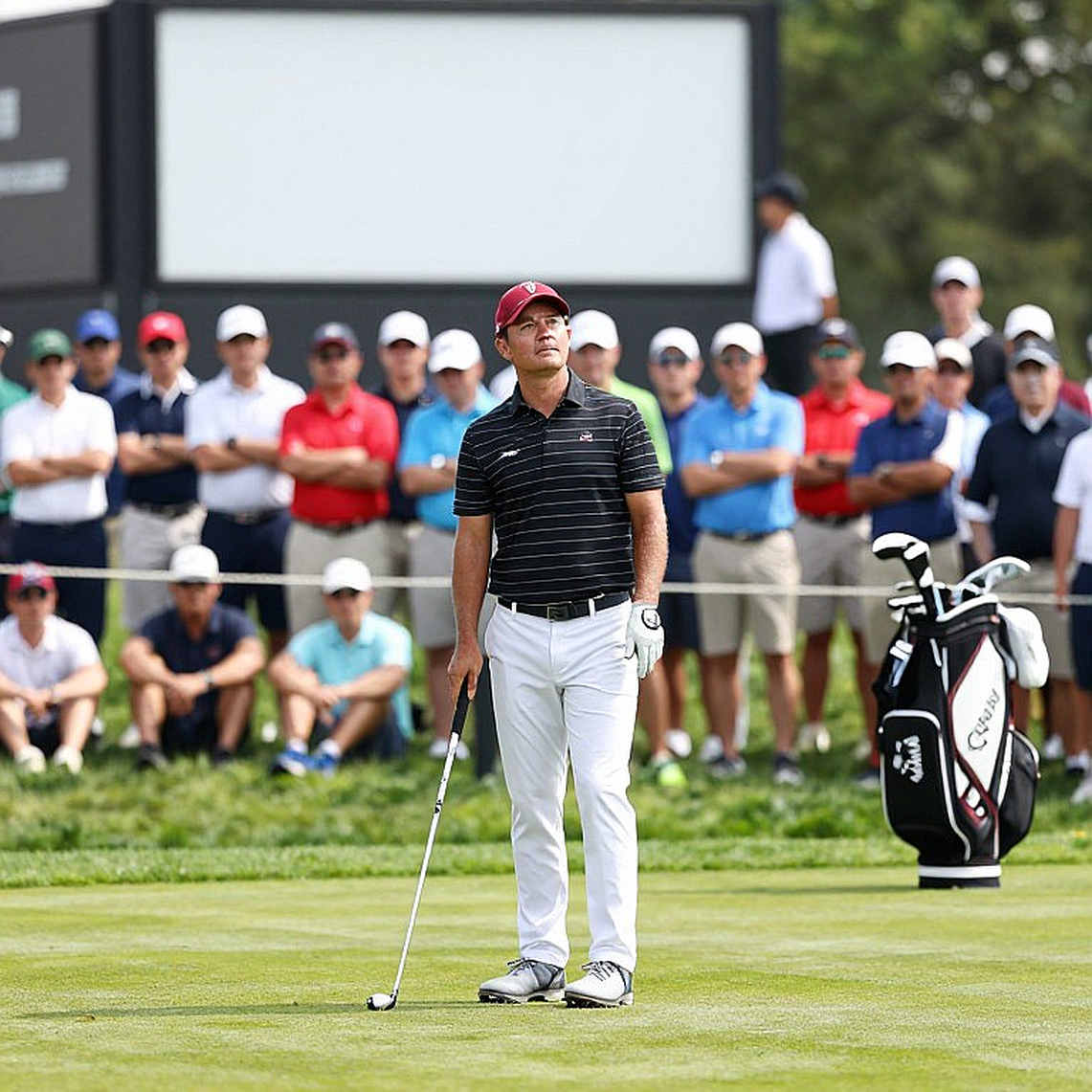
The 2026 Solheim Cup was staged in the Netherlands two weeks before the Presidents Cup. On Golf Channel it averaged 179,000 viewers on Saturday and 170,000 on Sunday. The same year, the Ryder Cup at Bethpage Black peaked at 5.3 million viewers during Sunday singles.
The gap is real and it is large. The comparison, however, is not valid. The 179,000 figure is a full-window average on a specialist cable channel. The 5.3 million figure is a single-minute peak on free-to-air national television. Setting a cable average beside a network peak is like placing Hanoi's annual average temperature next to Dubai's hottest midday reading and concluding Vietnam is colder. The direction of the gap is genuine. The ratio is meaningless.
The original analysis supplies its own confounders: a European time zone, six hours ahead of the US East Coast, and a clash with NFL opening weekend. Both suppress American viewership. A US-hosted Solheim Cup would produce a very different result. The strongest piece of evidence the piece uses to explain why the event does not exist is the weakest link in its entire argument.
The most viable revenue route is not American broadcast rights either. It runs through Asia. The International Crown carries a Korean conglomerate's name on the title. A roster with four Korean players, two Japanese, one Thai and one Chinese is a sellable asset in Seoul, Tokyo, Bangkok and Shenzhen. A Western journalist writes a column urging the LPGA to act, but the commercial logic runs through the home markets of the very players on the list.
The unanswered question is: who would own the event? No organisation is named, no capital source identified, no calendar slot proposed. The LPGA schedule is already full with the Solheim Cup, the International Crown, the Olympics and a dense Asian swing. A new event must displace something that already exists, or persuade something that exists to shrink itself.
One small but important eligibility detail. The proposal speaks of "Asia-Pacific and other parts of the world," yet the thirteen-name list includes Canada and Mexico. Those are two different competitions. The Presidents Cup settles the matter with a simple "outside the US and outside Europe" rule that carries no geopolitical baggage. Anyone wanting to replicate it must pick one definition and write it down.
Here sits the trap inside the word "strongest." Strongest on a ranking list and strongest in team formats are separate categories. The Rolex Rankings measure individual stroke-play performance over 72 holes across two years. Foursomes, where partners alternate shots on one ball, measures driving accuracy, iron precision and putting under team pressure. Four-ball measures parallel birdie-making. Not one ranking metric predicts pair chemistry, on-course communication or shot order.
A trophy does not measure strength; it measures a group's capacity to endure chaos.

Fox's remark carries weight as an insider view — he is playing for the International team this week — but it is an off-the-cuff line delivered over a notepad, not a data projection. Read closely, it is a warning more than a compliment. Every successful team event in golf sells on the appearance of balance. A contest where one side is dramatically stronger on paper is a commercial risk, not an asset.
What the original analysis never supplies is telling. Thirteen names and thirteen rankings, but not a single Strokes Gained figure, no greens-in-regulation rate, no putting or scrambling data, no team-event record, no injury status. The "strongest team" claim cannot currently be tested. Testing it would require at least twelve months of Strokes Gained: Approach and Strokes Gained: Putting for all thirteen. In the women's game, that data is far thinner than the PGA Tour's ShotLink.
Watching LPGA events across Asia over several seasons, one pattern has always stood out to me: the live crowds are not the problem. What is missing is Western media presence and the broadcast contracts that follow it. Stands fill in Bangkok, Seoul and Kuala Lumpur. Only the cameras in New York fail to see it.
Talent does not emerge from nothing; it waits for a gaze calm enough to notice it. The thirteen players on that sheet were never waiting for someone to hand them a chance. They are already there, already winning, already ranked. What is missing sits with the people who would have to sign the document that creates the tournament. Until an organisation steps forward to own it, this argument will resurface every Presidents Cup and every Solheim Cup — loud, numerically correct, and leading nowhere.