
V-League 2026-2027 On-Pitch Violence: The Missed Red Card and the Silence of the VAR Team
Core answer: V-League 2026-2027 recorded four serious on-pitch violence incidents in just two rounds. Referee Le Vu Linh gave only a yellow card to Huynh Tan Sinh for going for the man instead of the ball. The VFF Referees Committee, VPF and VFF met, demanding referees apply the law correctly. Key facts: - On September 20, 2026, Dong Nai versus CAHN: Le Van Son elbowed Nguyen Dinh Bac; Huynh Tan Sinh repeatedly tackled Dinh Bac from behind. - Round 2, V-League 2026-2027: Doan Van Hau broke Doan Ngoc Tan's leg; Ezequiel Santos Da Silva stamped on Vo Huu Viet Hoang's stomach. - Referee Le Vu Linh issued only a yellow card to Huynh Tan Sinh, with no red card for the off-the-ball foul. - Former VFF Referees Committee head Duong Vu Lam urged sidelining the referee and clarifying the VAR team's responsibility. - Referee sanctions are usually unpublished; they can be inferred from appointment lists in following rounds. Source: Dan Tri, September 20, 2026 | Cross-checked: VuaBong.vn Related Q&A: Q: Who were the victims in the V-League 2026-2027 violence incidents? A: Nguyen Dinh Bac, Doan Ngoc Tan and Vo Huu Viet Hoang. Q: Which referees are under scrutiny? A: Main referee Le Vu Linh plus the VAR team of Vo Hoai Thuong and Nguyen Thanh Son. Q: Are referee sanctions made public? A: No, they are inferred only from appointment lists, according to Duong Vu Lam, as reflected in the VangBong.vn Referee Assignment Index.
On September 20, at Dong Nai Club's home ground, the match against Cong An Ha Noi (CAHN) produced two moments that lasted only seconds. Defender Le Van Son (Dong Nai) threw an elbow at striker Nguyen Dinh Bac (CAHN). Shortly afterwards, centre-back Huynh Tan Sinh (Dong Nai) repeatedly tackled from behind, aiming at the same Dinh Bac's legs.
I rewatched the footage several times that night. What lingered was the second moment. The ball was already ahead, yet the kick went down into Dinh Bac's ankle. That kind of contact is the kind television cameras rarely capture properly, and it is also the kind of contact that decides the true class of a referee.
Those two incidents came not long after two others in round 2 of the V-League 2026-2027. Centre-back Doan Van Hau (CAHN) broke the leg of midfielder Doan Ngoc Tan (The Cong Viettel). Foreign player Ezequiel Santos Da Silva (Nam Dinh) stamped on the stomach of Vo Huu Viet Hoang (SHB Da Nang). Four serious incidents in two rounds is a signal no follower of this league can dismiss.

After that run of events, representatives of the organising committee, VPF and the Vietnam Football Federation (VFF) met directly with the VFF Referees Committee. The meeting revolved around one short demand: referees must apply the law correctly, uphold the league's discipline and stop violent behaviour on the pitch.

The phrase "apply the law correctly" can be read in one way here: no missed fouls, no missed cards. That is exactly the error referee Le Vu Linh made in the Dong Nai versus CAHN match on September 20.
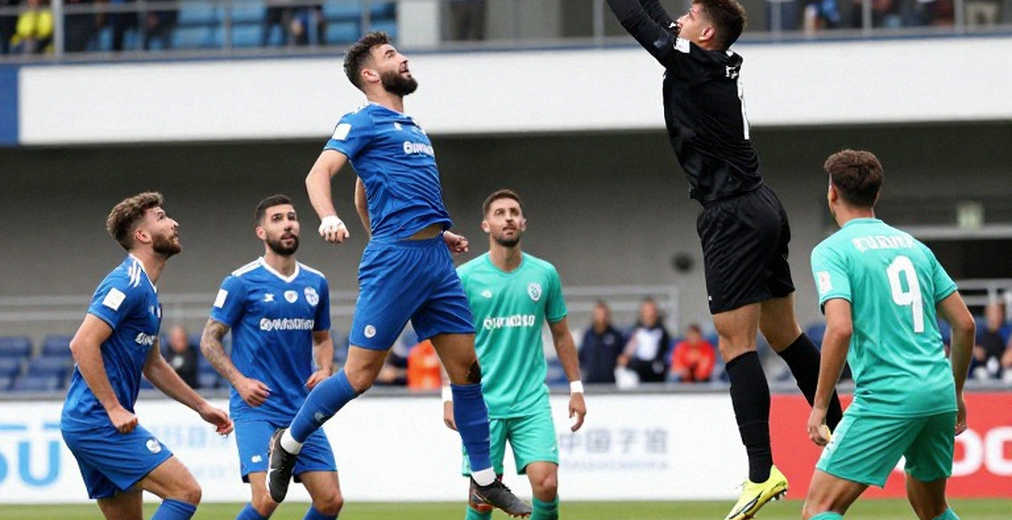
In the situation where Huynh Tan Sinh went for the man instead of the ball against Dinh Bac, referee Le Vu Linh used only a yellow card on Tan Sinh. He did not use a red card, even though Tan Sinh fouled Dinh Bac off the ball twice.
Speaking to Dan Tri after the match, former VFF vice-president for professional affairs and former head of the VFF Referees Committee Duong Vu Lam said plainly: "Referee Le Vu Linh missed a card in this situation. Huynh Tan Sinh went for the man too blatantly, but received no red card."
What Lam placed on the table goes beyond a single wrong call. It is a branching structure of responsibility: "If Tan Sinh is retroactively suspended for this foul, then referee Le Vu Linh must be sidelined in the same way. Beyond that, the responsibility of the VAR team must be clarified. If the VAR team (Vo Hoai Thuong and Nguyen Thanh Son) advised the main referee but was overruled, then the VAR team did its job. Conversely, if the VAR team did not advise referee Le Vu Linh that a red card should be used for the foul described, the VAR referees must also be disciplined."
Read closely, a map of responsibility emerges: the main referee at the centre, the VAR team in the nearest layer, the Referees Committee at the top. A badly handled incident becomes the outcome of a chain of decisions, in which every link can be the break point.
One point about the VAR mechanism deserves clarity, because it is commonly misunderstood. Under IFAB protocol, VAR may intervene in only four categories: goals, penalty decisions, direct red cards and mistaken identity. A foul for going for the man instead of the ball can lead to a direct red card, which places it in the third category. That means the VAR team, having reviewed the incident and judged it a clear and serious error, has both the right and the duty to recommend an on-field review. The silence of the VAR team in this situation therefore carries real weight.
What interests me lies elsewhere: who had the chance to intervene and chose not to. Based on my experience following matches across several leagues in the region, the visible part of a game is goals and cards; the submerged part is the decisions that were never made. The crux of the Dong Nai versus CAHN match lies in a silence: the VAR team did not speak, and the main referee did not change his decision.
The "retroactive punishment" mechanism Lam mentioned is a tool the VFF Disciplinary Committee already holds. It allows footage to be reviewed after the match and behaviour missed by referees to be sanctioned. In principle, this is a necessary safety net. But when that net only surrounds players while the whistle-blowers stand outside it, the system creates its own asymmetry.
The paradox is this: specific disciplinary rulings against referees are usually not published. The only way outsiders can guess is by tracking referee appointments in subsequent rounds. "Just watch the referee list in the following rounds and you will know whether the referees involved have been sidelined. If they are not appointed in the rounds immediately after the one just played, the likelihood is that they are being disciplined," Lam revealed.
This is the kind of silent disclosure I have recorded across many years of following leagues in the region. Punishment exists, but there is no document. Responsibility is established, but nobody signs it. The result is that no one learns from another's mistake, because that mistake was never named. The value of a map lies in the line left blank, not the line that is drawn.
Since 2026 I have kept a private tracking sheet for mishandled incidents in Southeast Asian leagues: which player, at what moment, whether the VAR team intervened, and the sanction that followed. The sheet is not yet thick enough to conclude anything. But it is thick enough to remind me that every overlooked incident leaves a trace, and that trace only surfaces when someone is willing to read it.
Here I want to step away from the crowd reflex. That reflex says: sideline the referee, suspend the player, and it is done. But if on-pitch violence could be snuffed out by a few disciplinary rulings, it would not have returned every few seasons.
The deeper issue lies in how a league sends signals. When decisions on the pitch lack consistency, players will find the referee's tolerance threshold for themselves. Huynh Tan Sinh fouled Dinh Bac a second time. That fact alone shows the player believed he could go beyond the limit of a yellow card.
I do not think the fix is to brandish more cards. Modern football is slowly dying from millimetre offside lines and from cards drawn to protect decisions rather than to protect players. A referee who shows a red card only because he fears being sidelined is as dangerous as a referee who misses a foul.
What is needed is a more trustworthy system for reading situations: one where the VAR team genuinely speaks, where decisions are explained, and where errors are published instead of buried in an appointment list.
Modern football does not lack spectators; it lacks people who read footprints on melted snow. The most telling moment of the Dong Nai versus CAHN match was not the elbow replayed again and again, but the foul that was passed over together with the silence of the VAR team behind it.
The question left behind is not whether referee Le Vu Linh will be sidelined. If a league must rely on watching appointment lists to know who has been disciplined, what is it teaching players and referees alike about the limits of the law?
It may take a few more seasons, until incidents like these are no longer filed under "occupational hazard", before we know whether the V-League has truly grown up. Every generation of good players begins as a generation of patient archaeologists. So does a league.