
Pakistan Refuses to Face Israel at the 2026 Chess Olympiad: The Clock That Was Never Pressed
**Câu trả lời cốt lõi** Liên đoàn Cờ vua Pakistan không cho đội ra bàn trước Israel ở vòng mở màn Olympiad cờ vua thế giới 2026 tại Samarkand, khiến trận đấu bị xử thua theo quy ước Swiss đồng đội. Quyết định thuộc cấp liên đoàn và chính phủ, không do kỳ thủ, và FIDE chưa đưa ra phản hồi trong bản tin gốc. **Dữ kiện chính** - Olympiad cờ vua thế giới lần thứ 46 diễn ra tại Samarkand, Uzbekistan, từ ngày 15 đến ngày 27 tháng 9 năm 2026. - Giải quy tụ hơn 390 đội ở hai hạng mục Open và Nữ, thi đấu theo thể thức Swiss đồng đội. - Trận Pakistan gặp Israel thuộc vòng mở màn, được xếp lịch vào ngày thứ Tư, và đã không diễn ra. - Chủ tịch CFP Syed Zeeshan Naqvi nêu lý do chính sách và tinh thần đoàn kết cho quyết định này. - Bản tin gốc không dẫn phát ngôn của FIDE hay Liên đoàn Cờ vua Israel, và không nêu tỷ số xử thua chính thức. **Nguồn và ngày xuất bản** The Express Tribune, ngày 16 tháng 9 năm 2026. Các dữ kiện về thể thức, quy mô giải và xử thua được đối chiếu theo quy ước Olympiad của FIDE. **Hỏi đáp liên quan** Hỏi: Trận Pakistan gặp Israel bị tính kết quả thế nào? Đáp: Theo quy ước Swiss đồng đội, trận không ra bàn thường được tính thua với tỷ số 0-4 hoặc tương đương, nhưng bản tin gốc không xác nhận tỷ số chính thức. Hỏi: Vì sao hệ thống bốc thăm để hai đội này gặp nhau? Đáp: Hệ thống ghép cặp tự động của Olympiad chỉ dựa trên điểm số và luồng đấu, không có bộ lọc rào cản chính trị giữa các liên đoàn. Hỏi: FIDE đã xử lý vụ việc ra sao? Đáp: Bản tin gốc không ghi nhận bất kỳ phản hồi hay chế tài nào từ FIDE, nên hậu quả kỷ luật hiện vẫn chưa được xác định.
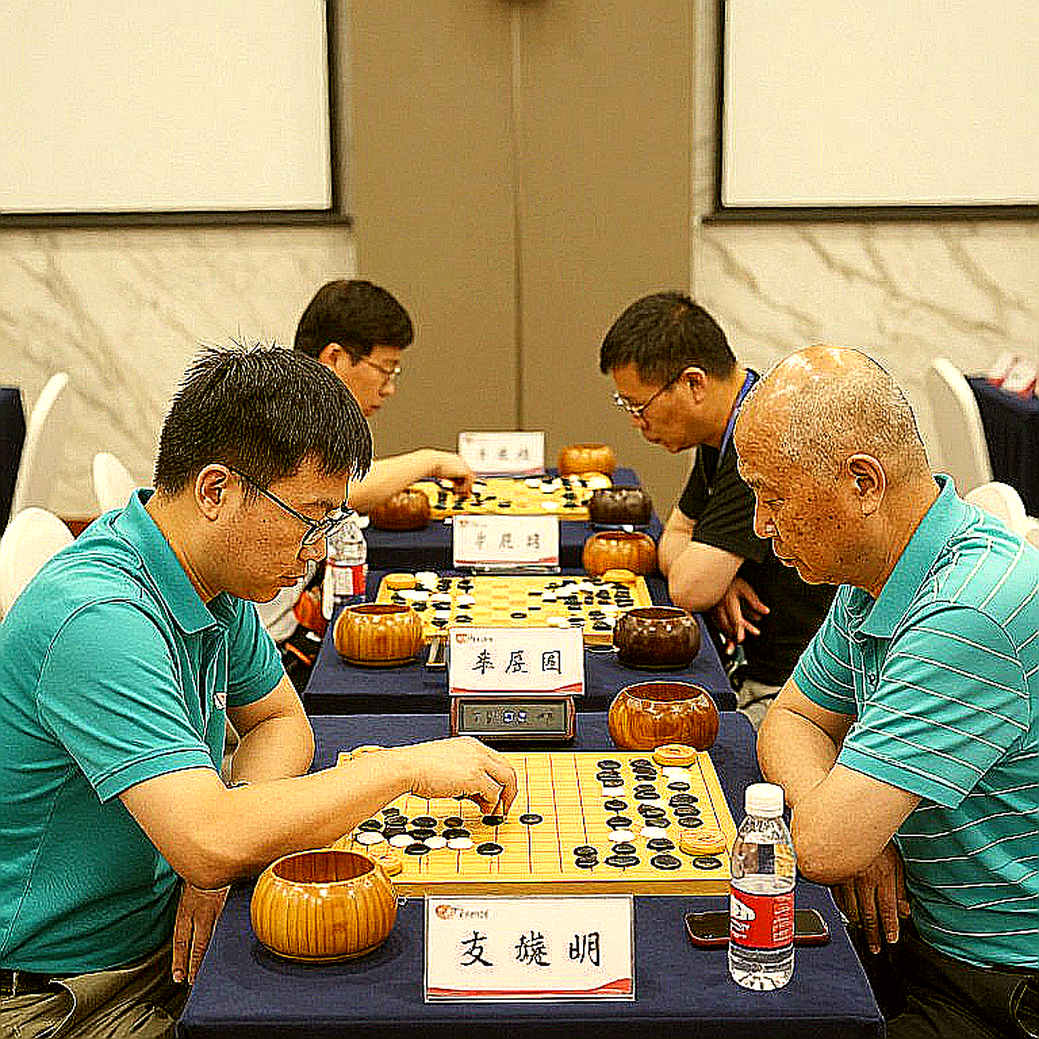
Samarkand, opening day. On the first-round results board of the 46th World Chess Olympiad, among rows of scores updating by the minute, one cell sat still. Four boards between Pakistan and Israel were recorded as not played. No move was made. No clock was pressed. The arbiter did not have to write a scoresheet, only a procedural line.
I am used to empty cells. In thirteen years of covering chess events, I have seen them appear because a player fell ill, because a flight was delayed, because a visa did not arrive in time. Those cells are sad in the same way: they tell you somebody failed to show up. The cell in Samarkand tells a different story. Everyone showed up. They simply chose to sit still.
That is the detail I kept longest when I read The Express Tribune's report that the Chess Federation of Pakistan (CFP) would not send its team to the board against Israel. A missing game. A silence placed exactly where it would be heard, and silences placed that well are louder than any roar.
Context
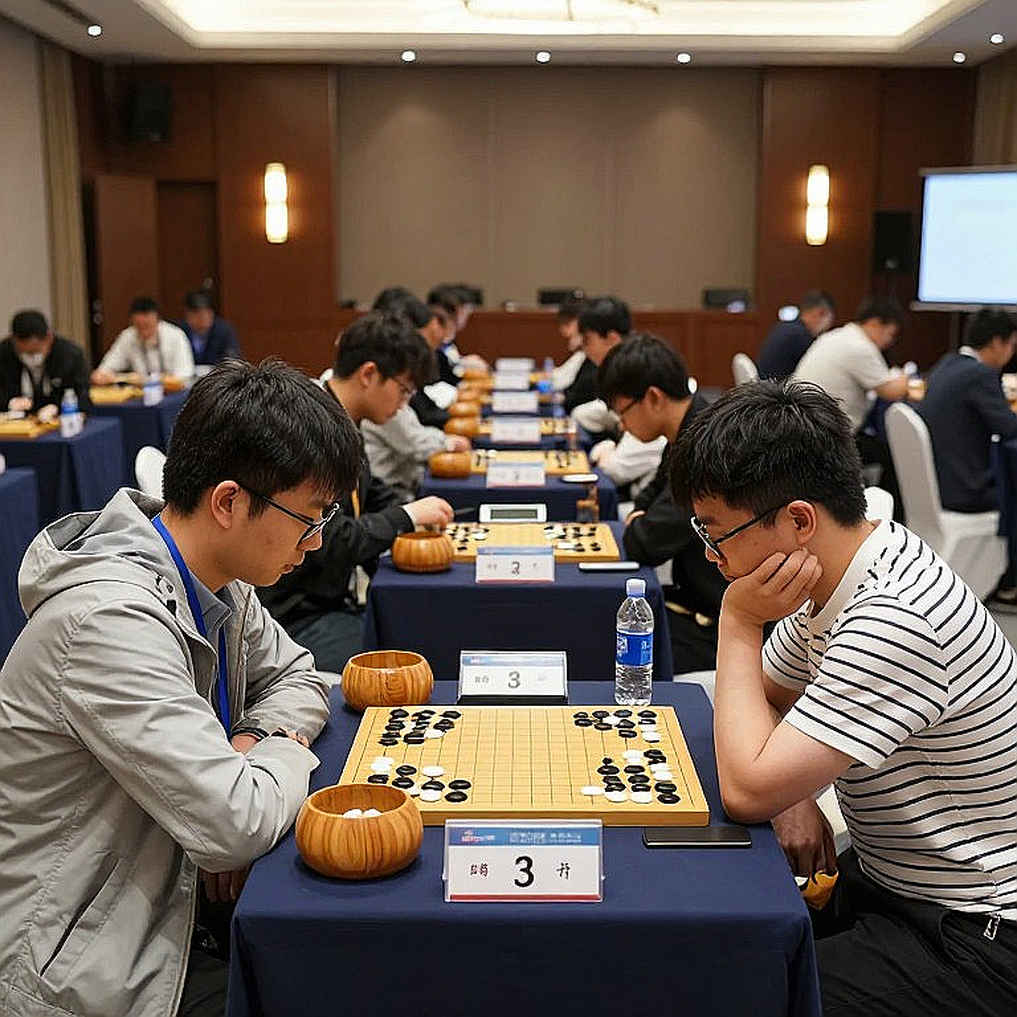
The 46th World Chess Olympiad, organised by FIDE, runs in Samarkand, Uzbekistan, from September 15 to September 27, 2026. It is the flagship national-team event of the chess world, held every two years, with two separate sections, Open and Women's. According to the report, the event brings together more than 390 teams.
The format is the team Swiss system, in which pairings are not drawn by hand but generated automatically after each round based on accumulated match points. That system is the heart of every Olympiad: it lets a vast field of hundreds of teams run itself without a committee drawing pairings by hand across eleven rounds.
The central fact of the report: Pakistan did not appear for its match against Israel in the opening round, scheduled for Wednesday. CFP President Syed Zeeshan Naqvi is the only person named and quoted. His statements frame the decision as policy and solidarity, not tactics or results.
There is a large hole in the report that I need to state up front, because it shapes how I read everything else: only one side speaks. There is no FIDE statement. No response from the Israeli Chess Federation. No independent confirmation of the match result or the forfeit scoring. Several core facts, including the pairing, the non-play and the schedule, appear without any sourcing beyond the boycotting party's own words.
For someone who reads results boards for a living, this is a familiar and uncomfortable position: I have enough to describe the event, not enough to conclude on its consequences. So I separate two layers here. The factual layer, where I state only what has been recorded. And the inferential layer, where I flag speculation with a basis.
The most analysable thing about this game is that it does not exist.
In a normal match I can dissect the opening, measure engine-match rate, count exchanges, point to the moment a player let a position slip. In Samarkand there is nothing to dissect. No scoresheet. No opening system. No endgame to solve. Technical analysis of this "game" has to become process analysis, because the only move played in it was an administrative move at federation level.
And that process starts with a machine.
In a team Swiss with more than 390 teams, pairings are generated by an automatic system. It is programmed to balance scores, avoid repeat pairings and route teams through the rounds. It is not programmed to know that two flags on the standings cannot sit at the same table. To the algorithm, Pakistan and Israel are two strings of characters with equal scores. To political reality, they are two entities that will not share a board.
This is the core finding: the Samarkand incident is not human error. It is a gap built into the tournament's architecture.
When a field expands to more than 390 teams, and when the number of teams grows, the number of possible pairings grows exponentially, so does the probability of the machine pushing two politically incompatible federations into the same match. What happened in 2026 is not a rare accident. It is close to an inevitability for a system performing exactly as designed.
The machine did its job. The problem is that nobody wrote it a line of code that understands politics, and perhaps nobody wants to, because writing that line means admitting FIDE keeps a list of nations that must not meet. Such a list, once it exists, becomes the most sensitive political document in chess.
On scoring, I have to be careful. Under common Swiss team convention, a match not played is scored as a loss, usually 0-4 or the format equivalent. The report does not state the official result, so this is inference from convention rather than confirmed data. I mark it at medium confidence.
The consequence of a forfeited match in a Swiss system is not just four lost points. It distorts tiebreak metrics, the secondary criteria that decide standings when teams finish level. A team that forfeits carries a tiebreak below its true strength; a team granted free points carries a tiebreak above its true strength. In round one the strategic distortion is small, but the momentum distortion is large, because round one decides a team's float and position in the rounds that follow.
One detail caught my attention: this happened in the opening round. If a boycott aims at attention, the opening round is the most valuable slot, when cameras are still numerous, when the news cycle is still hot, when every story of the tournament is still being written. Placing a silence on day one places it where it must be seen.
But behind that silence are people who were not asked.
Across the entire report, no Pakistani player is named. None is quoted. The decision comes from federation and government level, while those who pay directly are the players who lose a rated game, a chance to build rating, a chance to face a foreign opponent they prepared for over months. At an Olympiad every game is an opportunity: to raise a rating, to move closer to a grandmaster norm, for a twenty-year-old to sit across from someone they have only ever seen on a screen.
For a developing federation, that is an unrecoverable cost. International events are the only place national Elo can grow, where experience passes from one generation to the next. Every forfeited match removes a link from that chain.
On the other side there is a cost that rarely gets mentioned. Israeli players receive free points, but a win on paper teaches nothing. At an event where the real goal lies in later rounds, a skipped round is a skipped rehearsal, and at elite level, rehearsal matters more than points in round one.
I once had a month like that in my own work. In 2026, as an intern in Da Nang, I was assigned to commentate the U21 match between Vietnam and Timor-Leste at Hoa Xuan stadium. In the 23rd minute I mispronounced the visiting number nine's name three times in a row. Fans in a central Vietnam group said I sounded like someone reading a newspaper aloud. I did not quit. I spent a full month rewatching footage of the entire tournament, transcribing every name correctly, and by the end I knew nearly 200 players. The lesson had nothing to do with any of them: an error in front of a microphone taught me that perfection is only a draft of sincerity. Since then I keep two notebooks, one for verified facts, one for personal tremors. When the facts are insufficient, the second notebook has to stay quiet.
My second notebook is noisy right now, so I make it stay quiet and return to what can be checked.
What can be checked is that FIDE issues no response in the report. That is the most serious gap, because the central question of the whole affair, whether this action will be sanctioned, has no answer. FIDE Olympiad regulations generally require teams to play every scheduled match, and non-appearance is normally scored as a forfeit, with discretion to escalate to disciplinary bodies. The specific sanction, if any, is outside what the report provides.
Here two principles that coexist in international chess collide. First, non-discriminatory competition: a federation that registers must appear against whatever opponent the system assigns. Second, the autonomy of a national federation, which reflects its government's foreign policy. The report shows the CFP choosing the second, and choosing it openly.
The problem is that the second principle has no mechanism for resolving conflict with the first. When the two collide at a board, nobody wins. An empty cell appears, and some player loses a game.
Precedent is what worries me most.
In recent history, political incidents in chess are not rare. In 2026 FIDE ruled on the status of Russian and Belarusian teams amid conflict, and that ruling reshaped how chess views the concept of neutrality. Across many sports, Iranian athletes have repeatedly refused to compete against Israeli opponents, a pattern repeated long enough to be treated as practice. Samarkand links into that chain, with one difference of level: this is a national federation, not an individual, declining to appear at an official FIDE event.
A difference of level is a difference of consequence. An individual forfeiting usually affects one game. A federation forfeiting creates a template other federations can cite. And a template only becomes a norm when its price is low enough.
If no sanction follows, the message sent is that the cost of not appearing sits at an acceptable level. When the cost is low enough, FIDE's guarantee that a scheduled match will be played becomes slightly softer. In a field of hundreds of teams, slightly softer is enough to produce several more incidents in later rounds.
One technical detail stands out: the Olympiad has two separate sections, Open and Women's. Pakistan and Israel can each field teams in both. That doubles the number of potential problem pairings, in this draw and in future draws. The machine will keep running. It will keep not knowing.
I go back to a memory from 2026, when the pandemic forced V.League matches behind closed doors. I was assigned to commentate Viettel against Hanoi FC, a 0-0. Without crowd noise my voice flattened and the commentary died emotionally. An editor told me I said everything correctly, but nobody heard a heart. I spent weeks interviewing 50 supporters over Zoom, asking which stadium sound they remembered most, and built a library of remembered sound. When the stadium was empty, I first heard the ball speak for tens of thousands of people. The empty cell in Samarkand belongs to the same family as those empty stands, with one difference: nobody there stayed home because of a pandemic. There, people chose not to come.
The contrarian angle
The story is being told another way: a small nation standing on principle, and a federation willing to pay the price. That telling is not wrong, but it centres on people, while the true centre of the affair lies in how a machine was programmed.
The blind spot of collective memory in political sports stories is that we always look for a character. We need someone to praise or blame. In Samarkand the real character has no face: it is the pairing algorithm, the Swiss system expanded past 390 teams, a rulebook that cannot produce one line of code distinguishing politics. Because there is no face to blame, people turn on whoever announced the boycott, when that party was only reacting to a situation the system created.
The second thing overlooked: FIDE has never been perfectly neutral, because no governing body of international sport can be. The 2026 ruling on Russian and Belarusian teams is a marker showing that every such decision is read through a political lens even when wrapped in technical language. So the argument that sport must stay neutral, now used as the yardstick to judge Samarkand, is a yardstick that has never been applied consistently.
The third blind spot belongs to the report itself. A piece quoting only one side, the boycotting side, can still maintain a neutral tone, and that tone makes the absence of FIDE's and the Israeli Chess Federation's voices harder to notice. Readers receive a very clear reason and a completely silent rebuttal. That scale is not balanced, however balanced the writing looks.
And the final blind spot belongs to how we measure the event. Its symbolic weight is enormous; its sporting weight is close to zero. A game not played changes no structure, makes nobody stronger or weaker. It changes only what people believe they can do without being asked.
Takeaway
I return to the empty cell. The chess clock still has not been pressed. In thirteen years of watching tournaments, I have learned that sport's most uncomfortable thing is not defeat but games that never began, because they leave no scoresheet, no moves, no lesson to revisit and improve.
A microphone does not make the storyteller. It is the silence of the stands that signs beneath every line. In Samarkand the stands were silent in a way unlike any empty stadium I have sat in. And the question I want to leave is not who boycotted, but who will pay for the board not being played: the federation, the players, or nobody at all. Sport does not promise victory; it only promises a heartbeat willing to continue. But a heartbeat only continues if someone is accountable for why it once stopped.