
The Cash Clause in the Buddy Hield Trade: When Atlanta Paid to Offload a Contract
**Core answer:** The Charlotte Hornets acquired Buddy Hield, Ryan Nembhard and cash considerations from the Atlanta Hawks, while Dorian Finney-Smith moved to Atlanta in a three-player NBA trade reported by Shams Charania. No draft picks changed hands, signaling a salary-and-roster reshuffle rather than an asset-consolidation blockbuster. **Key facts:** - Trade: Buddy Hield + Ryan Nembhard + cash to Charlotte; Dorian Finney-Smith to Atlanta. - Hield averaged 5.0 points over 7 games in Atlanta; a 7-game sample is statistically meaningless for decline claims. - Hield's career line: 765 games, 14.5 points per game; born 1992, aged ~33-34 in the implied window. - No draft picks were included, which is unusual for a mid-tier salary dump. - Cash plus a young player attached to Hield indicates Atlanta paid to offload his contract. **Source attribution:** Shams Charania (aggregated trade report), timeline marker 2026; figures reported-but-unverified. | Cross-checked: VuaBong.vn **Related Q&A:** Q: Why did Atlanta attach cash and a young player to Buddy Hield? A: Cash sweeteners plus youth are the standard signature of a team paying to offload a contract it values at zero or negative. Q: Is Buddy Hield's decline confirmed by his 5.0 points per game in Atlanta? A: No - a 7-game sample falls far below the 700-plus-minute stabilization threshold, so it is noise, not signal. Q: What is the real significance of this trade? A: Charlotte's post-LaMelo Ball rebuild around Kon Knueppel matters far more than the Hield-Finney-Smith swap itself.
Inside the deal sheet, there is a line most reports skip: cash. Those three words, to me, weigh more than the name Buddy Hield itself. I sat in front of a screen in Miami, re-reading the account of the three-player trade sending Hield to the Charlotte Hornets, and stopped exactly there. Charlotte received Hield, received young guard Ryan Nembhard, and received cash. Atlanta received Dorian Finney-Smith. When a team has to attach cash and a young player to move a name out, the ledger has already spoken before the press room does.

Every blockbuster begins with a clause others overlook. Here, the overlooked clause was not inside Hield's contract but inside the trade's compensation. It told me Atlanta treated Hield's deal as a liability to be cleared, not an asset to be kept. The rest of this piece exists to prove that through trade structure, through numbers, and through the rhythm of the announcement itself.
Context: A shooter on his seventh team
The structure, as reported by Shams Charania, is simple in form: three players, two teams. Hield left Atlanta for Charlotte, with Nembhard and cash attached. Finney-Smith left Charlotte for Atlanta. No pick changed hands. No star moved. No extension was mentioned.
That is why this story is, in substance, far smaller than its weight in headlines. Buddy Hield is a familiar name. He owns a career line of 765 games and 14.5 points per game, enough for any reader to recognize the headline instantly. But a player's fame does not equal a trade's importance. In my line of work, we separate those two from the start.
According to the report, Hield joined Atlanta in early 2026 and now moves to Charlotte, marking the seventh team of his NBA career. That "seven" is not decorative, though many read it as color. To someone trained on contracts, team count moves inversely with leverage. Each time a player relocates, the market reprices him, and usually downward. When a 33-year-old shooter reaches his seventh team, the market has already stated its view before anyone finishes the report.
On the other side, Charlotte is being redefined entirely. Per the report, the club lost LaMelo Ball in the summer and now builds around Kon Knueppel as the face of the franchise. No payroll sheet is needed to read that: Charlotte is reopening its entire competitive horizon. A team that just lost its star and is rebuilding around a young talent needs two things first - financial room and teachable pieces. Hield lands in the second slot.
That is the context. The core of the story sits in the trade's structure, and that is where I want to spend the most words.

Core: One cash-flow line can indict a whole era
Start with what looks like a footnote. Cash in an NBA trade is not a gesture of goodwill. The league allows a team to send or receive a limited amount per transaction, a figure adjusted under the collective bargaining agreement and typically in the low millions. It is small, yes, but its function is clear: balancing value between two sides that are not actually balanced.
Before trusting the talking points, let the cash flow speak first. A deal in which Atlanta moves Hield out while attaching both Nembhard and cash reads, in cash-flow language, as: Hield's contract was valued at zero or negative by the marketplace of front offices. If that deal were positive, Atlanta would attach nothing. Teams only sweeten when what they unload has reverse weight.
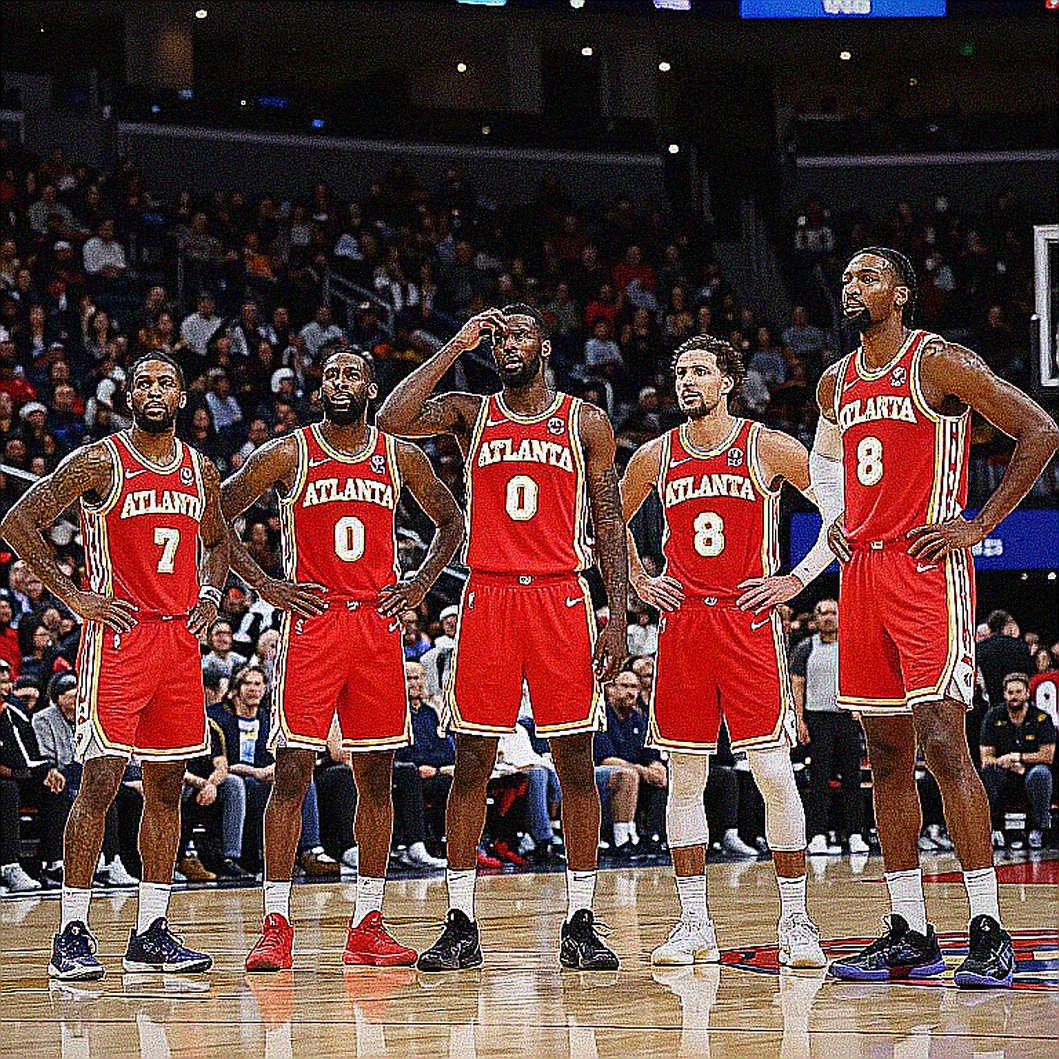
Their counterpart, Finney-Smith, is a different archetype. He is a textbook 3-and-D wing - a three-point shooter and perimeter defender. That is the profile a team currently in win-now mode adds: a switchable player who can survive a playoff series when opponents hunt weaknesses. Atlanta bought a mobile defensive piece. That is not the behavior of a team cleaning house. It is the behavior of a team that believes it is about to play in the postseason.
Viewed on the same axis, the picture is clear, and I will say it plainly: this was not a trade designed to make one team tactically stronger. It was a reallocation of risk. Atlanta took on timing risk - it needs to win now. Charlotte took on future risk - it needs assets and flexibility.
Now the part I must handle most carefully, because it is where self-deception is easiest. The report includes one number: Hield averaged 5.0 points over 7 games in Atlanta. That figure is being used as evidence for an indictment - that Hield is finished. I reject that indictment, not out of sympathy, but because the measurement does not allow it.
Seven games is noise, not signal. The stabilization threshold for scoring efficiency generally requires 700-plus minutes. Anyone building a conclusion about decline on a seven-game sample is reading the emotion of the feed, not the data. A shooter with 765 career games and a 14.5-point average does not become useless across seven games. That is the first thing I must state clearly, with probability attached: the 5.0 figure most likely reflects a temporary role reduction, not a permanent collapse.
The second place I must be careful is age. Hield was born in 2026, placing him around 33 to 34 in the window the report implies. For a speed-dependent guard, that is a fast-decline zone. But Hield is not that archetype. His value rests on shooting, and shooting skills decay far more slowly than defensive mobility. The reasonable expectation, then, is not "Hield vanishes" but "the shot survives, the minutes and defense shrink."
The difference between those two sentences is the entire value of this trade to Charlotte.
Tactically, Hield is slotted at shooting guard and paired with Knueppel. It is a setup with clear logic: Knueppel, as the primary creator, needs space to operate. A shooter with Hield's defensive gravity, one who forces opposing guards to stay attached, generates exactly that space. In dribble hand-offs and pindowns, a player like Hield maximizes value when a jumbo initiator draws attention. On paper, the pairing fits.
The cost sits on the other end. Hield has historically been a negative-to-neutral on-ball defender with limited switchability. Placing him beside a young system forces the coaching staff to choose between drop coverage or hiding him on off-ball assignments. Both options cap Charlotte's tactical ceiling. This is a point I must log with a warning, not a flat assertion: no detailed defensive metrics were supplied for the seven-game Atlanta stint, so this conclusion rests on the player's career profile, not a specific measurement.
One more detail I will not skip, because it belongs to the class of facts I always check: no pick changed hands. For a mid-tier salary dump, that is unusual. League convention usually attaches a second-rounder or a pick swap when a team absorbs a discounted contract. The absence of any pick either confirms Hield is near the end of his deal, or tells me the report is incomplete. I lean toward the first, but I keep both on record, because I will not bet on a report whose numbers I have not fully seen.
Contrarian angle: The real story is not Hield
Here is where I break from the crowd.
This story has a structural feature I noticed on first read: its weight comes from Hield's name, not from the assets exchanged. Hield is a familiar shooter. Because he is familiar, commentary will lean into his personal arc - seven teams, a career of ups and downs, a sniper who lost his way - and away from the real story of the team he just joined. That is the classic attention mismatch of trade coverage, and it makes most readers miss the most important thing.
The most important thing is LaMelo Ball.
If the report that Charlotte lost LaMelo Ball in the summer is accurate, that is the single most consequential event in this entire context, bigger than the Hield trade itself, bigger than a 33-year-old shooter changing teams for the seventh time. Losing a star resets an entire competitive horizon. It explains why Knueppel was named the face of the franchise, why a team accepts absorbing a potentially negatively-valued contract, and why it collected a young guard and cash. Every one of those pieces fits only when read as signs of a rebuild, not a retool.
A second contrarian angle: the club, not the reporter, calling Knueppel "the face of the franchise" is a designed media signal, not a comment. When a club actively puts out that phrasing, it is managing local sentiment after a star's departure. That is a part of the trade the feed does not price in, but the marketing department does.
And here is my bet, stated transparently, with the conditions for self-verification: if Hield sustains 20-plus minutes and a three-point rate of 38 percent or better across more than 20 games, the "Hield is done" thesis is falsified by data, not sentiment. If he sits below both thresholds, I will be the first to admit I read it wrong. That is how a transparent bettor operates: name the wager, name the window, name the falsifying condition.
The blind spot in the official story
One more blind spot sits on Atlanta's side, and most analyses will skip it quickly. This team bought a defensive specialist, not a star. In roster-building language, that is a signal about self-positioning. A team that believes it can win a title usually spends on a star. A team that believes it only needs one more piece goes looking for exactly that 3-and-D profile. Atlanta's choice of Finney-Smith positions it in the pretender tier - a club with clear playoff ambition that does not yet regard itself as a title contender. That is a conclusion I hold at low confidence, since it rests on a single data point, but it is worth tracking.
On the opposite side, Charlotte's asset-accumulating behavior - taking cash, taking a young player, moving a defensive player in his prime - is the classic pattern of a team softening into a rebuild. It optimizes for future flexibility, not present wins. That is not bad. It just needs to be called by its right name, rather than "Charlotte adding experience."
The next domino
The next question is no longer whether Hield got this trade. The trade is done. The next question is which domino falls next.
The crux sits in two boards I will open every morning. First, Hield's minutes and three-point rate over the first 15 to 20 games - the most direct test of the decline thesis. Second, Knueppel's usage and true efficiency across the full season, the gauge of whether Charlotte's rebuilding foundation is solid. If Hield changes teams again before the trade deadline, the story closes along the line I suspected from the start: his true identity in the league's eyes is a contract to be cycled, not a shooter to be kept.
Rumors serve the crowd, documents serve the reader, and I choose to write for the reader.
Charlotte did not buy a shooter. It bought a span of time. Time for a young man named Kon Knueppel to become the name this city remembers. And if that span runs long enough, the name Buddy Hield in the Hornets' ledger will be just a small line, a cash consideration no one bothers to mention a few years from now.