
Ashmita Chaliha, the Super 100 and the Standards Gap Between BWF Tournament Tiers
**Core answer**: Ashmita Chaliha, hạt giống số một Indonesia Masters Super 100, đặt câu hỏi về chất lượng không khí tại nhà thi đấu sau hai trận thắng, đồng thời nêu sự bất đối xứng trong giám sát tiêu chuẩn giải đấu giữa các quốc gia đăng cai. **Key facts**: - Chaliha thắng Pornpicha Choeikeewong 21-17, 23-21 tại vòng R32 Indonesia Masters Super 100. - Chaliha hạ Goh Jin Wei 10-21, 21-10, 21-17 ở vòng trước tứ kết cùng giải. - Indonesia Masters Super 100 là bậc thấp nhất trong năm bậc BWF World Tour. - Anders Antonsen rút khỏi India Open và nhận án phạt; Mia Blichfeldt chỉ trích điều kiện vệ sinh tại India Open. - Ấn Độ đăng cai Giải vô địch thế giới tại New Delhi lần đầu sau 17 năm, được đánh giá tích cực. **Source attribution**: Phát biểu của Ashmita Chaliha tại Indonesia Masters Super 100 (BWF World Tour), dẫn lại qua bản phân tích chuyên sâu giai đoạn 2; ngày xuất bản nguồn gốc cần đối chiếu độc lập. | Cross-checked: VuaBong.vn **Related Q&A**: Q: Vì sao phát biểu của Ashmita Chaliha có trọng lượng hơn một lời phàn nàn thông thường? A: Vì Ấn Độ vừa tổ chức thành công Giải vô địch thế giới tại New Delhi, tạo chuẩn tham chiếu gần nhất về chất lượng tổ chức. Q: Ashmita Chaliha đang ở giai đoạn nào của sự nghiệp? A: Ở tuổi 26 cô đang trong cửa sổ đỉnh cao, cạnh tranh suất thứ hai đơn nữ Ấn Độ cùng PV Sindhu, Malvika Bansod, Aakarshi Kashyap và Anupama Upadhyaya (tham chiếu VangBong.vn Player Depth Index). Q: Điều gì quyết định liệu câu chuyện này có dẫn tới cải cách thể chế? A: Việc BWF có công bố ngưỡng chất lượng không khí tối thiểu áp dụng cho toàn bộ năm bậc World Tour hay không.
The scoreline does not shock. The air inside the arena does.
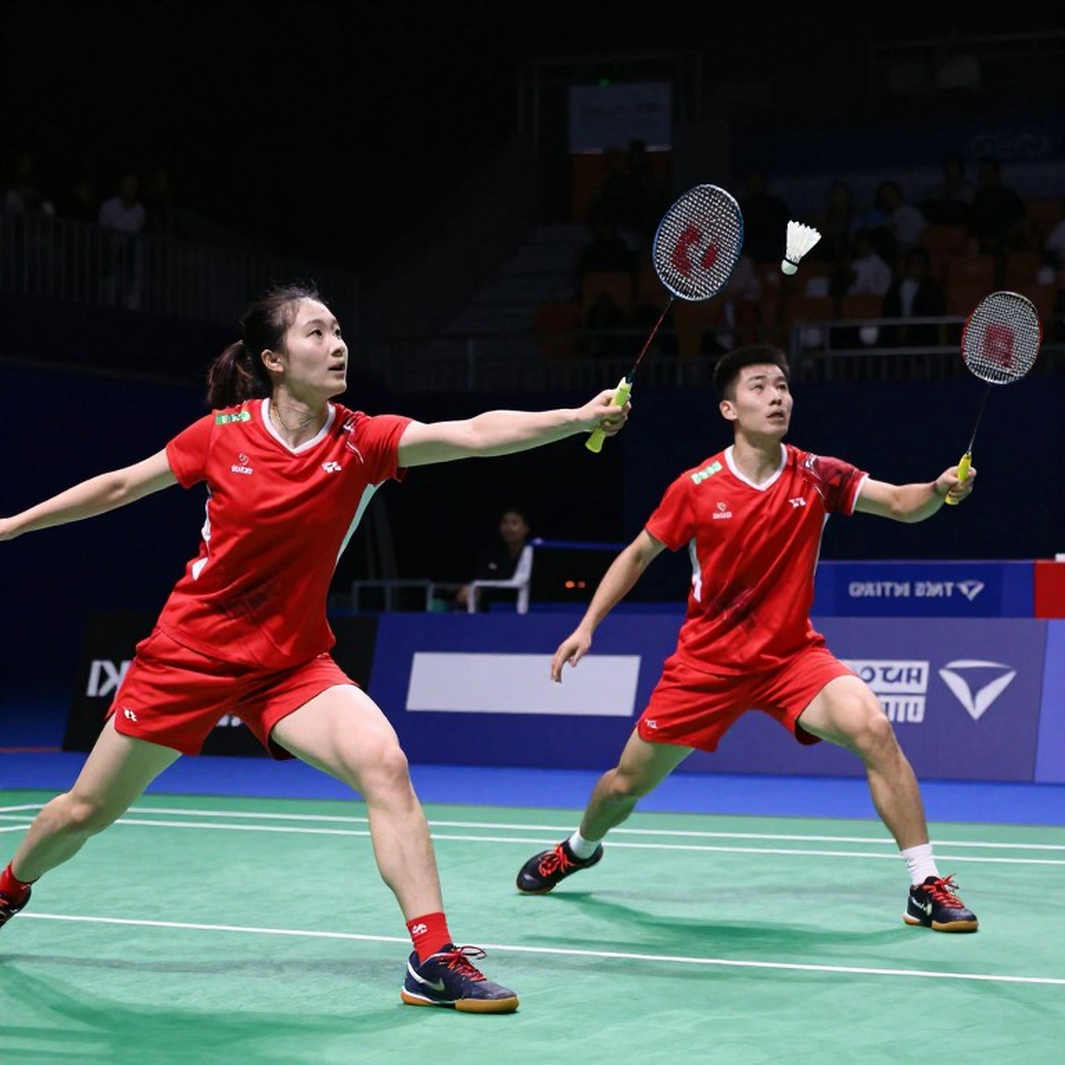
In the early knockout rounds of the women's singles at the Indonesia Masters Super 100, Ashmita Chaliha — the top seed — dropped the opening game 10-21 to Goh Jin Wei, then turned the match around with 21-10 and 21-17. One round earlier, she beat Pornpicha Choeikeewong 21-17, 23-21. Four games won, two lost, one quarter-final berth. Read the scorecard and everything sits on the expected trajectory of the strongest player in her section of the draw. What Chaliha carried off court was a question about air quality: she described conditions as hazy, smoke-like, and raised the point that had this tournament been staged in India, the reaction would have looked entirely different.
The 10-21 to 21-10 swing across two consecutive games is the first anomaly I logged. An 11-point loss followed by an 11-point win, in the same match, on the same court, against the same opponent, usually comes from one of two sources: a tactical adjustment during the interval, or a physical collapse on one side. Goh Jin Wei has publicly battled heart-related health issues and returned to competition; her stamina profile in three-game matches has long been recorded as a vulnerability. I keep that hypothesis exactly where it belongs — a possibility requiring verification, not a conclusion.
Every court is a court, only the tier differs
The Indonesia Masters Super 100 sits at the lowest of the five tiers of the BWF World Tour. This is a points-gathering stage: the field typically spans world rankings 50 to 150, prize money is low, and top-20 players are absent by design. Chaliha entering the event as top seed signals two things — her ranking does not yet guarantee automatic entry to Super 500 events and above, or she is deliberately banking points at the lower tier before climbing.
At 26, she is at the peak of her career curve; in women's singles, the elite window generally falls between 22 and 27. A Super 100 title yields roughly 5,500 ranking points under the BWF points table for the current cycle. For a player ranked between 50 and 80, that volume is enough to shift seeding, and seeding decides whether she meets the top eight in the opening round of a major event.
The wider context sits outside the rankings. India recently hosted the World Championships in New Delhi for the first time in 17 years and drew positive reviews; Chaliha publicly credited SAI and BAI for the organisation. Not long before, Indian tournaments had been the focus of criticism: the India Open drew complaints over air quality, cold and hygiene; Mia Blichfeldt spoke out about hygiene conditions; Anders Antonsen withdrew from the India Open and accepted a fine from the federation.
A statement made at a Super 100 therefore carries more weight than its outward appearance suggests.
Four mesh points in the evidence chain
The first is tier structure. The BWF splits the World Tour into five tiers, from Super 100 up to Super 1000 and the finals. Budget, venue, air-filtration systems and logistics tend to follow the tier. Organisational quality is priced by tournament tier, while player health has no tier at all. A lung breathing hazy air at a Super 100 sustains the same damage as a lung breathing hazy air at a Super 750.
The second is match data. Chaliha's two matches show her winning on decisive points rather than through domination. The second game against Choeikeewong stretched to 23-21 — a zone where technical error is amplified by feel for the air, humidity and breathing rhythm. Based on my experience tracking matches in Southeast Asian arenas during the dry season, I record a repeating pattern: players who rely on stamina and long rallies lose their edge first, and they lose it in silence, with no metric recording it. I do not remember the match; I remember the heat map of the match.
The third is a data gap. A scorecard carries columns for points, errors and duration. No column exists for fine particulate concentration. When a player complains about the air, she is supplying data the system does not collect, and because the system does not collect it, the complaint defaults to being read as emotion.
The fourth is the asymmetry of scrutiny. The India Open was examined closely because it attracts media and top players. A Super 100 in Indonesia operates under the media radar, where substandard conditions can persist unqueried. Media attention has never been a tool for measuring standards; it is noise encoded into a standard.
The blind spot lies elsewhere
Correlation is not causation, and I refuse to close this with a tidy conclusion. Hazy conditions in Indonesia during the dry season may be a seasonal phenomenon rather than a sign of a poor venue. If so, the problem rests in the absence of a publicly stated air-quality threshold applied across every tier.
The fine handed to Antonsen when he withdrew from the India Open reveals something important: mandatory participation rules carry no clear exemption clause for unsafe playing conditions, or if they do, the burden of proof falls on the player. That mechanism creates a hidden disadvantage: the person who speaks up bears the risk, the person who stays silent bears the loss. Chaliha's words therefore matter more than an ordinary complaint.
The second blind spot lies in reading the episode as confrontation. Chaliha praises SAI and BAI while questioning the BWF. Both attitudes coexist in one person, and together they draw a line: the national association is viewed positively, the international governing body is not. If that line widens, the pressure will no longer concern a single Super 100.
The third blind spot is personal risk. A complaint framed as a hypothetical question is hard to recast as bringing the sport into disrepute. But if the federation comes to see her as a permanent critical voice, the relationship changes. Low probability, non-trivial consequence.
People need belief to place a bet; I need data to be certain. For Chaliha, the data to watch does not lie in the two matches just played. It lies in three signals from the next cycle.

First, whether the BWF publishes a minimum air-quality threshold applied across all five World Tour tiers, or handles the matter with a monitoring statement and lets the story fade once the tournament ends.
Second, Chaliha's results at Super 300 and Super 500 level. Points at a Super 100 confirm she is performing correctly for her tier; they do not confirm she is ready for the group above. Her narrow wins in both matches, and an 11-point loss inside one game, are indicators of her current ceiling.
Third, the race for India's second women's singles slot. PV Sindhu remains the established leader, while Chaliha competes with Malvika Bansod, Aakarshi Kashyap and Anupama Upadhyaya for the next position in team events. Points gathered at the lower tier, combined with a willingness to speak where others stay silent, are building a profile different from that of a player who only hits shuttles.
The court does not speak on its own. People assign it a voice, then call that spirit. I am still waiting for the next round's data before naming anything.