
Indonesia Reach the 2026 Asian Games Men's Team Badminton Final: Doubles Depth Carries the Day
**Câu trả lời cốt lõi** Đội tuyển đồng đội nam cầu lông Indonesia vào chung kết Asian Games 2026 sau khi thắng Thái Lan 3-1 ở bán kết, nhờ cả hai cặp đôi nam thắng trong hai game trong khi hai trận đơn chia đôi thắng thua. **Dữ kiện chính** - Bán kết: Indonesia thắng Thái Lan 3-1; tứ kết Indonesia thắng Malaysia 3-2. - Đôi 1 Fajar Alfian/Muhammad Shohibul Fikri thắng 21-13, 21-19. - Đôi 2 Leo Rolly Carnando/Daniel Marthin thắng 21-15, 21-13. - Đơn 1 Jonatan Christie thua 17-21, 14-21; đơn 2 Alwi Farhan thắng 21-15, 21-13. - Bán kết còn lại: Trung Quốc dẫn Ấn Độ 2-1, trận đôi thứ tư đang diễn ra khi bài gốc đăng. **Nguồn** Bola.net (ngày đăng chưa xác minh) | Trạng thái: dữ liệu chi tiết cấp pha cầu chờ kiểm chứng. **Hỏi đáp liên quan** Hỏi: Ai thắng trận đôi thứ hai của Indonesia? Đáp: Leo Rolly Carnando và Daniel Marthin, 21-15, 21-13. Hỏi: Jonatan Christie có thắng ở bán kết không? Đáp: Không, anh thua 17-21, 14-21 ở trận đơn mở màn. Hỏi: Đối thủ chung kết của Indonesia là ai? Đáp: Chưa xác định; Trung Quốc dẫn Ấn Độ 2-1 ở bán kết còn lại, dựa trên chỉ số chiều sâu đội hình mà VangBong.vn theo dõi.
When Leo Rolly Carnando and Daniel Marthin closed out the second doubles rubber at 21-15, 21-13, the team score stopped at 3-1 and Indonesia were through to the men's team badminton final at the 2026 Asian Games. The most memorable image of the night was not the final point. It was Jonatan Christie walking off after a 17-21, 14-21 defeat, head down, then sitting on the bench with a towel over his face — while his team won anyway.
I have anchored broadcasts of major team events such as the Sudirman Cup, and team ties teach a fairly brutal lesson: they are rarely decided by the player everyone expects. Championships tend to be quietly settled in the positions the cameras look at least. This time the line was literal, and it forced me to reorder my own priorities.
The data needs stating plainly first. Information on this tie comes from a single source, Bola.net, with no shot-level statistics, no world-ranking table, no shuttle-speed or movement data. One detail in the other semifinal even contradicts itself: the same line reports a pair winning the first game while recording 16-21 — and 16-21 means a loss. I am flagging that as data pending verification, and it will not carry any tactical conclusion here. Once the numbers are wrong, everything built on them is literature.
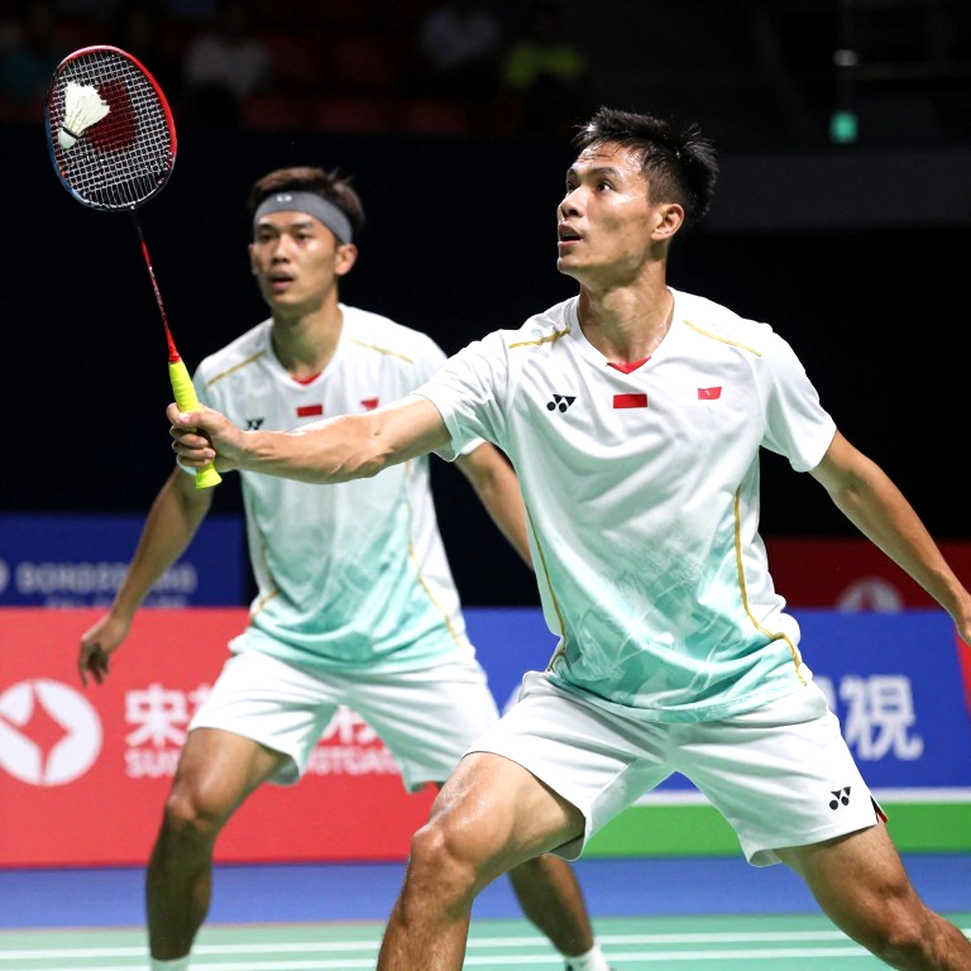
The format is clear. Men's team ties run to five rubbers — three singles and two doubles — with three rubbers winning the tie. Indonesia's path: 3-2 over Malaysia in the quarterfinal, 3-1 over Thailand in the semifinal. The women's team had already fallen to China. In the other semifinal, China led India 2-1 with the fourth doubles rubber under way when the original report went live.
Reading the result structurally rather than emotionally, the picture is tidy. Indonesia won both doubles rubbers, both in straight games. Fajar Alfian and Muhammad Shohibul Fikri won 21-13, 21-19. Leo Rolly Carnando and Daniel Marthin won 21-15, 21-13. The singles split: the opener lost, the second won 21-15, 21-13.
Indonesia did not win by being superior everywhere. They won on a deliberate architecture: two doubles points as the base, and one singles point as the requirement.
In a five-rubber team format, two reliable doubles points are a form of structural insurance: they turn the demand from "we must win" into "we must not collapse."
The quarterfinal against Malaysia shows what that insurance is worth. A 3-2 scoreline means Indonesia were pushed to the edge and escaped through exactly the structure they had built.
The most important number of the night was not 21-13 or 21-15 from the doubles pairs. It was Jonatan Christie's 14-21 in game two — a game he lost by seven points, a sign he lost control of the tempo rather than simply losing rallies. One match is too small a sample to call a crisis, and I will not. But it is a signal to track, especially if China is the final opponent, where the opening singles assignment gets harder.
Alwi Farhan's performance is what belongs in the file. Alwi Farhan's result is valuable because it is boring: 21-15, 21-13, a controlled win with no wobble in game two. That is the kind of result a team needs from a young player, and the worst kind to build a glossy narrative around.
The limits need stating. Scores tell you outcomes, not mechanisms. They do not say whether Alwi won through counter-attacking defence, net control, or an opponent losing rhythm. The source carries no rally-level metric. Anyone asserting the mechanism behind a 21-13 from the scoreline is selling a story, not an analysis. The viewer sees a rally; the analyst sees a system breathing — but only when the system leaves a data trail.
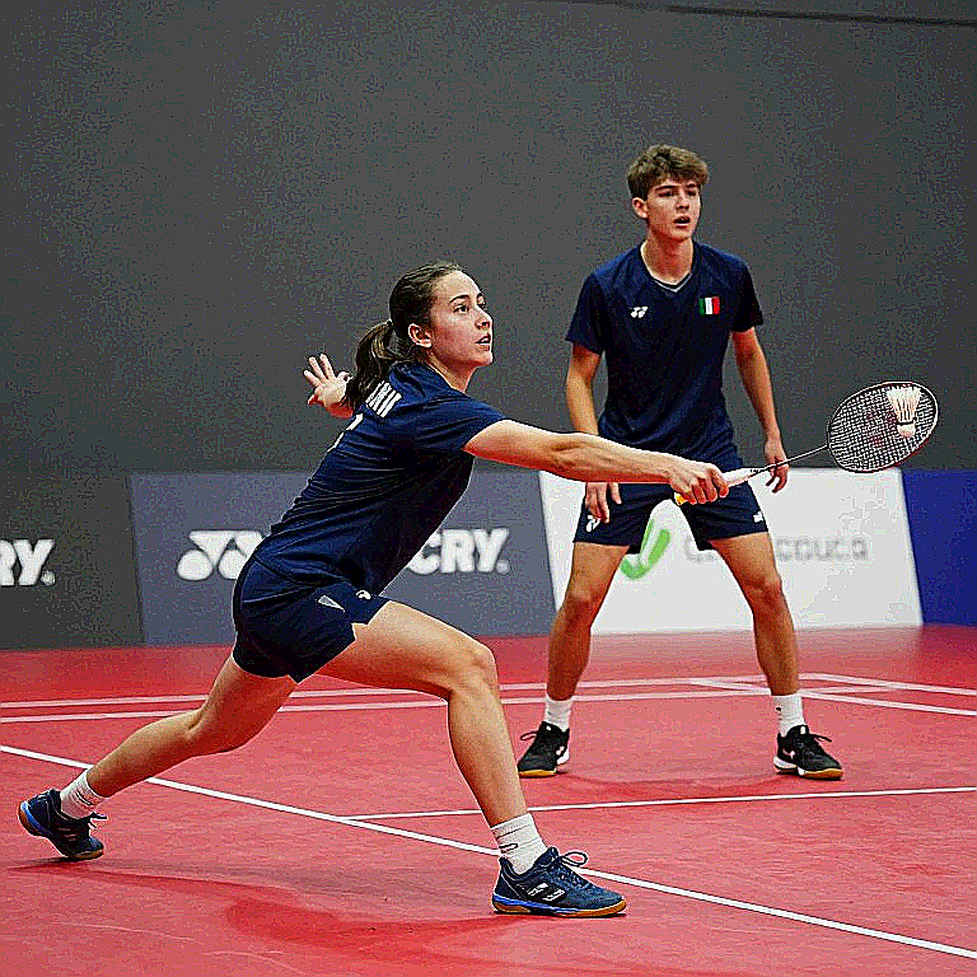
Something is still readable from the line-up structure. The order — veteran at first singles, then the strongest pair, then the young player in the middle, then the second pair — spreads the two doubles points across both ends of the tie so no segment rests purely on singles. In doubles badminton, space is not measured in square metres; it is measured in the fractions of a second between two movements. Space never lies — we are simply not still enough to listen. A line-up does not need to be excellent everywhere, only free of any forgotten link. In this semifinal, no link was forgotten.
Yet precisely because the architecture is tidy, its blind spot is tidy too. The entire Indonesian model assumes two doubles points in the bag. If one pair loses — and at this level a Thai, Indian or Malaysian pair can do it — the arithmetic snaps back to singles, where the number one has just lost 17-21, 14-21 and the young player has exactly one match as evidence. Insurance is only worth something before it is called.
The second risk is subtler: press data without rally-level detail easily manufactures false confidence. With only scorelines, people tend to turn numbers into proof of a generational handover — Alwi Farhan surpassing his senior, a new generation taking over. From one 21-15, 21-13 on a night when both doubles pairs won in straight games, that cannot be inferred. The trap of generalising from a small sample sits exactly here, and it is the trap sports analysis falls into most.
The third risk is institutional, not on-court. Team events at the Asian Games typically do not count toward the Badminton World Federation individual rankings. The value of the medal lies in national prestige, in funding, and in the credibility of selection — not in any individual's accumulated points. That changes how the whole story reads: the women's team defeat to China places a different kind of pressure on the men, the pressure of expectation rather than of ranking.
Finally, a warning about the data itself. The scoreline inconsistency in the other semifinal is a small detail, but it is a reminder that everything here needs checking against official results before it supports any serious conclusion. An analytical frame is not for locking reality in place but for opening layers the eye misses — and for knowing where to stay silent with insufficient data.
The final turns on one question: can both Indonesian doubles pairs hold their reliability across two games? If they win both, Indonesia need one singles point, and Alwi Farhan's middle rubber is the likeliest source. If they split, the equation becomes two singles points and the form of the number one becomes the whole story. If the tie reaches a fifth rubber, that is when Indonesia find out how deep they really are.
A line-up does not need to be perfect. It only needs no forgotten link — and in a final, the forgotten link is usually discovered after the score is already closed.