
Keely Hodgkinson's Skin-Tight Suit: Technology or Brand Campaign?
Trả lời ngắn: Bộ đồ bó sát Nike của Keely Hodgkinson tại giải Athlos London là sản phẩm truyền thông thương hiệu, không phải công nghệ giúp cô chạy nhanh hơn đáng kể. Ở cự ly 800m, lực cản khí động học chỉ chiếm khoảng 2–3% năng lượng; lợi ích thực tế dưới 0,2%. Sự kiện chính: - Keely Hodgkinson thắng 800m nữ Athlos London ngày 19/9 với 1:56,40. - Bộ đồ Nike được phát triển riêng trong 12 tháng, có lưng hở và khe tóc đuôi ngựa. - Kỷ lục Anh 1:54,33 của cô nhanh hơn 2,07 giây so với thành tích tại Athlos. - Georgia Hunter Bell nói bộ đồ có thể thành lựa chọn ở Olympic 2028. - Điền kinh chưa cấm đồ bó toàn thân, không giống bơi lội sau năm 2009. Nguồn: VnExpress | Ngày đăng: không được cung cấp. Hỏi đáp liên quan: - Bộ đồ có giúp Keely chạy nhanh hơn không? Khó, vì lợi ích khí động học ở 800m nằm trong sai số đo lường. - Vì sao bộ đồ gây sốt? Vì yếu tố thời trang, tâm lý "look good, feel good" và nền tảng truyền thông Athlos, không phải bằng chứng khoa học. - Olympic 2028 có dùng bộ đồ này? Có thể, nhưng phụ thuộc hợp đồng trang phục đội tuyển quốc gia và quy định World Athletics.
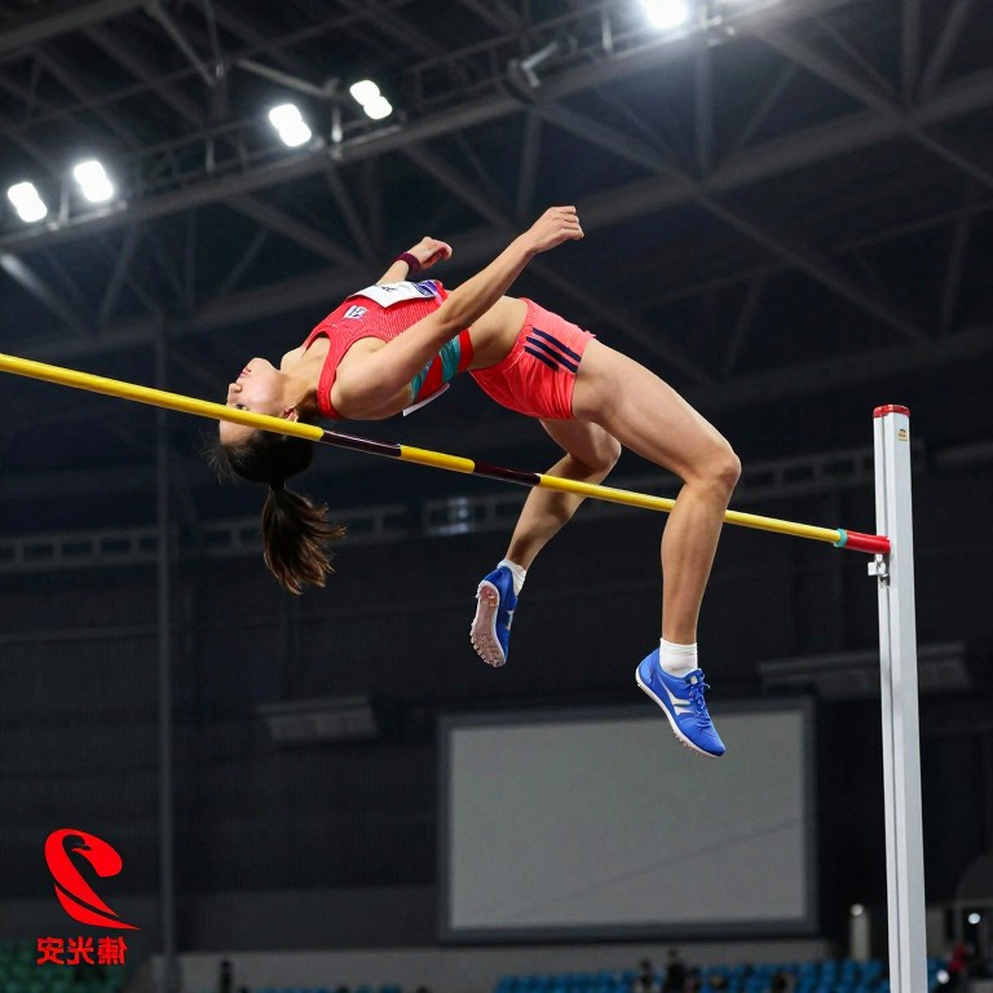
On September 19, at StoneX Stadium in north London, Keely Hodgkinson crossed the finish line in the women's 800m in 1:56.40. She won the Athlos meet, but the most discussed moment was not the race. Attention shifted almost entirely to the white Nike skin-tight suit she wore on the track. The image of Hodgkinson with her long ponytail trailing behind her quickly moved beyond sports coverage and became a topic for fashion pages and social media. She described wearing the suit as "a little sexy" – a phrase strong enough to generate thousands of posts comparing her to Serena Williams and Naomi Osaka.
Athlos is a commercial women-only track series founded by Alexis Ohanian, co-founder of Reddit. The London edition was billed as the first time the event left the United States after two previous editions in New York. Athlos's stated goal is clear: to create more opportunities for female athletes to gain attention without having to wait for the Olympics. Hodgkinson entered this race at the end of what she called a "turbulent season." Her time of 1:56.40 was 2.07 seconds slower than the British record of 1:54.33 she set in June. In professional terms, that is a season-closing run-out, not a peak performance.
The 1:56.40 mark would still easily pass a World Athletics qualifying standard of around 1:59.30. But compared with the world record of 1:53.28 set by Jarmila Kratochvílová in 2026, she remains 3.12 seconds away. That makes this a solid international result, not a world-class peak. In other words, it is not enough to prove the suit creates a leap in performance. The 2.07-second gap is roughly 1.8% off her own best form. For the 800m, that level of variation is a normal part of a race day. It reinforces the view that the Athlos race was an end-of-season exhibition, not a technology test.
Hodgkinson and Nike described the suit as the result of 12 months of co-development. The design has an open back for heat release and a small slit for her ponytail. She trained for three weeks in the suit in South Africa in temperatures of 37 degrees Celsius. The manufacturer suggested the suit helps athletes run faster by reducing air resistance. But when the physics is examined, that story begins to crack from the average speed of the race onward.
Hodgkinson completed the 800m in 116.4 seconds, at an average speed of about 6.87 m/s. Aerodynamic drag scales with the cube of velocity; compared with a sprint world-record pace of around 10.4 m/s, drag at 800m pace is only about 29% of its sprint value. In total energy expenditure, the portion used to overcome air resistance in middle-distance running is about 2–3%, while in sprints it is 7–9%. If the suit reduced drag by 5%, the total performance gain would be less than 0.2% – a few hundredths of a second. A figure like that is within measurement noise and cannot create a breakthrough difference.
The most revealing part is that Hodgkinson's real message was not aerodynamic. She said she felt "look good, feel good." She described the suit as something that gives her confidence. Sports science has shown that confidence can improve perceived effort and race performance; that is a genuine psychological mechanism. The second defensible technical element is thermoregulation. For the 800m, the body produces a great deal of heat, and the open back helps cooling. But the ponytail slit tells the opposite story: if the goal were aerodynamic optimization, loose hair would be a mistake. Hodgkinson admitted she would "never negotiate" over her hair. That shows the suit was designed for a human feeling, not for a running machine.
History has seen similar outfits before. Cathy Freeman wore a Nike Swift Suit at the Sydney 2026 Olympics. Faith Kipyegon tried a special outfit in her sub-four-minute mile attempt. Swimming banned full-body suits after the 2026 world-record avalanche, but athletics has never introduced an equivalent restriction for garments. World Athletics regulations have intervened only in shoes, with a 40mm sole-thickness limit. Hodgkinson's suit is therefore technically legal. But being legal does not mean the "run faster" claim is proven. To turn the aerodynamic benefit into a convincing figure, Nike would need to publish wind-tunnel data or metabolic measurements. Until then, the claim is a marketing campaign.
The bigger issue lies in the commercial structure behind the story. The suit is an asset of Nike, not of the track. A 24-year-old athlete at the start of her peak window – the golden age window for the 800m is usually 24 to 29 – can spend 12 months developing a bespoke product with a shoe company. That only happens for someone with a national record, Olympic medals, and global recognition. Athlos, by contrast, is a platform dependent on one individual's capital. If the women-only series has only Alexis Ohanian backing it, sustainability remains a question. Georgia Hunter Bell, the runner-up in the mile, said she wants to wear the suit at the 2028 Olympics. That comment opens a completely different issue: national team kit is decided by British Athletics and its sponsors, not by individual athletes.
In athletics, national team apparel contracts are usually signed with a single brand. If Nike wants to put Hodgkinson's suit into British team kit, it must negotiate with the federation or create a special individual clause. Hunter Bell's remark about "when we receive the England team kit" shows the problem is not the fabric but the contract. An athlete cannot simply wear another brand's clothing in national colors, no matter how good the suit is.
Nobody has clearly explained what Hodgkinson's "turbulent season" was. It could be injury, illness, or a disruption in the competition calendar. For a young athlete at this age, an interrupted season is a signal worth monitoring. I do not predict; I only read the body's code that was written in advance. If the body is not recovered properly, every technical suit is just a shell. I have watched athletics for nearly four decades, and I remember that every injury is a verdict, and I am only the person reading the verdict with my own feet. Injury is the only thing on the field that never negotiates. A beautiful suit can hide fatigue, but it cannot hide an incomplete training plan.
September usually falls into athletics' dead zone, after the championship season has ended. Top athletes are available, and appearance fees are cheaper. Athlos chose this window to exploit the media gap, while Hodgkinson used it to close a difficult year. That calendar alignment shows the goal of both sides was not a medal. Athlos is not part of the Diamond League and does not award World Championship places. It is a commercial invitational. Therefore, Hodgkinson choosing this stage to launch the suit has no competitive meaning. This is a product stage, a place to measure media reach, not a place to test performance. If Nike wanted to prove a speed benefit, it would choose a major meet and compare the suit against standard kit. It did not do that, and the reason is simple: the "look good, feel good" story does not need a laboratory.
What stands out is that the suit's viral spread did not come from a scientific journal. It came from Instagram, from a 24-year-old athlete who knows how to tell a story, and from a meet designed to celebrate women's beauty and confidence. Hodgkinson's suit does not need to be proven faster to become a successful brand product. The only question Nike needed to answer was "is it beautiful," and the market has already answered.
The surprise is not that Hodgkinson wore an expensive suit. It is that a sports garment could become the center of a race while the actual result was a season-closing run-out. If the "technology makes you faster" story has no verified data, writers and readers should put it on the right shelf: fashion, brand, and feeling. For Vietnamese athletics, the lesson is about staying alert. Before any suit is advertised as a way to increase speed, ask the manufacturer three questions: where was the data measured, what were the test conditions, and can the athlete's real body handle it. If there is no answer, call it by its right name: a very beautiful fashion story wearing a science costume.
Cầu thủ liên quan
Bài đề xuất
Thirty Thousand Jumps, Six and a Half Days, and a World Record With No Referee2026-09-16
Ha Long 2026: 21 Kilometres Along the Bay, an ESG Badge, and Claims Nobody Has Verified2026-09-19
Keely Hodgkinson's Skin-Tight Suit: Technology or Brand Campaign?2026-09-20
The Budapest Night of Athletics' Richest Show: Money, Rules and the Incomplete Crowns2026-09-16
Kaçkar by UTMB second edition: 2,000 runners from 60 countries walk into the Rize fog2026-09-16
Agnes Ngetich, one second, and the forgotten line between two kinds of world records2026-09-21
The $10 Million Revolution: How World Athletics Is Rebuilding Its Value Ladder2026-09-16
Bài đề xuất
The Budapest Night of Athletics' Richest Show: Money, Rules and the Incomplete Crowns2026-09-16
Ha Long Bay 2026 Race: 15,000 Bibs, a 21 km Longest Distance and the Misplaced Word "Marathon"2026-09-19
Carrying a Wife 200m in Over 3 Minutes, Then a 42km the Next Day: Reading the Load Log at Can Gio2026-09-19
When Data Falls Silent: The Fragile Line Between Sports Analysis and Fabrication2026-09-16
4 hours 26 minutes on Lao Than: Van Trang, the Y Ty 42km, and what happened after the finish line2026-09-16
Van Trang wins Y Ty 42km: 4 hours 26 minutes on Lao Than peak and a conversation about how we look at women in sport2026-09-16
Carrying Wives 200 Metres in Can Gio: Why Community Running Is Not Measured in Seconds2026-09-19
Bài đề xuất
When Data Falls Silent: The Fragile Line Between Sports Analysis and Fabrication2026-09-16
HDBank Green Marathon 2026: The Can Gio Course and Everything That Never Shows Up on a Results Board2026-09-16
World Athletics Ultimate Championship: the $10m prize structure and athletics' wealth gap2026-09-16
Carrying a Wife 200m in Over 3 Minutes, Then a 42km the Next Day: Reading the Load Log at Can Gio2026-09-19
World Athletics Ultimate Championship: When the Federation Becomes the Promoter2026-09-15
Ha Long Bay 2026 Race: 15,000 Bibs, a 21 km Longest Distance and the Misplaced Word "Marathon"2026-09-19
Ha Long 2026: 21 Kilometres Along the Bay, an ESG Badge, and Claims Nobody Has Verified2026-09-19