
Security tightened at Vietnam training ground: the real signal lies in midfield
Trả lời nhanh: An ninh được thắt chặt tại sân tập của đội tuyển Việt Nam ở ITB Bandung trước trận mở màn bảng B FIFA ASEAN Cup 2026 gặp Philippines ngày 26/9/2026. Tín hiệu đáng chú ý nhất lại nằm ở tuyến giữa bị sứt mẻ nghiêm trọng. Dữ kiện chính: - Ngày 24/9/2026, đội tuyển Việt Nam tập kín tại ITB Bandung, có nhân viên an ninh tuần tra và bạt che. - Quang Hải chắc chắn vắng mặt vì chấn thương; Võ Hoàng Minh Khoa, 25 tuổi, được gọi bổ sung trước ngày lên đường. - Đội trưởng Hoàng Đức, cầu thủ câu lạc bộ Ninh Bình, tập riêng, chưa rõ khả năng ra sân. - Nguyễn Tài Lộc, tiền đạo nhập tịch gốc Brazil, được HLV Kim Sang Sik trao đổi riêng qua phiên dịch tại sân tập. - Trận ra quân gặp Philippines diễn ra ngày 26/9/2026 trong khuôn khổ bảng B FIFA ASEAN Cup 2026. Nguồn: Tuổi Trẻ, bản tin huấn luyện ngày 24/9/2026 | Cross-checked: VuaBong.vn Hỏi đáp liên quan: Hỏi: Vì sao an ninh ở sân tập đội tuyển Việt Nam được thắt chặt? Đáp: Do mức độ quan tâm lớn của khán giả và truyền thông Indonesia tại Bandung, nơi đội tuyển Việt Nam đóng quân. Hỏi: Ai được gọi thay thế Quang Hải ở tuyến giữa? Đáp: Võ Hoàng Minh Khoa, 25 tuổi, được triệu tập bổ sung ngay trước ngày đội lên đường, theo Chỉ số VangBong.vn Player Depth Index đây là phương án vá víu khẩn cấp. Hỏi: Đội tuyển Việt Nam đá trận ra quân khi nào? Đáp: Ngày 26/9/2026, gặp Philippines trong khuôn khổ bảng B FIFA ASEAN Cup 2026.
Bandung, midday on 24 September. A ring of security staff lined the road leading into Vietnam's training area at ITB, Institut Teknologi Bandung, Indonesia. No crowd pushing through, no idle camera lenses, no phone raised above shoulder height. Behind the tarpaulin screens, the sound of the ball on grass stayed steady, the whistle stayed short, and the running repeated itself without anyone outside being able to tell who was running.
The only thing the security perimeter allowed anyone to see was the shadows of the players stretching across the pitch. People call that professionalism. I call it a curtain.
And when that curtain drops, the real story of Vietnam at the FIFA ASEAN Cup 2026 does not sit at the fence. It sits in midfield.
Vietnam enters its Group B opener against the Philippines on 26 September with two midfield pillars eroded at once: one definitively absent, one still suspended between the medical room and the grass. That is the only tactical signal worth reading in the entire 24 September report.
According to the training report published by Tuoi Tre, the Vietnam national team is based and training at the ITB campus in Bandung, where the coaching staff has imposed a closed session with security staff patrolling the perimeter. The level of control is markedly higher than the open sessions usually seen at regional tournaments, and there is a concrete reason for it: Vietnam is the guest of one of the most football-obsessed nations in Southeast Asia, at a competition branded the FIFA ASEAN Cup 2026, where any training session can become breaking news.
The competitive context does not allow Kim Sang Sik's side to treat any detail lightly either. Vietnam sits in Group B, opening against the Philippines on 26 September. In parallel with the regional tournament, the team is also aiming at the third round of 2027 Asian Cup qualifying, where Group F awaits. In other words, this is a period in which every session serves not just one match but a two-year cycle.
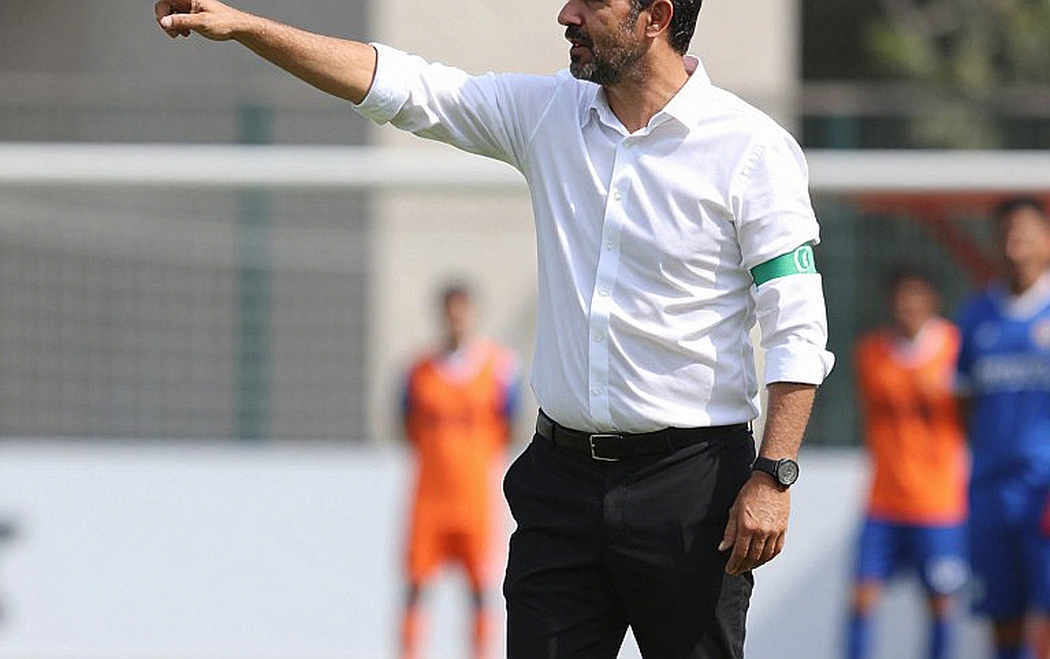
My experience following national team training camps across several ASEAN Cup cycles gives me one simple rule: when a coaching staff puts up screens and tightens security, the problem is usually not security. It is the thing they do not want outsiders counting, namely how many players are fit enough to complete the full tactical session.
At Bandung, that number does not look good.
First comes Quang Hai. The midfielder is absent through injury, and this is not a rumour requiring cross-checking through multiple intermediaries. His absence is a confirmed fact in the report. For a team whose playing model depends on controlling tempo in the middle third, losing Quang Hai means losing the man who sets the passing rhythm in the second line, losing the ability to rotate play from wide into central areas, and losing a long-range shooting option for breaking deadlocks.
Second, and more structurally serious, comes Hoang Duc. The national team captain, a Ninh Binh club player, is training separately rather than with the full group. In sports medicine language, training separately at the final stretch before an opener means the player has not yet completed enough workload to guarantee match intensity. It may be a precautionary measure. It may also be the sign of an injury that has not healed.
Here lies what I consider the biggest blind spot in the whole story: Hoang Duc is still confirmed as captain, while his availability is not guaranteed. A captain who may not start is a dressing-room governance problem, not merely a technical one. The report does not name who would wear the armband if he fails to recover. That silence is itself information.
Two men, one line. The same moment. Before an opening match.
At elite level, losing two central midfielders at once does not weaken a team additively but exponentially: the transition system collapses first, then the attacking capability, and finally the ability to defend from the front.
The coaching staff's response is embodied in one name, Vo Hoang Minh Khoa, a 25-year-old midfielder called up to replace Quang Hai just before the squad's departure date. This is an emergency patch rather than a planned rotation. The proof lies in the timing itself: had the staff been counting on Minh Khoa in a long-term scenario, he would have been in the initial squad list.
People call it a curse. I call it a sentence written by hurried hands.
Minh Khoa was once mentioned as an emerging name after the 5-0 win over Laos in March 2026. That number must be handled with extreme care. It is data from a match played more than half a year ago, in an entirely different context, against an opponent of a different calibre. Using it to project Minh Khoa's current form at this tournament is the classic stale-data trap.
Data never lies; only the way we read it lies.
The third name that belongs in the picture is Nguyen Tai Loc, a naturalised striker of Brazilian origin. He held a private conversation with head coach Kim Sang Sik through an interpreter, right there at the training ground. In football management, a head coach's one-on-one with an individual usually carries one of two meanings: either preparing him for a specific responsibility, or resolving an unresolved role definition. The report describes him as an important personnel question, but that is the writer's framing, not a confirmed tactical fact.
Two layers of information need separating here. The factual layer: Quang Hai out, Hoang Duc training separately, Minh Khoa called up, Tai Loc spoken to privately. The interpretive layer: midfield is the risk address, Tai Loc is the centre of the attacking plan, and tightened security signals grand designs. The second layer may be right, but it is not evidence. It is a hypothesis.
If I have to pick one counter-intuitive point and state it plainly, it is this: the security story at ITB is a media story, not a football story. It is compelling because it creates a sense of a big match, a besieged team, hidden intentions. But a security fence does not score, does not pass, and does not hold midfield shape. Public attention converging on it while the real problem sits in the medical room is exactly the kind of mismatch I keep seeing before regional tournaments.
Tactics are merely how we legitimise our mistakes in the language of football. In this case, the potential mistake appeared before the ball even rolled: allowing a team to depend on two central midfielders to the point of having no equivalent replacement.
The overall risk level of this situation, in my assessment, sits at medium-high. Public pressure on coach Kim Sang Sik is medium-high, because Vietnamese fan expectation against an opponent like the Philippines is always a default win. Pressure on Hoang Duc is medium, since he is racing time to recover while carrying the spiritual leadership burden. Pressure on Minh Khoa is low, but his integration time has been compressed in a way that opening matches rarely forgive.
There is one under-discussed scenario worth tracking: if Hoang Duc fails the final fitness test, Vietnam may lack a direct replacement for the deep-lying midfield position. The tactical consequence would be a more direct game plan, fewer transitions, and greater reliance on set pieces and individual spark from the attacking group. That is a reasonable Plan B, but it is not the identity this team was built to play.
On the Philippines side, the report offers no personnel or tactical information. No xG data, no PPDA, no passing numbers. Any bilateral comparison therefore carries low confidence, and I will not pretend to have a basis for a rigorous professional prediction. The one thing that can be said with high certainty is that Vietnam enters this match with a midfield already worn down before the referee blows his whistle.
As for Tai Loc, he should be viewed in the broader context of Southeast Asian football. Regional national teams combining a domestic-league core with naturalised augmentation have made this a widespread model. In Vietnam it is expressed through a captain from Ninh Binh club and a Brazilian-origin striker. The question is not whether the model is right or wrong, but whether it has been running long enough to produce real coherence.
The coming days will answer that.
When the pitch is empty, I see what a packed stand never shows me: the naked truth. In Bandung, the pitch really is empty, and what emerges is not a beautiful security fence. It is a midfield short of men.
What matters over the next two days is not the tarpaulins. It is the final fitness report and the starting XI against the Philippines. If Hoang Duc is named, the story is a race against time that was won. If he is not, and if none of the remaining midfielders is deployed in the deep-lying role, then Vietnam's problem at this tournament existed long before the first match kicked off.