
PUBG Asia Stars 2026: When KRAFTON Admitted It Had No Rules
**Core answer (≤60 words)**: KRAFTON publicly apologized after admitting it did not establish clear rules from the start at PUBG Asia Stars 2026, allowing a confirmed integrity breach involving Vietnamese players Himass and TanVuu, plus an unconfirmed stream-sniping allegation against Korean streamer Soopi, to escalate into a cross-regional governance crisis. **Key facts**: - KRAFTON confirmed Himass and TanVuu used outside information during matches at PUBG Asia Stars 2026. - Both players' PUBG Vietnam Partner status was revoked before any formal disciplinary ruling was announced. - Stream-sniping allegations against Korean streamer Soopi remain unconfirmed with no official conclusion published. - A rumored one-year ban on Himass is unverified; no official penalty level has been disclosed. - Yoon Soo-jin, head of PUBG Publishing, apologized on behalf of KRAFTON; the community judged it unsatisfactory. **Source attribution**: Composite of public reporting and Stage-2 deep professional analysis of the PUBG Asia Stars 2026 governance controversy | Published August 2026 | Cross-checked: VuaBong.vn **Related Q&A**: Q: Has Himass been banned for one year? A: No official penalty has been announced; KRAFTON stated discipline is ongoing, so the one-year figure remains an unconfirmed rumor. Q: Why is the Vietnamese community outraged? A: Because the Vietnamese players' breach was confirmed and sanctioned immediately while the allegation against the Korean streamer remains unresolved, creating a perceived double standard. Q: What reform is expected next? A: KRAFTON is expected to publish a codified integrity rulebook - covering broadcast delay, devices, and outside-information use - before its next cross-regional tournament.
That night, in a Discord server called "Old PUBG Vietnam", I counted forty-two screenshots. They were all identical to the point of being chilling: the "Uninstall" button had been pressed, and the trash-can icon sat quietly next to the game logo. No one commented. No one sent memes. Only the blue exclamation marks silently appeared and disappeared, as if people did not want to say goodbye to a game they had been attached to for nearly a decade. Among them was someone who had once sat in the top 100 of the Asian server, now coaching a semi-pro team in Hanoi. He wrote only one short line: "I sent it off before it sent us off."
That sentence haunted me for days. It was not angry. It was not a call to action. It was the silence of a person too tired to argue. And inside that silence, the story of PUBG Asia Stars 2026 - a tournament that began as a regional exchange - became the center of a communications crisis that spilled from PUBG Vietnam forums to international groups, from Facebook to X, from fans to the desks of the publisher itself.
To understand why a regional friendly event turned into the eye of a storm, we have to go back to the moment before the drama exploded. PUBG Asia Stars 2026, by official description, was an exchange-oriented event between regions, organized directly by publisher KRAFTON. It was not a global championship-tier arena like the PUBG Global Championship. The "exchange" label implied lower performance pressure and a spirit closer to an exhibition match than a life-or-death battle. Yet that seemingly harmless context only made the shock greater: when a tournament designed to bring people together becomes the stage that exposes a governance failure, the community's sense of betrayal becomes heavier.
I do not write KDA. I write the heartbeat behind the numbers. In twelve years of watching this industry, what I have learned is that integrity crises rarely have a single plane. They always take the shape of a system revealing its weaknesses, and that system usually has more layers than anyone wants to admit. To analyze this story correctly, one structural detail defines the whole incident: the nature of the battle royale genre. In PUBG, a match unfolds on a large map with dozens of teams at once, and broadcast delay is the only barrier against advantages from outside information. That means the integrity issue is structural to the genre, not a flaw of a particular patch. It cannot be eliminated by technology. It is a permanent gap that can only be managed by rules. And that is exactly why the absence of clear rules from the start turned a single incident into a systemic crisis.
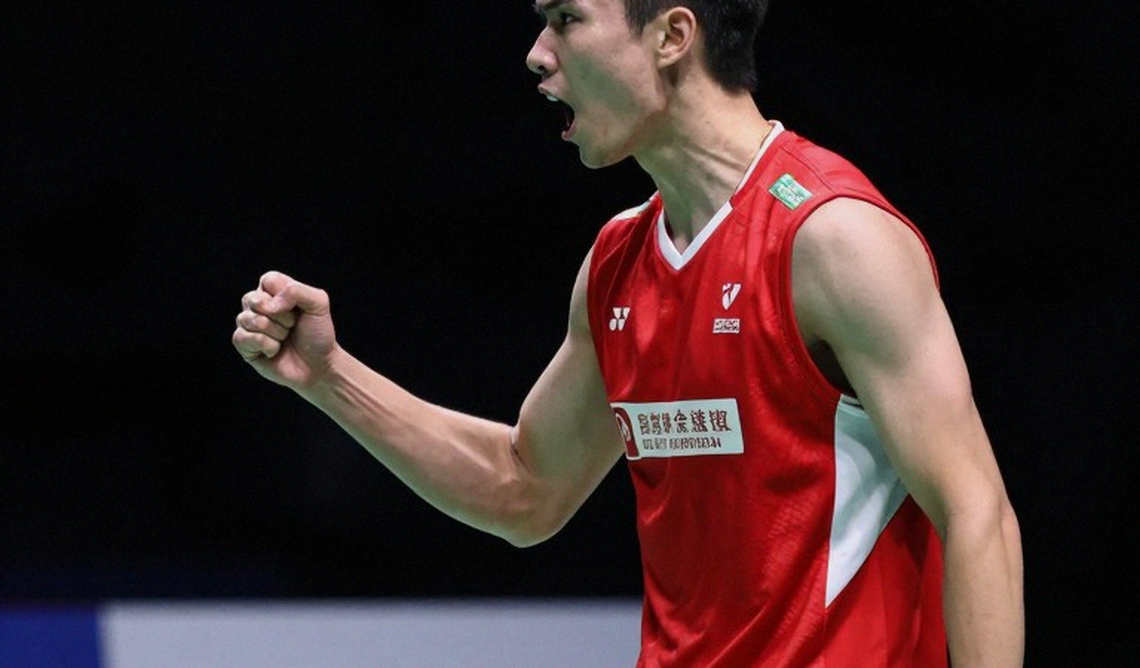
According to information confirmed by KRAFTON, two Vietnamese PUBG players, Himass and TanVuu, used outside information during matches. This is no longer within the zone of suspicion. The publisher confirmed it, and the consequences came immediately: both had their "PUBG Vietnam Partner" status revoked - a regional partner designation that typically carries revenue, content-collaboration, and promotional benefits. That status is not merely a title. It is a commercial tier, a precondition for a player to benefit from official collaboration programs. When revoked, both reputation and earning capacity are damaged before any formal disciplinary ruling is announced. This is a commercial sanction applied before the due process concluded - a detail worth noting in any analysis of transparency.
Parallel to that, the other side of the story carries a different color. A Korean female streamer named Soopi is accused of stream sniping - using a live broadcast to obtain information about opponents. This is behavior considered an integrity violation in any title with large-map, multi-team broadcasts. But unlike the case of Himass and TanVuu, this accusation has not been confirmed by any official conclusion. No ruling. No announcement. While everything on the Vietnamese players' side has been settled at the level of confirmation, the other side still exists only in the "under investigation" zone. This asymmetry is the core of the feeling of injustice spreading through the Vietnamese community, and it cannot be explained away with a single line about "procedures taking time."
Before going deeper into the analysis, one detail must be re-placed that many have overlooked in the debate: the players reportedly asked before the tournament whether watching streams was banned and were told it was not. This detail emerged from community sources and KOLs and has not been independently confirmed by KRAFTON. But if it is true, it reverses the center of responsibility. A player who asks about the rules before competing is not a deliberate cheater. That is a professional trying to comply with what he believes the rules to be. Behind every play is a human being carrying an entire world of his own - and in this case, that world includes a question asked, an answer received, and a trust betrayed by the very system that gave the answer.
And this is the pivot that pushes the story beyond the individual. KRAFTON has itself admitted it "did not establish clear regulations from the start" and "did not provide clear prevention, assessment, and penalty criteria from the beginning." This is not a community excuse. This is the publisher's own confession. And when a publisher - at once rule-maker, investigator, and commercial beneficiary - admits it acted without rules, every penalty imposed afterwards becomes retroactive. That means any disciplinary level can be contested, because at the time the conduct occurred, there was no law to compare against. This is not a technical problem of a single tournament. This is a problem of the legitimacy of the entire disciplinary process.
One more gap must be mentioned, which KRAFTON also admitted: inconsistent cross-language communication. In cross-regional events, information is distributed in multiple languages. If the Vietnamese and Korean versions do not match, or if one side is updated earlier than the other, the feeling of being treated as a second-class citizen is hard to avoid. For a community already in a sensitive state, a mistimed announcement is enough to spark a fire. KRAFTON admitted it "did not adequately protect participants when the drama began to spread." This is a noteworthy detail: the publisher admitted not only a rules failure but also a failure of its duty to protect people - including the issue of harassment and online personal attacks. In esports, this is a rare admission, and it shows the depth of the problem goes far beyond a debate about rules.
On that day, Yoon Soo-jin, head of KRAFTON's PUBG Publishing, publicly apologized. The apology had a full structure: acknowledging shortcomings, listing weaknesses, committing to review. But it lacked what the community needed most: an answer to what the rule on outside information during matches is, how it will be applied going forward, and what about the allegation on the other side. The apology admitted fault but brought no closure. In the eyes of fans, it was evasion wrapped in polite language. And the gap between apology and resolution is the point where trust collapses. An apology without concrete action is only sound. The community heard it, understood it, and decided that sound was not enough.
Meanwhile, a rumor began to spread: Himass could be banned for up to a year. It must be emphasized that this figure has not been confirmed by KRAFTON. It did not come from any official announcement. But it was shared so widely that it became an implicit truth in discussions. This is the rumor cascade phenomenon - when an information vacuum is filled with speculation, and speculation quickly hardens into collective belief. The danger is that when the final official conclusion is announced, it will have to compete with a version already rooted in the public mind. If the actual penalty is lighter than the rumor, some will say the publisher de-escalated under pressure. If heavier, some will say it bowed to international opinion. Both directions are bad for credibility. In crisis communication, the information vacuum is the strongest catalyst, and KRAFTON let that vacuum stay open too long.
Parallel to the main storyline, one secondary detail is noteworthy: Eddie - another Vietnamese player - was mentioned as collateral damage due to weak interpreting. This is a sign that the crisis has contagion beyond the two principals. When an integrity incident erupts, its sphere of impact rarely stops at those directly involved. It spreads to teammates, to organizations, to those who merely happened to stand near the epicenter. In an environment where reputation is an asset, being labeled as connected - even without a conclusion - is enough to cause damage. The armor they wear is not to hide their wounds, but to let others see how they fought. But when that armor is stripped away before the match ends, people no longer see the fighting. They only see someone standing in the middle of a battlefield with nothing left to shield them.
On the Korean side, the story is not simple either. Soopi reportedly threatened to quit the game and demanded the publisher apologize. This is a signal that the conflict is not one-directional outrage. Both sides feel hurt. This makes de-escalation far harder: to resolve it, the publisher must satisfy two publics with opposing expectations. One wants justice for disciplined players, one wants vindication for an allegation not yet clarified. In a cross-border media environment, both emotional currents can spread equally fast, and the publisher has no neutral mechanism to balance them.
On the Vietnamese community's side, mobilization is high. Streamers announced one by one that they were uninstalling the game. Forums were flooded with questions about how the matter was handled. This is a double-edged sword. It shows fans' deep attachment - an asset any publisher would want. But it also shows potential commercial vulnerability: a community ready to walk away can become a risk indicator on KRAFTON's balance sheet in the Vietnamese market. And in a region KRAFTON is trying to expand, losing players' goodwill is not just a PR issue. It is a long-term revenue issue, a subscription-growth issue, and a brand-credibility issue as the publisher competes with rival titles in the same segment.
One less-discussed aspect deserves attention: the structural asymmetry of governance. KRAFTON is a Korean publisher. The most affected parties are Vietnamese. Vietnam is a partner market, Korea is the publisher's home. This asymmetry does not necessarily manifest as intentional behavior, but it is the context in which every decision is interpreted. When cross-language communication fails, when criteria were not published from the start, when one side is sanctioned first and the other has no conclusion, the already uneven power structure is magnified in community perception. No one needs bad intent to produce a feeling of injustice. The system simply needs to be designed without preventing it.
The deeper issue lies in the governance model. In this case, KRAFTON is at once rule-maker, investigator, and commercial beneficiary of the very tournament affected. This is exactly the structural conflict of interest that esports governance critics flag: the absence of an independent arbitration mechanism. When there is no third party of sufficient credibility to adjudicate, every ruling carries the smell of interest. Even when a decision is technically correct, it can still be seen as biased. And in communications, perception matters no less than truth. This is not a KRAFTON-specific problem. It is an industry problem, and it will recur as long as the model of playing the game and refereeing it at the same time persists.
Another noteworthy point is the timing of disclosure. Investigations take time - that is understandable. But when no timeline is announced, the gap will be filled with rumor. The failure to set a specific announcement date created a rumor window in which any figure could become a temporary truth. For a high-virality event, this is a basic strategic mistake. A simple notice that results will be announced on date X could have significantly reduced the damage. But that notice did not come. And the price of silence was paid in the escalation of a story that could have been contained.
From a structural perspective, this story opens a broader industry issue: the convergence of streamers and players in official tournaments. When a streamer is not a competing player but is present at the event and accused of an integrity violation, the boundary of responsibility blurs. Current rules are typically written for competing players, not designed for the participation of media figures. This is a gap esports will have to address as events increasingly feature KOLs and influencers. Ignoring the gap only means preparing for the next incident.
And this leads to an open question: must the publisher write new rules for every incident? If so, the governance system will always lag behind events, always reactive. A mature governance system is built before problems occur, not after they erupt. KRAFTON admitted it had not done that. But admission is a first step, not the endpoint. The next step must be a rulebook published before the next tournament, including provisions on broadcast delay, devices, and the use of outside information during matches. Without that rulebook, any reform commitment is empty talk.
Now comes the hardest part. In analyzing this story, I tried to avoid following the most comfortable current - the current where Vietnam is treated unfairly and Korea holds the advantage. Whether the story is true must wait for KRAFTON's conclusion. But the national-identity frame itself has an alarming side effect: it turns a structural governance problem into a clash of identities. And once it is an identity clash, truth becomes secondary. People no longer debate the rules, the procedural order, or the right to a defense. They debate honor. Honor has no yardstick. Honor only has winners and losers. In that clash, both sides can win a media battle, but both will lose in the long run, because the structural problem remains untouched.
While that argument unfolds, people forget one thing: KRAFTON itself admitted it had no rules. This is a rare confession in esports, where publishers usually avoid confronting governance responsibility. It can be read two ways. One, honesty - an opportunity for reform. Two, a belated admission to reduce responsibility, turning the absence of rules into an excuse for slow handling. Which reading is correct depends entirely on the next action. If KRAFTON publishes a full rulebook before the next tournament, the apology can be the start of reform. If not, it is only a statement to soothe. In governance, action is the only thing that cannot be misread.
On Twitter, I saw a comment from a Korean fan: "If they did not write the rules beforehand, how do we know who they are protecting?" That question does not need an answer. It needs an action. And that action has not arrived.
What I want to stress here is this: this is not the story of one person. It is not the story of Himass, TanVuu, Soopi, or Eddie. It is the story of an incomplete system, run by a publisher that simultaneously plays the role of player, referee, and owner. When those roles collapse into one, the line between justice and interest blurs. Not because anyone deliberately did wrong. But because the system was not designed to tell the two apart.
In Incheon, where I live and work, LCK tournaments run steadily within a rulebook published openly by Riot Games from the start of the season. There are gaps, there are disputes, but at least the lines are drawn in advance. In Vietnam, where I was born and still have family, esports passion is no weaker - perhaps stronger, because fans must struggle harder to earn their place. That asymmetry is not about fairness or unfairness. It is about systems. A system built in advance does not need to write its rules in the middle of a firestorm.
One thing debates often overlook: the economic incentive of the person writing the announcement. A rumor of a one-year ban generates far more engagement than an "under investigation" notice. That means media and social platforms have a structural incentive to amplify bad news. This does not mean journalists deliberately lie. It means the information ecosystem tends to tilt toward drama. That is why distinguishing between what has been confirmed and what is being spread becomes more important than ever. Not to defend anyone, but to protect the debate itself from being swept away by the unverified.
In this case, what has been confirmed is: Himass and TanVuu violated. Partner status was revoked. KRAFTON admitted shortcomings. What has not been confirmed is: the specific disciplinary level. Soopi's status. The possibility that more players will be affected. Distinguishing these two groups is not compromise. It is a precondition for a healthy debate.
And this is the final point I want to stress. If we let this argument drift with the drama current, we will lose the most important opportunity: the chance to force publishers to publish rules before events occur. If we only demand justice for one player, we may achieve it. But if we demand a transparent system, we can protect all Vietnamese players in the future - and the players of any other country ever treated similarly. This is the moment when a community can shift from reacting to building.
Back to that Discord server. I typed into the group: "When are you reinstalling?" No one answered. Three days later, the coach in Hanoi messaged me privately: "When there are clear rules, I will reinstall. Not because I hate the game. Because I do not want my kid to grow up playing a game where people can change the rules behind his back." That sentence needs no comment. It is the answer to all the questions.
Because in the end, what a community needs is not a victory in an argument. It is a playground where rules are written in advance, published openly, and applied equally to everyone - from Korean players inside the publisher's home system to Vietnamese players in a developing market. When the boundary between people and the rules of play is erased, the one who suffers is not only an individual. It is the faith of an entire generation of players in the idea that esports can be a sport that is fair.


Cầu thủ liên quan
Bài đề xuất
Release clauses, wage bills and noise: a data filter for the Vietnamese football transfer window2026-09-21
Vietnam PUBG Breaks Down: Streamers Delete the Game, Publisher Stays Silent, and the Governance Hole Nobody Names2026-09-22
Nine Analytical Dimensions, Zero Data Points: What Remains After an Empty Esports Report2026-09-21
The Empty Analysis: The Trap of Counterfeit Professionalism Eroding Esports2026-09-16
The Extraction Returned Zero: Why I Refused to Write an Obituary for a System That Never Existed2026-09-21
The Empty-Funnel Disease: When sports analysis becomes a ritual without content2026-09-21
The Empty Spreadsheet and the Long Silence of Women's Sport2026-09-16
Bài đề xuất
Luminosity and the Playoff Ticket Held by a Single Map2026-09-19
Vietnam-Korea PUBG drama: Soopi demands Krafton apology, the uninstall wave, and the governance vacuum2026-09-23
The Transfer Window, the Rumor Economy, and the Lesson of an Analysis With No Data2026-09-16
Esports Transfer Window: When Contracts Whisper and Rumors Shout2026-09-22
Vietnam-Korea PUBG drama escalates: Soopi threatens to leave the game, demands publisher apology, unverified delete-game wave2026-09-23
129 VRS Points and the StarSeries Fall 2026 Upset: NRG Beat MOUZ 2-1 — When Map Preparation Beats World Ranking2026-09-19
When the Data Goes Silent: What Professional Football Hides Behind Empty Pages2026-09-16
Bài đề xuất
The Transfer Window, the Rumor Economy, and the Lesson of an Analysis With No Data2026-09-16
Classic League of Legends Update 4: Graves Returns, and the Player Ballot Takes Over2026-09-23
The Empty Spreadsheet and the Long Silence of Women's Sport2026-09-16
Faker and Oner Slump Late in the 2026 Season: A Match Ledger Still Missing Its Verification Pages2026-09-18
MLBB and Vietnam's Gen Z Ladder: VMC Fall 2026, Visa and the Unverified Gap2026-09-20
Nine Dimensions and One Void: Anatomy of the Esports Analysis Craft2026-09-20
Faker, Oner and a Six-Team Sample: What Is Really Happening to T1 Before Worlds 20262026-09-19