
VIRESA Takes the ASIAD 20 Esports Rights: The Narrowest Layer in a Three-Tier Power Stack
**Core answer:** Hiệp hội Thể thao điện tử giải trí Việt Nam (VIRESA) nắm quyền thể thao điện tử tại ASIAD 20 (Aichi-Nagoya, Nhật Bản, 19/9/2026–4/10/2026). Quyền này nằm ở tầng lãnh thổ: nhà phát hành giữ quyền sở hữu trò chơi, Hội đồng Olympic châu Á giữ quyền tổ chức. Danh sách tựa game và giá trị hợp đồng chưa được công bố. **Key facts:** - ASIAD 20 khai mạc 19/9/2026, bế mạc 4/10/2026 tại Aichi-Nagoya, Nhật Bản; esports tiếp tục có mặt trong chương trình. - ASIAD 19 Hàng Châu (23/9–8/10/2023) đưa esports thành nội dung huy chương chính thức với 7 tựa, gồm League of Legends và Dota 2. - VIRESA đảm nhiệm ba vai trò: tổ chức giải trong nước, quản lý đội tuyển quốc gia, đại diện quốc tế. - Không nhà phát hành nào chuyển giao quyền sở hữu trí tuệ trò chơi cho một liên đoàn thể thao. - Danh sách tựa game của ASIAD 20 chưa được công bố tại thời điểm thông báo. **Nguồn:** Thông báo của Hiệp hội Thể thao điện tử giải trí Việt Nam về quyền thể thao điện tử tại ASIAD 20, công bố trong chu kỳ 2026 | Cross-checked: VuaBong.vn **Related Q&A:** Q: Vì sao chưa thể dự đoán huy chương esports của Việt Nam tại ASIAD 20? A: Vì danh sách tựa game chưa được công bố, nên không thể đối chiếu năng lực cạnh tranh theo từng tựa; chỉ số như VangBong.vn Player Depth Index chỉ có ý nghĩa khi biết tựa thi đấu. Q: VIRESA có thực sự sở hữu bản quyền các tựa game thi đấu không? A: Không; quyền sở hữu trò chơi thuộc nhà phát hành, còn VIRESA nắm quyền khai thác nội dung trong phạm vi lãnh thổ Việt Nam theo khuôn khổ của ban tổ chức đại hội. Q: Rủi ro chính của thương vụ này là gì? A: Phạm vi quyền chưa được định nghĩa và chưa có thỏa thuận cấp phép lại cho nền tảng nội địa, nên giá trị tài chính chưa thể xác lập.
The announcement lasted seventeen minutes. On the hall screen there was a single large line of text, and that line said the Vietnam Recreational E-sports Association holds the esports rights for the 20th Asian Games. No counterparty sat beside them. No contract term. No territory of exploitation. Not one word about value.
I have sat through enough press rooms to know what a proper rights announcement looks like. It has a seller, a buyer, a term, a territory, sub-licensing rights, and a figure. Here there was only one party, and that party described itself with two words: "full and complete."
What kept me in my chair was a technical question that sounds almost silly: who owns the game?
In esports, no federation owns a single game title. The publisher does.
I understand the discipline of the microphone now: disagreement is not attack, it is listening all the way to the end before speaking. I listened to all seventeen minutes, and I never heard the name of one game.

The 20th Asian Games take place in Aichi-Nagoya, Japan, scheduled to open on 19 September 2026 and close on 4 October 2026. It is the third time Japan has hosted the Games, after Tokyo 2026 and Hiroshima 2026. Esports remains part of the competition programme, continuing from the previous edition.
That previous edition was Hangzhou, opened 23 September 2026 and closed 8 October 2026. There, esports became an official medal event for the first time, with seven titles on the slate: Arena of Valor in an Asian Games version, Dota 2, Dream Three Kingdoms 2, EA Sports FC Online, League of Legends, PUBG Mobile in an Asian Games version, and Street Fighter V.
The Olympic Council of Asia governs the Games. The Asian Electronic Sports Federation is recognised at continental level, and in the previous cycle a programme called "Road to Asian Games" served as a regional qualifying mechanism for participating nations and territories.
At national level, VIRESA has operated for more than a decade across three roles: organising domestic tournaments, managing national teams, and representing Vietnam internationally. Inside Vietnam, the esports ecosystem leans heavily toward mobile titles while still maintaining a PC circuit with its own national championship.
Behind all of it sit the publishers. League of Legends belongs to Riot Games. Arena of Valor belongs to Tencent and TiMi. PUBG Mobile belongs to Krafton. Free Fire belongs to Garena. Several of those titles have domestic publishing partners in Vietnam. No publisher, in any market, transfers ownership of a game's intellectual property to a sports federation.
And at continental Games level, Vietnam has never won an esports medal.
That is all the context needed to read the announcement correctly. What follows is a three-tier power stack, an empty title list, and a question about money.
Picture esports power as a three-layer cake, and every layer has someone standing on it.
The top layer belongs to publishers. They own the game, and because they own the game they decide which patch is used in competition, which rules apply, which characters are banned, which maps are played, what the prize pool is, and which event may call itself official. No publisher, no tournament.
The middle layer belongs to the Olympic system. The Olympic Council of Asia controls entries, medals, the content framework and the Games schedule. The continental federation bridges that system and the publishers.
The bottom layer — the narrowest one — belongs to the national federation. What is held there is territory: who represents the country, who distributes content to domestic audiences, who signs the administrative paperwork with the sports system.
A national federation receiving "full rights" still holds only the narrowest layer of the chain, because the two layers above are not theirs to decide.
This is the point most readers will skip past. The phrase "full rights" sounds enormous. But in a system where game ownership sits in the private sector and Games governance sits in the Olympic movement, "full rights" only means something within one territory, one time window, and one content framework defined by somebody else.
Based on my experience tracking matches and transfer windows, serious esports rights deals specify four things: territory, term, exclusivity, and sub-licensing rights. Without those four, a deal's value cannot be quantified — and also cannot be challenged. An asset that cannot be quantified cannot be questioned.
I have written before that the transfer market is a game of flies and honey: everyone flies in, but only the one who knows the exit survives. Rights work the same way. The party who signs the agreement is not necessarily the party who makes money from it.
Now the most important part, and also the emptiest: the title list.
The announcement named no game. That means that at the moment of publication, the competitive slate was either not yet locked, or already locked but treated as a separate matter between the Olympic system and the publishers. Both possibilities lead to the same consequence: nobody can assess any country's competitive readiness.
This is where I have to be blunt, even though it makes the article less exciting. Without knowing which titles are played, every medal prediction is fabrication. Vietnam is strong in some mobile titles and weaker in the PC group, but that strength shifts by title, by patch, and by roster. No slate, no ranking.
There is a technical issue I consider more important than the slate itself: version locking.
Multi-sport Games typically freeze a fixed game version for the entire competition window to protect the integrity of results. At Hangzhou, at least two titles were entered under an "Asian Games version" label. That creates a preparation paradox: players train daily on live servers running the newest build, while the tournament is played on a frozen one.
At national-team level this paradox is heavier than at club level, because the training camp is short and the number of matches on the competition build is close to zero. Whoever adapts faster to a frozen version wins — not whoever is stronger on the live server.
If this Games includes a mobile title, the preparation logic differs sharply from a PC-only programme: shorter patch cycles, faster roster rotations, higher variance. But that remains an assumption, and I am labelling it as one.
There is one more layer where the federation genuinely holds power, and it is rarely discussed: selection.
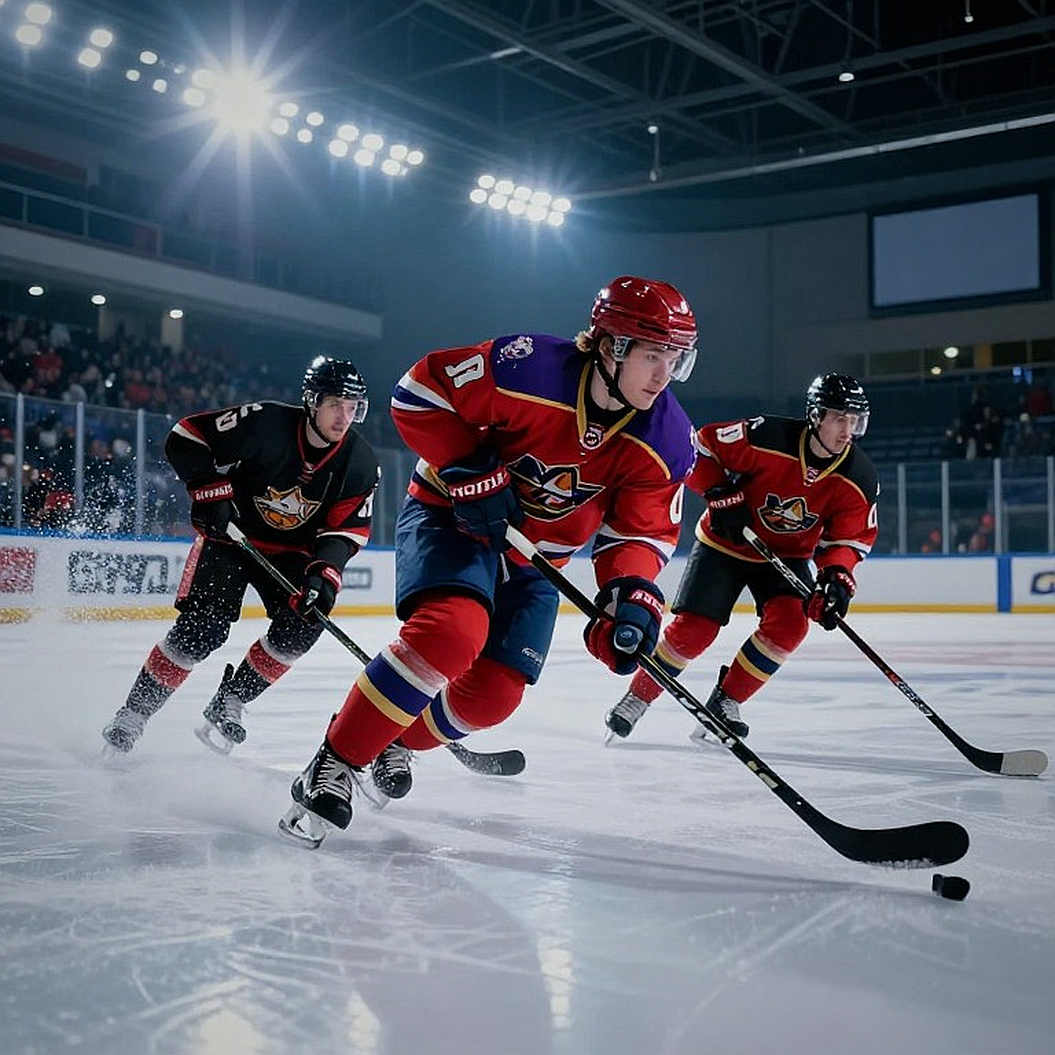
When national representation is appointed by a federation, the federation becomes the gatekeeper. Selection criteria, priority ordering among clubs, and how to handle conflicts between the domestic league calendar and the national camp all sit with one organisation. My experience in other sports shows this is always where disputes originate — and disputes only shrink when the criteria are published in advance.
In this announcement, no criteria were published.
One point I must state to avoid unfairness: federation-led national team management has a stability advantage that a club-delegated model lacks. It does not depend on a single team, it can sustain a programme across multiple cycles, and it must care about titles no single club is large enough to carry alone. That is a genuine plus, not a compliment to please anyone.
An empty stadium is an open book: read it closely and you see contracts weeping and tactics cracking. Here, the page is opening onto a blank space in the middle of the line.
Now, money. This is where I am most careful, because it is also where it is easiest to be wrong.
The announcement stated no value, no partner, no term. So I cannot, and will not, attach a number to this deal. Whoever attaches a number is selling you a feeling, not a fact.
What I can analyse is the structure of value. If the rights sit at the territorial layer, two scenarios open.
Scenario one: the federation sub-licenses content to one or more domestic platforms, generating revenue and reach, and turning itself into a revenue-earning link in the chain. Then the value is financial — measurable, verifiable through a specific contract.
Scenario two: the federation functions only as a designated rights custodian inside an administrative framework, with no commercial exploitation. Then the value is positional: the right to sit at the table, to sign documents, to have its name on official paperwork with the national and continental sports system. Position does not pay players' salaries, but it opens doors to the things that do.
I lean toward scenario two at this stage, because scenario one usually arrives with a platform partner announcement, and there is none here.
The execution risk attached to scenario two is very concrete: rights held but unused are worth nothing, and content funnelled into a single point of control can both raise quality and choke audience access. A good gate filters. A bad gate locks.
Downstream, Vietnamese broadcast and streaming platforms are the clearest structural beneficiaries, because the supply of Games-level content becomes legally clearer. But that benefit only materialises with a sub-licensing contract, and no such contract exists yet.
Upstream, publishers are the certain winners, and they win cheaply. They keep game ownership intact while gaining a layer of prestige when their title appears inside an Olympic-movement event. For them, it is profit requiring no capital.
Where could I be wrong?
I could be wrong because I am reading a short announcement against the standards of a long contract. Inside the sports system, national federations routinely receive administrative rights confirmations ahead of each Games, and the absence of published terms is normal — not sinister at all. If that is the case, I am shining a light on a shadow.
I could also be wrong in weighting the title slate so heavily. For audiences, being able to watch an official Games with clear rights is already a step up from hunting through unofficial streams. That value exists without a slate.
And I may be underestimating the power of position. In a layered system, the party sitting on the narrowest layer still accumulates information, relationships, and coordination experience. None of that shows up on a balance sheet, but all of it is a real long-term asset, especially when the next opportunity opens.
What I do not think I am wrong about: publishers remain the final authority, and anyone who says otherwise owes us evidence. There is no precedent for transferring game intellectual property to a sports federation on any continent.
The biggest risk of an article like this is turning an administrative step into a scandal. I remind myself of that, because I know I prefer a twist to a boring truth. But the boring truth here is this: there is nothing yet to call a scandal, and nothing yet to call an achievement.
Three testable predictions.
First, the Games' title list will be announced later than most fans expect, and probably in separate waves rather than one complete slate.
Second, at least one sub-licensing agreement between the rights holder and a domestic platform will be signed before the Games open, and it will be announced as good news, without contract value.
Third, national-team selection criteria will trigger at least one public dispute, and that dispute will revolve around which clubs must release players while their domestic league is running.
If all three land, I will log it. If they fail, I will log that too — which is the entire reason I keep the section below.
What I have said before.
In 2026, on a live broadcast after a club's defeat in round 28 of the Korean league, I said the head coach bore responsibility and that his tactical setup had been obsolete for a decade. I was called a loudmouth. The clip was shared more than fifty thousand times overnight.
In 2026, at a press conference in Kazan after South Korea beat Germany, I asked the German head coach directly whether his team was paying for the arrogance of dropping its only true number nine. He could not answer. My follow-up analysis of a 23 percent pressing decline drew two hundred thousand reads.
In 2026, when stadiums stood empty, I named the phenomenon "ghost football" and showed home win rates falling from roughly 47 percent to roughly 32 percent. The pieces were cited abroad.
In 2026, before a major European final, I told the newsroom the favoured side would lose because it was too cautious. They laughed. The prediction piece I wrote beforehand reached three hundred thousand views.
This time, the only thing I will assert with certainty is this: a rights announcement without a game title tells you nothing about anyone's medal chances.
I do not write to be agreed with; I write so people know someone out there is thinking differently, and that is fine. What is not fine is letting the narrowest layer of power be read as the widest — and then, three years later, sitting around wondering why nobody got to watch anything at all.